

Florida man dies after contracting brain-eating infection from rinsing sinuses with tap water
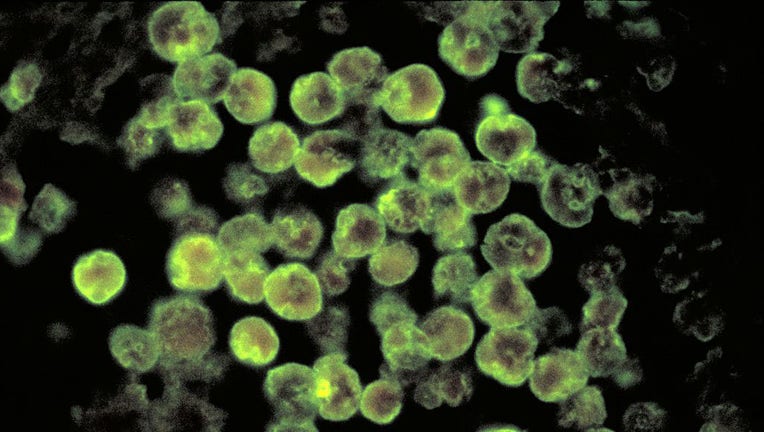
FILE - This photomicrograph depicts the histopathologic characteristics associated with a case of amebic meningoencephalitis due to Naegleria fowleri parasites. Naegleria fowleri infects people when water containing the ameba enters the body through
A man in south Florida died from a brain-eating infection last month after using tap water during sinus rinses, according to FOX 4.
The man, who has not been named but was identified as a resident of Charlotte County, died on Feb. 20, three days before the county health department issued a public alert about the infection.
DOH-Charlotte reported one case involving Naegleria fowleri, a microscopic single-celled living amoeba, on Feb. 23. The department said infection is rare and can only happen when water contaminated with the amoeba enters through the nose, stressing that it cannot be contracted by drinking tap water.
The amoeba can cause an infection of the brain known as primary amebic meningoencephalitis (PAM) – a condition that does not have any known effective treatments.
NEVADA BOY DIES FROM BRAIN-EATING AMOEBA THAT MIGHT HAVE INFECTED HIM IN LAKE MEAD
In a statement to FOX 4, the CDC said this is the first case ever in Florida where a person was infected through tap water, and the first ever case reported in winter months in the U.S. It's also the first reported case of Naegleria fowleri infection this year.

Surgeons find tapeworm egg in woman's brain
"At first we were kind of surprised and weren’t exactly quite sure what we were looking at," the woman’s doctor said. "It basically looked exactly like a quail egg inside her brain."
According to the CDC, the infection kills over 97% of the people who contract it. Out of 154 known infected individuals in the United States from 1962 to 2021, only four confirmed patients have survived the infection.
Last summer, then 13-year-old Caleb Ziegelbauer contracted a possible brain-eating amoeba while swimming at Port Charlotte Beach Park, which is in Charlotte County, Florida.
Though his case has not been confirmed by the CDC as the Naegleria fowleri infection, his medical team reportedly believes that's what it was. As of last week, he is still alive and remains on the road to recovery.
13-YEAR-OLD CHILD WITH RARE BRAIN-EATING AMOEBA OPENS HIS EYES: 'WE REMAIN HOPEFUL'
The CDC said the amoeba typically lives in warm, freshwater bodies like lakes, rivers and hot springs. It is also likely to be found living in sediment at the bottom of lakes, ponds and rivers, so the agency advises against digging in or stirring up soil in shallow, warm fresh water.
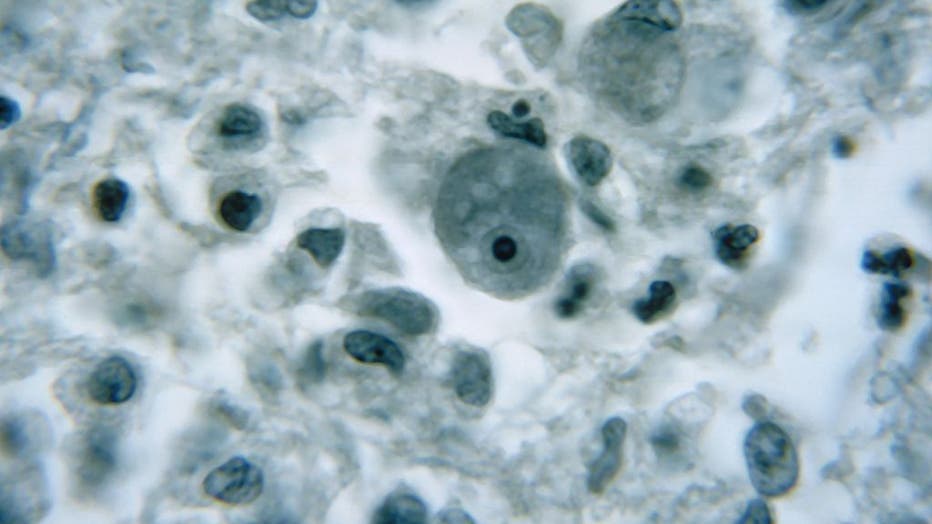
FILE - This photomicrograph of a brain tissue specimen depicts the cytoarchitectural changes associated with a free-living amebic infection, which may have been caused by either a Naegleria fowleri, or an Acanthamoeba sp. (Photo by Smith Collection/
It is extremely rare for Naegleria fowleri to be found in swimming pools, splash pads, surf parks, or other recreational venues, but it is possible if they're poorly maintained or don’t have enough chlorine.
In the U.S., most infections have been linked to swimming in southern states, with Texas and Florida reporting the most cases at 39 and 37, respectively.
DEADLY BRAIN-EATING AMOEBA: WHAT TO KNOW
Following the death, DOH-Charlotte said it is "continuing to investigate how this infection occurred and is working with the local public utilities to identify any potential links and make any necessary corrective actions."
In the public alert, the department said Charlotte County residents should be extra cognizant while bathing, showering, washing faces, swimming, jumping into water and playing with hoses/sprinklers to avoid water going up the nose. It's also recommended to keep plastic and blow-up pools disinfected, and to avoid slip-n-slides.
It added that sinus rinse solutions should always be made with distilled or sterile water, which can be made by boiling tap water for at least one minute then letting cool.
The department urged residents to seek medical assistance immediately if any of the following symptoms are experienced after swimming in warm lakes or rivers or getting water up the nose: headache, fever, nausea, disorientation, vomiting, stiff neck, seizures, loss of balance and hallucinations.