

How data centers lost in the midterm elections
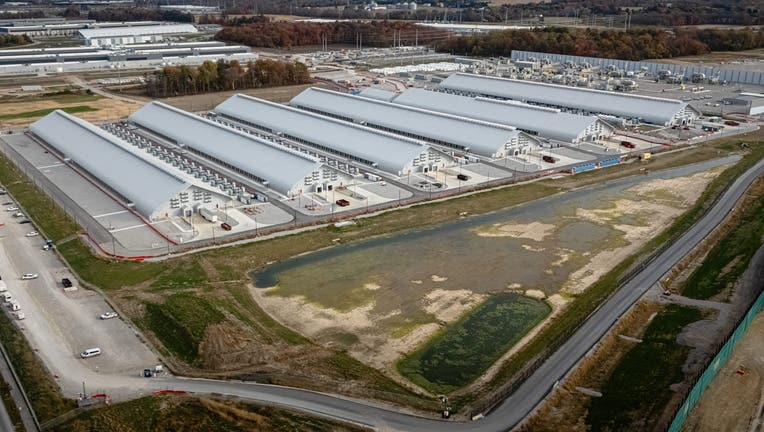
A data center in New Albany, Ohio. (Photo by Jon Cherry/Getty Images) ((Photo by Jon Cherry/Getty Images) / Getty Images)
COLUMBUS, Ohio - Beyond political parties and individual candidates, there was a clear loser in the 2026 midterms: data centers.
As these essential pieces of AI infrastructure have dropped in popularity, they’ve been met with staunch resistance at the ballot box.
Data centers lost on the ballot in the midterms
By the numbers:
According to research by Rosebud Consulting, voters in cities across the nation approved 44 ballot measures restricting data centers this November.
Nearly half of those ballot measures came out of cities in Ohio, one of the nation’s largest data center markets. Ohio has more than 250 data centers. That’s the fifth most in the nation.
Voters in Kansas, Illinois, Wisconsin, Maine, New Jersey, Florida, California and Nevada also approved restrictive ballot measures.
By contrast, a single community voted in favor of data centers on a ballot measure.
That was in Harwood, North Dakota — a town of less than a thousand residents.
Data centers proved unpopular
Dig deeper:
AI proponents took a shellacking in Ohio, where midterm voters approved 21 restrictions for data centers in cities across the state.
And that’s no surprise for researchers at Ohio Northern University.
"These election results reflect a well-established majority consensus across Ohio communities demanding greater local control and strict oversight." said Keith Durkin, a professor at Ohio Northern University. He’s also director of the university’s Institute for Civics and Public Policy.
The college released a study in October that found widespread opposition to data centers.
"Our statewide Northern Poll found that 55% of Ohio adults oppose data center construction in their communities, and 57% support legal restrictions and megawatt caps on hyperscale development." Durkin said.
Big Tech growing pains appear to go beyond a rural and urban or political divide.
"The underlying voter sentiment shows minimal geographical differences in the state of Ohio," Durkin said. "Concerns over escalating home electric bills and grid vulnerability resonate equally across urban centers, suburban developments, and rural farming communities. The demand for ratepayer protection and community zoning authority spans all geographic demographics."
Ohio's Senate race:
Data centers may have been a factor in Ohio’s Senate race.
While Ohio has typically been a stronghold for Donald Trump — he carried the state in the last three presidential elections — this year, Ohio voters rejected his endorsed Senate candidate and instead sent Democrat Sherrod Brown to Washington D.C.
Brown, who previously served in the Senate, labeled his competitor Republican Jon Husted, as "the face of data centers" in a campaign ad.
In another, Brown’s campaign called Husted, who was the incumbent in the race, the "chief reason Ohio has so many data centers."
Meanwhile, President Trump, who endorsed Husted, has vocally supported AI and data centers, saying communities that reject them are destined to become "backwards and poor."
Brown ultimately won his seat with 50% of the vote.
Husted trailed with 45.1%, according to the Associated Press.
Anti-data center sucesses:
Beyond Ohio, candidates looking to battle Big Tech performed well on election night.
Gina Hinojsa, the Democrat and Texas Governor-elect who unseated Republican Greg Abbott, has called for an immediate moratorium on data centers.
Likewise, in Michigan, Abdul El-Sayed, who won a bitter Senate race, was also outspoken on data centers.
Their wins help to validate survey results from Pew Research Center, which found that a large portion of Americans are feeling pessimistic about data centers.
Six in 10 adults surveyed said they would not be comfortable with a new data center in their area.
Another 58% said they disliked politicians who supported building data centers near their homes or communities.
However, Dirkin, the professor from Ohio Northern University, cautioned against drawing a straight line between candidate success or failure and anti-AI sentiment.
"While data center expansion and tax subsidies carry clear public unpopularity, it is difficult to draw a direct causal line to candidate losses," Dirkin said. "Multi-issue elections are complex, and our findings indicate that data center concerns do not operate in a vacuum—they are tied to a larger, overarching voter focus on overall economic affordability, household utility costs, and community tax policy."
Are data center laws going to change?
Big picture view:
It’s unclear if the anti-data center sentiment that came through in the midterms will result in new laws governing AI’s continued buildout.
Wall Street appeared fearful of a data center slowdown, leaning into a multi trillion-dollar post-election sell-off of AI stocks.
At the same time, some in the Big Tech world are asking for clarity in future laws.
"New policy is required to establish trust and confidence between communities, elected officials and companies," wrote OpenAI, the owner of ChatGPT, in a Nov. 5 statement. "Lawmakers should establish rules to advance responsible investment, protect residents, and ensure that the benefits of AI infrastructure are broadly shared."
The company also offered a new set of data center commitments, saying it will pay the full costs of electricity and infrastructure and introduce new environmental protection plans.
The Source: This story was written using interviews with a Northern Ohio professor, Pew Research Center and Rosebud Consulting data, election night results and public statements made by candidates and OpenAI. It was reported from Eden Prairie, Minnesota.