

New Red Cross data reveals 1 in 5 blood donors show signs of prediabetes and diabetes
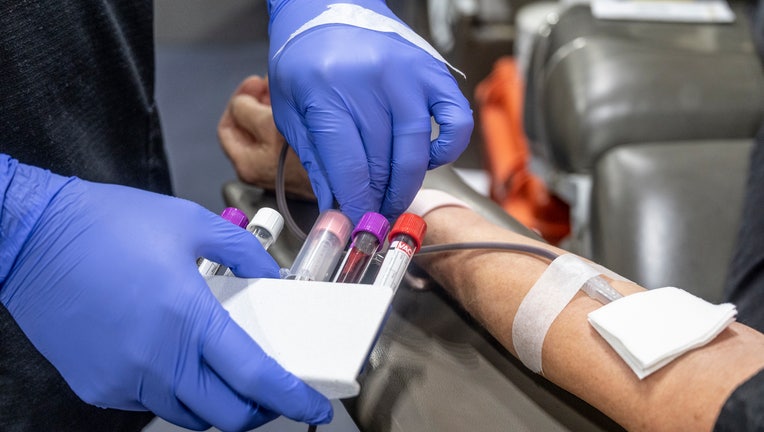
A nurse fills test tubes with blood to be tested during an American Red Cross bloodmobile in Fullerton, CA on Thursday, January 20, 2022. (Photo by Paul Bersebach/MediaNews Group/Orange County Register via Getty Images)
Millions of U.S. adults are living with undiagnosed prediabetes and Type 2 diabetes, and new data from the American Red Cross shows that 1 in 5 blood donors have elevated A1C, a test that measures your average blood sugar levels. During the month of March, the Red Cross will provide free A1C diabetes screenings to successful blood, platelet and plasma donations.
By the numbers:
The American Red Cross says their findings are based on the first year of free A1C screening offered by the Red Cross, which provided results to more than 920,000 blood donors nationwide over three testing periods in 2025.
The findings found among the donors with elevated A1C levels, 80% had readings indicating prediabetes, a condition that can often be reversed through lifestyle changes such as a balanced diet and regular exercise.
What they're saying:
"Each year, the Red Cross sees about 2.5 million blood and platelet donors, giving us a powerful opportunity to influence health outcomes at individual and national scale," said Dr. Pampee Young, Red Cross chief medical officer in a release. "By sharing personalized health insights, we're empowering people who come in to save someone else's life to also potentially save their own."
Red Cross providing free A1C screening for blood donors March 1-31
During the month of March, the Red Cross will provide free A1C screening on all successful blood, platelet and plasma donations. The Red Cross says no fasting is needed for the A1C test.
To schedule a blood donation appointment, visit RedCrossBlood.org
What you can do:
After making a successful blood donation in March, donors can access their A1C result within one to two weeks through the Red Cross Blood Donor App or donor portal at RedCrossBlood.org. Anyone with an elevated A1C level is encouraged to consult their health care provider.
The Source: Information in this article was provided by The American Red Cross. This story was reported from Orlando.