

Nighttime curfew at San Carlos Apache community set to end
Curfew at San Carlos Apache community set to end
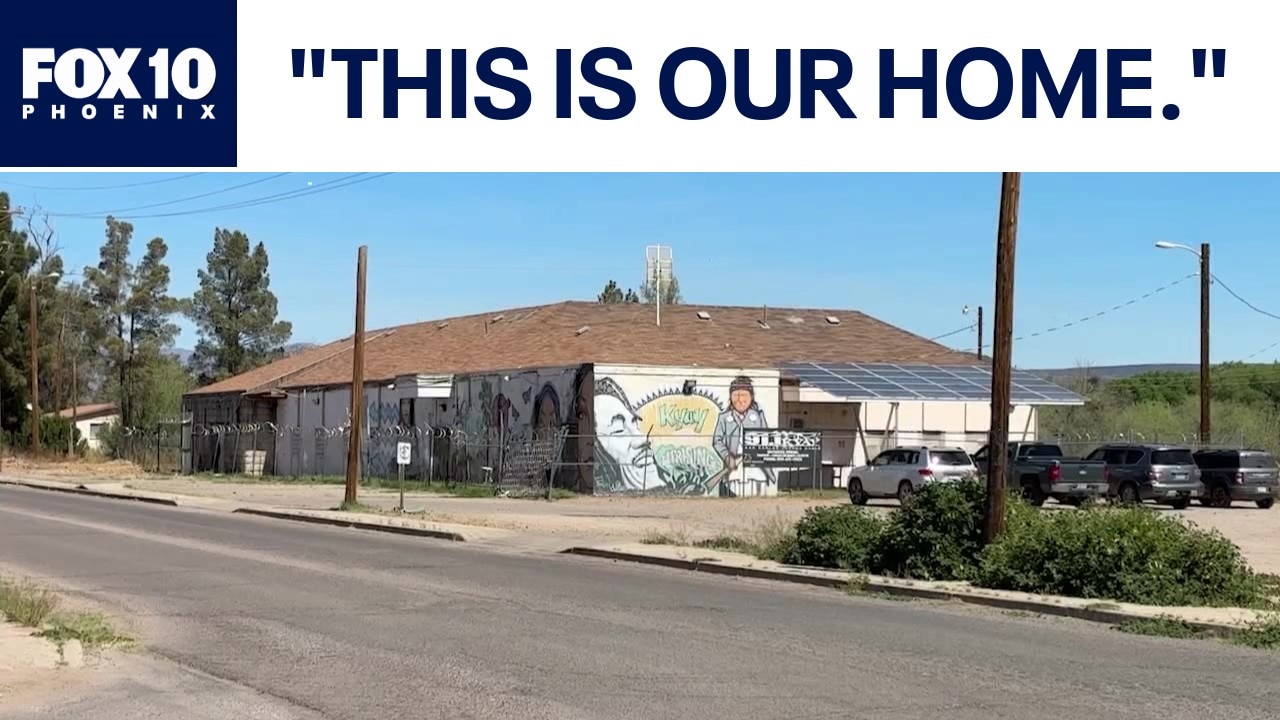
A two-week curfew in Bylas, a community on the San Carlos Apache Reservation, is set to end on March 29. The curfew was instituted amid a spate of violent incidents in the area, and FOX 10's Ashlie Rodriguez has more.
SAN CARLOS APACHE RESERVATION, Ariz. - A curfew that was issued for Bylas on the San Carlos Apache Reservation is set to end in a matter of days.
The backstory:
On March 14, San Carlos Police Department posted a statement to its social media page, announcing that a temporary curfew was approved by the tribe's council for the Bylas area from March 17 to March 29.
According to an excerpt of the order, the daily curfew for Bylas begins at 8:00 p.m. every day, and ends at 5:30 a.m. the next day. An exception was given for essential activities, which include work and health care. Officials also said there will be "zero tolerance for weapons of any kind."
Per to a statement we received from San Carlos Apache Police, the decision to place Bylas under curfew was made in response to the murders that have taken place in that area in recent days.
"While all three suspects connected to those incidents have been identified and arrested, the safety of the community remains the highest priority," read a portion of the statement. "The temporary curfew is intended to help stabilize the situation, provide additional time for law enforcement to maintain a strong presence in the area, and give residents reassurance that proactive steps are being taken to protect the community."
Big picture view:
Bylas is a community located along US 70 within the San Carlos Apache Indian community, about 45 miles to the east of Globe. On March 24, we went on the reservation to see what their police department was doing to keep the community safe.
"This is what we got. This is our home. So we try to protect it as much as we can," said San Carlos Apache Assistant Police Chief Wendsler Noise Jr.
The San Carlos Apache Reservation consists of 1.8 million acres of land, and there are just 30 officers to keep more than 15,000 tribal members safe.
"99% of our problems all stem from drugs or alcohol," said Assistant Chief Noise.
In the first week of March, Assistant Chief Noise and Chief Elliot Sneezy were tasked with investigating three homicides in just over a week’s time, prompting the tribal council to put the town of Bylas under a nighttime curfew.
"Basically for the community, it’s more funding. We definitely need more funding," said Chief Sneezy.
Local perspective:
The San Carlos Apache Reservation still doesn’t have its own 911 system, pushing emergency calls to surrounding counties’ sheriff’s offices, who then reroute to the reservation’s dispatch. Police response can sometimes take as long as an hour with only one officer en route, which doesn’t help in situations like a shooting.
When members do call the authorities, retaliation is fierce.
"You better find out who that was, because they were videotaping us," one resident was heard saying.
"We could use a command vehicle, we could use drones, we could use more license plate readers, but they all cost money," Chief Sneezy said. "To hire more police officers, we have to have more funding."
The tribe’s police officers, trained in federal, state and tribal law, are able to successfully confiscate drugs and guns. For every win, however, there’s another emergency, with the department receiving more than 50,000 emergency calls a year in recent years.
"We put it out to the community. If you see something, say something. Don’t let it go undetected," said Assistant Chief Noise. "Let law enforcement know and we’ll do everything we can to make sure justice is provided."
The deep connection many of the officers share with the people they serve — routinely exchanging greetings and expressions of love with residents — is leading to fatigue, burnout and turnover.
"It’s just sometimes it's kind of hard because they can’t be at two places at one time. They help us as much as they can," a community member said.
"There’s so much ahead. I think we’re doing a really good job. We’re moving forward," Chief Sneezy said. "And that’s the name of the game, moving forward."
By the numbers:
Right now, the department’s budget hovers around $4 million, mainly coming from federal funding and grant money. But for the department to function at its full capacity, they need another $3 million.
The Source: Information for this article was gathered by FOX 10's Ashlie Rodriguez.