

Controversial weed killer dicamba approved for some GMO crops: What to know

Weed killers contain chemicals linked to cancer
Drugwatch.com Senior Medical Writer Terry Turner joins LiveNOW from FOX to talk about some common weed killers that contain chemicals linked to cancer.
The Environmental Protection Agency has reapproved dicamba, a controversial weed killer, for use on genetically modified soybean and cotton.
The decision has sparked concern from environmentalists who fear the chemical will drift and destroy nearby farms, as it has in the past. Here’s the latest:
What is dicamba?
The backstory:
Dicamba is a common herbicide that can be sprayed on top of genetically engineered crops, or GMOs. It kills the weeds without damaging the crops. It’s been in use for decades, but farmers have relied on it more in recent years.
Is dicamba safe?
Dig deeper:
Dicamba has raised widespread concern over its tendency to drift and destroy nearby crops. Environmental groups say dicamba drift has devastated vegetable farms, trees and other critical plants.
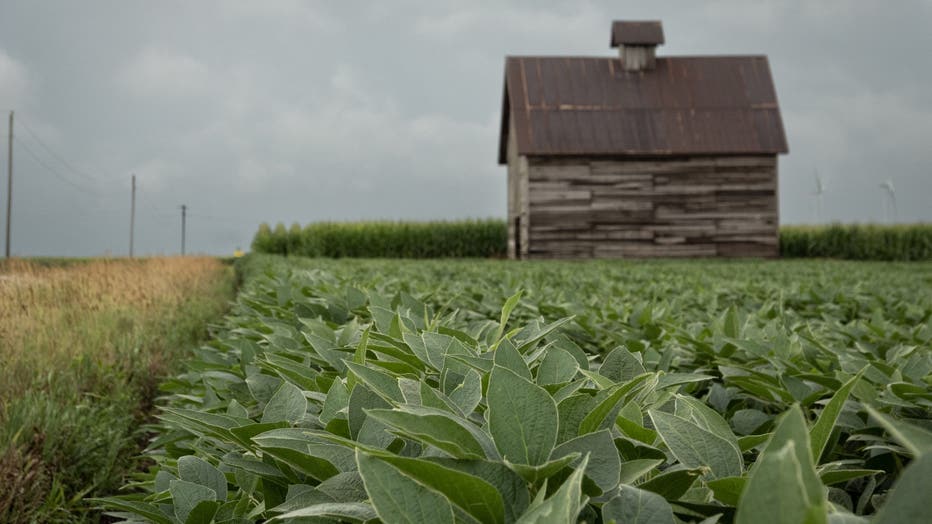
FILE: A weathered corn crib sits at the edge of a soybean field on July 25, 2025 near Lexington, Illinois. (Photo by Scott Olson/Getty Images)
Researchers have been working to better understand its health risks. A 2020 study in the International Journal of Epidemiology found that dicamba exposure was linked to an increased risk for some cancers, including liver cancer and a type of leukemia affecting the blood and bone marrow.
EPA says ‘risks are real’
What they're saying:
The EPA agrees that the "ecological risks associated with dicamba drift and volatility are real," but said dicamba is crucial for farmers to protect crops from fast growing weeds.
RELATED: Common cleaning chemical tied to spike in liver disease across US, researchers say
"If not carefully mitigated, off-target movement of dicamba can damage sensitive plants and impact neighboring farms and natural ecosystems," the EPA said in a statement. "These concerns are exactly why the strongest safeguards ever are essential."
According to the EPA, there are limits on how much can be applied per acre, how much can be applied on hot days, and buffer zones to prevent harm to nearby crops.
The American Soybean Association supports the rule change.
The other side:
Environmentalists like Nathan Donley, environmental health science director at the nonprofit Center for Biological Diversity, said the EPA’s restrictions aren’t strong enough. They say the buffer used to prevent harm to nearby plants has already proved ineffective, and the new rules allow dicamba to be used for too many days of the year.
RELATED: EPA’s research and development office eliminated; thousands laid off
"When push comes to shove, this administration is willing to bend over backward to appease the pesticide industry, regardless of the consequences to public health or the environment," Donley said.
The Source: This report includes information from The Associated Press.