Flood Watch
from SAT 11:00 PM MST until MON 5:00 AM MST, Eastern Cochise County below 5000 ft including Douglas/Wilcox, Upper Gila River and Aravaipa Valleys including Clifton/Safford, Southeast Pinal County including Kearny/Mammoth/Oracle, Western Pima County including Ajo/Organ Pipe Cactus National Monument, Dragoon/Mule/Huachuca and Santa Rita Mountains including Bisbee/Canelo Hills/Madera Canyon, Tucson Metro Area including Tucson/Green Valley/Marana/Vail, Tohono O'odham Nation including Sells, Baboquivari Mountains including Kitt Peak, Upper San Pedro River Valley including Sierra Vista/Benson, Chiricahua Mountains including Chiricahua National Monument, Galiuro and Pinaleno Mountains including Mount Graham, Santa Catalina and Rincon Mountains including Mount Lemmon/Summerhaven, White Mountains of Graham and Greenlee Counties including Hannagan Meadow, South Central Pinal County including Eloy/Picacho Peak State Park, Upper Santa Cruz River and Altar Valleys including Nogales, Yavapai County Mountains, Little Colorado River Valley in Navajo County, Western Mogollon Rim, Coconino Plateau, Yavapai County Valleys and Basins, Oak Creek and Sycamore Canyons, Grand Canyon Country, Little Colorado River Valley in Coconino County, Marble and Glen Canyons, Northern Gila County, White Mountains, Kaibab Plateau, Eastern Mogollon Rim, Little Colorado River Valley in Apache County, North Phoenix/Glendale, Aguila Valley, Mazatzal Mountains, Tonopah Desert, Gila Bend, San Carlos, East Valley, Northwest Pinal County, Northwest Valley, Southeast Valley/Queen Creek, Globe/Miami, Deer Valley, Fountain Hills/East Mesa, Apache Junction/Gold Canyon, Buckeye/Avondale, Tonto Basin, Rio Verde/Salt River, South Mountain/Ahwatukee, Dripping Springs, Southeast Gila County, Pinal/Superstition Mountains, Scottsdale/Paradise Valley, New River Mesa, Sonoran Desert Natl Monument, West Pinal County, Superior, Cave Creek/New River, Central Phoenix

Injuries in marching band are as common as in other sports, experts say
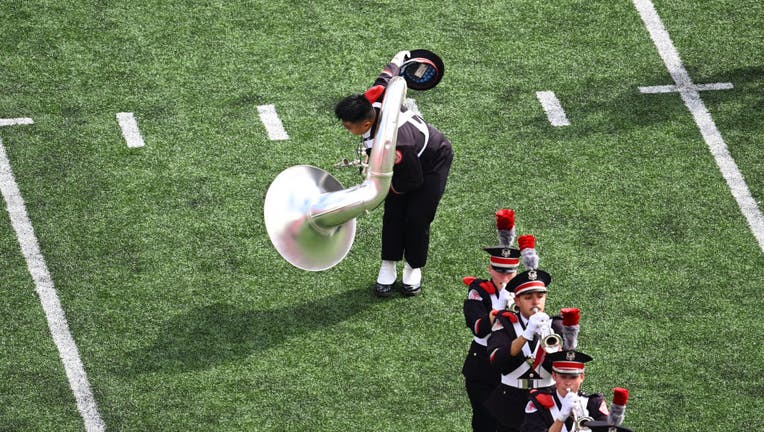
COLUMBUS, OHIO - OCTOBER 21: A member of the Ohio State University Marching Band "dots the i" prior to a game between the Ohio State Buckeyes and the Penn State Nittany Lions at Ohio Stadium on October 21, 2023 in Columbus, Ohio. (Photo by Ben Jackso

For years, many thought joining a marching band was a safe alternative to other high school sports known to cause potentially life-altering injuries.

But a recent study published on Oct. 20, by the American Academy of Pediatrics (AAP) has found that marching band is extremely physically demanding with risks of disabling injuries.

In fact, 70% of marching band-related injuries reported to emergency departments over a 9-year period occurred in high school-age females, with most injuries to the ankles and knees, the academy reported. 

"Like their instruments, band members must be in tune with their bodies," said Capt. Jacob R. Coene, MD, MC, USAF, researcher. "Coaches and parents should be educated on the risk of soft tissue injury and mild traumatic brain injury to help keep their band members marching to the beat of the drum." 

Authors of the report say this study is the first "nationwide estimate of marching band injuries presenting to an [emergency department]."

For the study, researchers examined approximately 20,335 marching band injuries that were reported to emergency departments between 2012 and 2021.

Data from the National Electronic Injury Surveillance System found that 85% of marching band injuries occurred in those between the age of 14 and 18. 

The National Athletic Trainer Association made recommendations in 2017 to keep marching band members safe, according to the researchers.

States including Texas and Oklahom are now requiring pre=participation physicals for marching band members, according to the AAP.


HealthNews