

Not an athlete? PepsiCo says you need Gatorade anyway
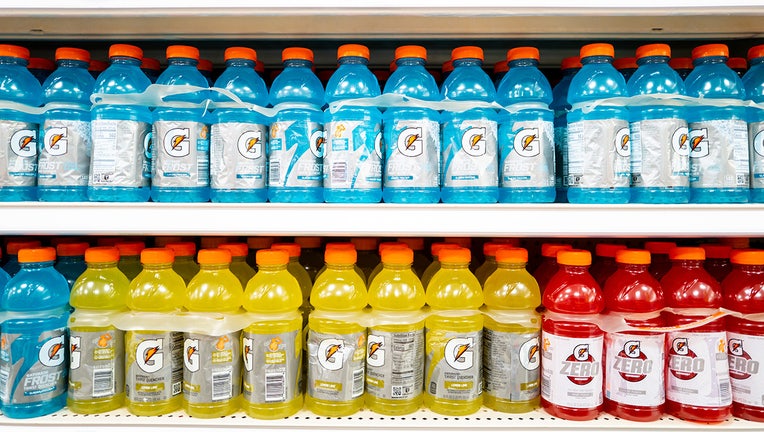
Bottles of Gatorade sit on shelves at a Target store on June 04, 2025 in Austin, Texas. (Photo by Brandon Bell/Getty Images)
Gatorade is joining the electrolytes craze with a new strategy: marketing its sports drinks to non-athletes who just want to hydrate.
PepsiCo, Gatorade’s parent company, said the pivot reflects a growing interest in beverages with perceived health benefits. Doctors, however, warn that sports drinks and added electrolytes should only be consumed when you’ve been sweating or have an illness that causes dehydration.
Gatorade’s new pitch
What they're saying:
Mike Del Pozzo said Gatorade will now clearly label products that it says can hydrate better or faster than water. Gatorade Thirst Quencher, for example, has 48 grams of sugar and 18% of the recommended daily amount of carbohydrates, which athletes need to maintain energy. But Gatorade Lower Sugar, which went on sale last month and has 75% less sugar, is one of the company's biggest sellers in recent history, Del Pozzo notes. A new drink in the works, Gatorade Longer Lasting, blends glycerin and electrolytes to help the body stay hydrated for longer than water alone. It’s one of at least 150 brands that have entered the space in the last few years.
RELATED: McDonald’s adding energy drinks, craft sodas to US menus, reports say
Liquid I.V., which was founded as a sports drink mix in 2012, has shifted to a wellness and hydration brand after being bought by Unilever in 2020. LMNT also had non-athletes in mind last fall when it introduced a smaller, 12-ounce version of its sparkling electrolyte drink.
"That puts a lot of risk on the category and pressure from a credibility perspective," Del Pozzo told The Associated Press. "Some that are coming in are building on the science that we created. And we’re like, ‘Well, geez, we should be doing that. We should be talking more overtly about the science and the business, and why we believe we’re future-forward."
By the numbers:
Jack Doggett, a food and drink analyst with the consulting firm Mintel, said his research found 60% of consumers who buy sports drinks aren’t athletes. Unit sales of sports drink mixes, like powders from Liquid I.V., Skratch Labs and Gatorade, rose nearly 20% in the year ending March 22, according to Circana, a market research company. Bottled water sales were flat in the same period.
"People are using these drinks more for wellness and daily maintenance," Doggett said. "It’s easy to say that the wellness consumer is the young consumer, but older generations are also drinking these drinks for hydration."
Are sports drinks good for everyone?
The other side:
Doctors caution that while electrolyte and sports drinks have their place in the hydration world, the average non-athlete shouldn’t reach for one just because they’re thirsty.
RELATED: Reese's will shift back to classic recipe after backlash, Hershey says
According to the Cleveland Clinic, these drinks should only be consumed:
- After a workout or physical activity.
- On an extremely hot day when you’ve been sweating a lot.
- During an illness that causes dehydration.
Travis Masterson, an assistant professor at Pennsylvania State University's College of Health and Human Development, said the average non-athlete gets the sodium they need from their diet.
"Gatorade 100% has a place, but is it going to be necessary for everybody? Do you need to hydrate faster or longer?" he said. "The average person doesn’t need all the extra stuff."
The history of Gatorade

The backstory:
Gatorade was invented in 1965, when the football coach at the University of Florida asked Dr. Robert Cade, a professor at the school, why his players were losing so much weight during games but not urinating. Cade said the players were sweating out electrolytes – another word for minerals like sodium, potassium and magnesium – and upsetting the body’s chemical balance.
RELATED: Reflecting on Gatorade's origins, 50 years later
Cade came up with Gatorade, a drink containing salt to replace electrolytes, sugar to improve energy and lemon juice for flavor. Quaker Oats acquired Gatorade’s parent company in 1983 and established the Gatorade Sports Science Institute two years later. PepsiCo became Gatorade’s owner when it bought Quaker Oats in 2000.
The Source: This report includes information from The Associated Press and the Cleveland Clinic.