

Pan Am plane that crashed off Puerto Rico in 1952 found after 74 years
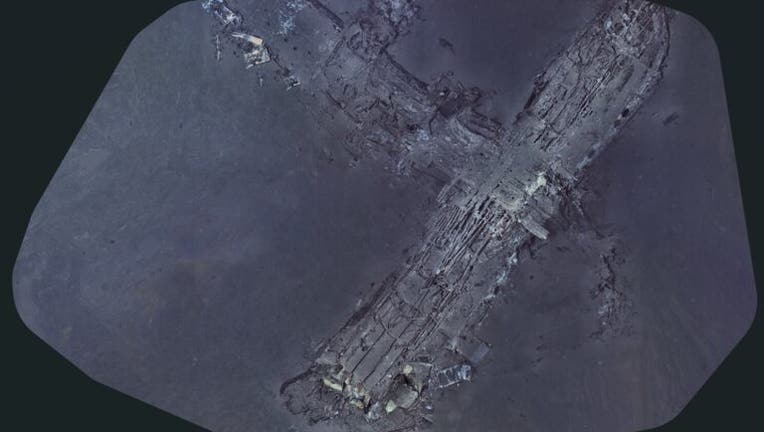
(Sonar imagery shows the wreckage of the Pan Am Clipper Endeavor, a Douglas DC-4 that crashed into the Atlantic Ocean off Puerto Rico in 1952. (Air/Sea Heritage Foundation and Deep Sea Vision))
Wreckage from a Pan Am passenger plane that crashed into the ocean off Puerto Rico in 1952 has been located, ending a decades-long search for the aircraft involved in a disaster that killed 52 people and helped reshape airline safety procedures.
Dig deeper:
Investigators found the remains of the DC-4 using an autonomous underwater vehicle equipped with high-resolution sonar, which identified the aircraft's fuselage and detached tail resting in nearly 2,000 feet of water.
The backstory:
The Clipper Endeavor was forced to ditch in the Atlantic shortly after taking off from San Juan for New York after losing engine power. Although 17 survivors initially escaped the impact, many passengers struggled to find life vests, and crew members had difficulty deploying life rafts before the aircraft sank within minutes.
The Civil Aeronautics Board concluded the crash was caused by inadequate maintenance that contributed to the engine failure, as well as the captain's handling of the aircraft after it lost power.
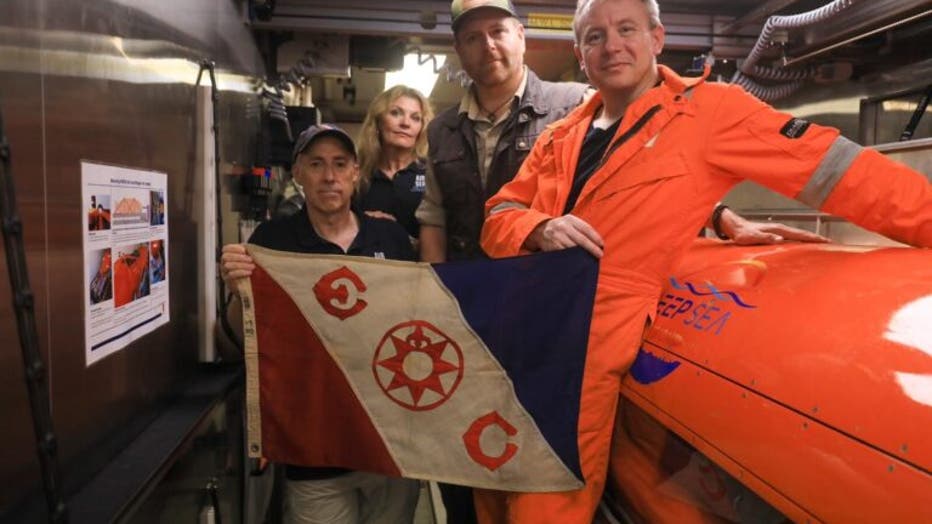
(Air/Sea Heritage Foundation (ASHF) President Russ Matthews, ASHF Director Idee Matthews-Montijo, Expedition Unknown's Josh Gates and Deep Sea Vision President of Operations Craig Wallace inside an AUV hangar with an Explorers Club flag. (Discovery Channel))
The confusion aboard the sinking aircraft, particularly passengers' inability to quickly access flotation devices, prompted significant aviation safety changes, including mandatory preflight passenger safety briefings and improvements to onboard flotation equipment.
Air/Sea Heritage Foundation President Russ Matthews became interested in the crash in 2019 after learning that a luggage tag from the flight had washed ashore in Florida. His research eventually led him to records from a Puerto Rico hearing on the accident, including a map created by Air Force pilots who witnessed the crash during a nearby training mission that estimated where the plane went down.
An earlier search using a towed sonar array was halted by bad weather two years ago. Matthews and his team decided to make another attempt before the crash's 75th anniversary using a newer autonomous underwater vehicle originally developed for military missions such as detecting undersea mines.
Tony Romeo, CEO of underwater exploration company Deep Sea Vision, had discussed assisting Matthews for some time if one of the company's vessels happened to be operating nearby. That opportunity came in April when one of Deep Sea Vision's ships transited Puerto Rico between assignments while carrying an advanced underwater drone capable of locating the wreckage.
What they're saying:
"There we were, and everything kind of came together at the moment: good weather, the right team, and the right equipment and ship. So we took a shot at it," said Romeo, whose father was a mechanic and pilot for Pan Am.
Big picture view:
Deep Sea Vision had previously led a six-month search for Amelia Earhart's aircraft without success. Using years of research from Matthews' team, along with historical weather data from the day of the crash, searchers narrowed the target area to about 10 square nautical miles. The underwater drone detected the wreckage on its first pass through the search zone, though the team did not realize it had succeeded until the vehicle surfaced with sonar images.
The Source: FOX News contributed to this report. The information in this story comes from The Associated Press, which reported on the discovery based on interviews with Air/Sea Heritage Foundation President Russ Matthews and Deep Sea Vision CEO Tony Romeo, as well as historical records from the Civil Aeronautics Board's investigation into the 1952 Pan Am crash. This story was reported from Los Angeles.