

US infant mortality rate rose to 3% in 2022, largest increase in 2 decades, CDC says

FILE - Newborn baby feet. (DIDIER PALLAGES/AFP via Getty Images)
NEW YORK - The U.S. infant mortality rate rose 3% last year — the largest increase in two decades, according to the Centers for Disease Control and Prevention.
White and Native American infants, infant boys and babies born at 37 weeks or earlier had significant death rate increases. The CDC's report, published Wednesday, also noted larger increases for two of the leading causes of infant deaths — maternal complications and bacterial meningitis.
"It’s definitely concerning, given that it’s going in the opposite direction from what it has been," said Marie Thoma, a University of Maryland researcher who studies maternal and infant mortality.
Dr. Eric Eichenwald, a Philadelphia-based neonatologist, called the new data "disturbing," but said experts at this point can only speculate as to why a statistic that generally has been falling for decades rose in 2022.
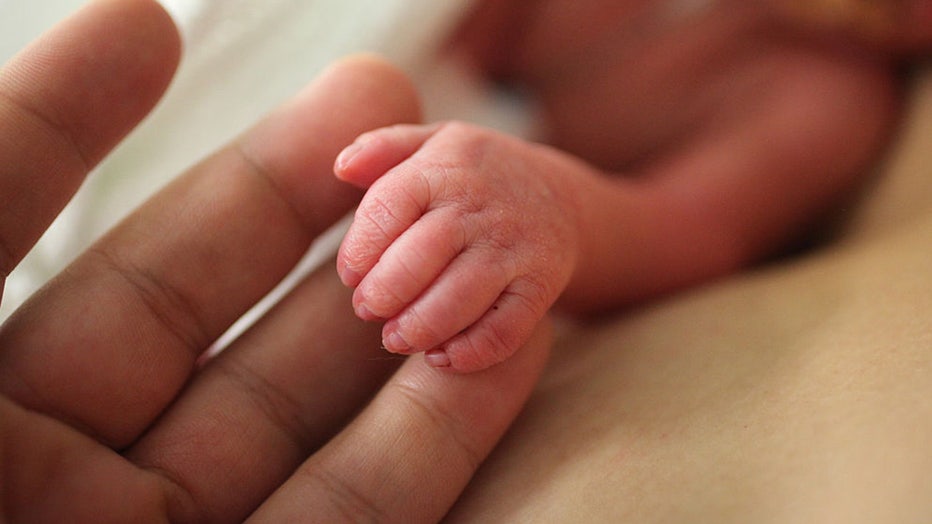
FILE - Premature newborn hand in the Neonatal Intesive Care Unit. (Jennifer Polixenni Brankin/Getty Images)
RSV and flu infections rebounded last fall after two years of pandemic precautions, filling pediatric emergency rooms across the country. "That could potentially account for some of it," said Eichenwald, who chairs an American Academy of Pediatrics committee that writes guidelines for medical care of newborns.
Infant mortality is the measure of how many babies die before they reach their first birthday. Because the number of babies born in the U.S. varies from year to year, researchers instead calculate rates to better compare infant mortality over time. The U.S. infant mortality rate has been worse than other high-income countries, which experts have attributed to poverty, inadequate prenatal care and other possibilities. But even so, the U.S. rate generally gradually improved because of medical advances and public health efforts.
"Today’s data underscores that our failure to better support moms before, during, and after birth is among the factors contributing to poor infant health outcomes," Dr. Elizabeth Cherot, chief executive of the March of Dimes, said in a statement.
The national rate rose to 5.6 infant deaths per 1,000 live births in 2022, up from 5.44 per 1,000 the year before, the new report said.
The increase may seem small, but it’s the first statistically significant jump in the rate since the increase between 2001 and 2002, said Danielle Ely, the CDC report's lead author. She also said researchers could not establish whether the 2022 rise was a one-year statistical blip — or the beginning of a more lasting trend.
Overall in the U.S., the death rate fell 5% in 2022 — a general decrease that's been attributed to the waning impact of the COVID-19 pandemic, especially on people 65 and older. U.S. maternal deaths also fell last year.

FILE - A mother holds the feet of her newborn son. (Erik Freeland/Corbis via Getty Images)
More than 30 states saw at least slight rises in infant mortality rates in 2022, but four states had statistically significant increases — Georgia, Iowa, Missouri and Texas.
In numbers, U.S. infant deaths surpassed 20,500 in 2022 — 610 more than the year before nationwide. But Georgia had 116 more infant deaths than the year before, and Texas had 251 more.
"It would appear that some of the states could be having a larger impact on the (national) rate," Ely said, adding that smaller increases elsewhere also have an effect — and that it’s hard to parse out exactly what places, policies or other factors are behind the national statistic.
Georgia health officials said they are working to understand infant mortality trends in that state, and noted the 2022 rate was similar to rates in 2018 and 2019.
There may have been incomplete reporting in 2020 and 2021 during the first years of the pandemic, Georgia Department of Public Health spokeswoman Nancy Nydam said in an email, and "the 2022 numbers may be more a reflection of what was actually happening all along."
___
The Associated Press Health and Science Department receives support from the Howard Hughes Medical Institute’s Science and Educational Media Group. The AP is solely responsible for all content.