

2026 Election: Democrats poised to flip Arizona state legislature for first time in decades
2026 Election: Arizona Legislature could flip blue
Democrats lead top statewide contests and are projected to take the Arizona Legislature for the first time since 1966. FOX 10's Taylor Wirtz reports.
PHOENIX - Democrats are celebrating major wins across Arizona as the state legislature appears poised to flip to a Democratic majority for the first time in decades.
"It's about damn time," Arizona Secretary of State Adrian Fontes told us on Nov. 4.
"We’re winning races that people once thought were impossible," said Rep. Yassamin Ansari, a Democrat who won re-election to her Congressional seat on Election Night.
The backstory:
Per the Arizona State Constitution, members of the state legislature serve two-year terms, and the state legislature itself consists 30 legislative districts.
In each of the legislative districts, voters select one senator and two representatives. This means there were 90 seats up for grabs in the election.
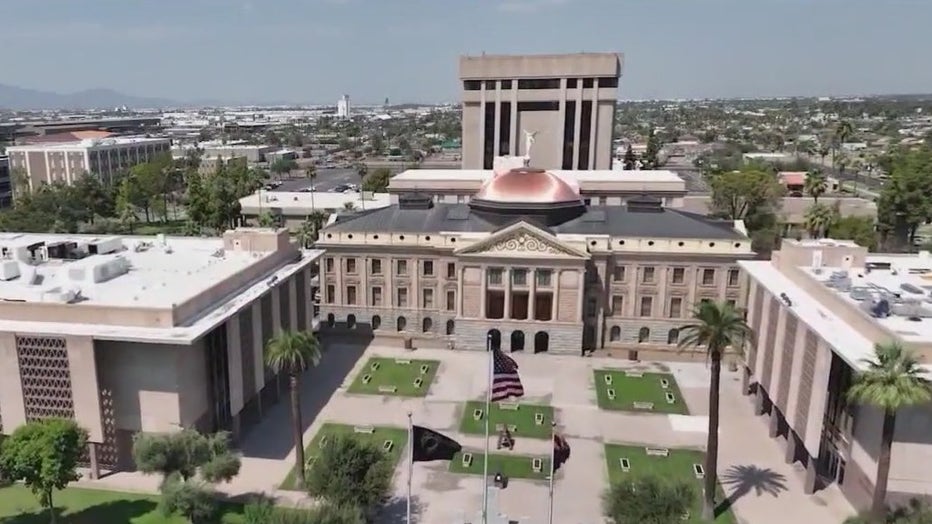
Arizona Capitol
By the numbers:
According to unofficial election numbers on the morning of Nov. 4, Democratic state senate candidates are ahead in 20 of the 30 races, while Democratic state house candidates are ahead in 38 of the 60 races.
Why you should care:
Entering the 2026 election, Republicans were the majority in the state legislature. According to figures from the National Conference of State Legislatures, Republicans held 33 of the 60 state house seats, and 17 of the 30 state senate seats.
Should the unofficial election numbers hold, the Republicans would become the minority party in the Arizona State Legislature for the first time in decades.
Dig deeper:
According to figures provided by the Arizona Secretary of State's Office, Republicans have held the majority in the State House since at least 1972, the earliest data available on the Secretary of State's website.
In the 1972 election, Republicans won 33 of the 60 state house seats.
As for the State Senate, Republicans flipped that chamber to their control in the 1978 election, and held onto majority status until 1990, only to regain it two years later in 1992. The Republicans tied with Democrats in the State Senate following the 2000 election, and regained its majority again two years later. The GOP has held the state senate majority since then.
What they're saying:
"This is the biggest change in decades, frankly," said pollster Mike Noble.
Noble, who is the CEO and founder of Noble Predictive Insights, said the flip didn’t come as a surprise.
"We had a 71% chance that Democrats were going to flip the state legislature, but also a 61% chance they flipped the state Senate. Not only did those come to fruition, actually Democrats have exceeded those expectations," Noble said.
Noble says issue-driven Arizona voters followed the blue wave across the country.
"What we saw in the exit polls too, huge shifts among Hispanic Latinos. They shifted dramatically over to the Democrats, also among young voters and non-college educated whites, so kind of more of your blue collar working class folks. You just saw those groups that kind of built that new GOP coalition just leave en masse in this election," Noble said.
What's next:
With Democrats now predicted to control all three branches of state government, Noble says public policy could look very different moving forward.
"So it's huge changes for everyone in the professional space, everyone's corporate government affairs or government affairs arms. I mean, it's a completely new way that they're going to have to do business now in Arizona," Noble said.
Fontes believes the pending results mean voters are ready for change.
"I genuinely believe that Arizona spoke pretty loudly. And if you look at what was rejected, not just who was rejected, you can see that this is something that’s going to, I think, impact the state for a long time to come," Fontes said.
These results are still unofficial as counties wrap up their final counts, but experts agree they offer a clear sign of where the state is headed.
The Source: Information in this report was gathered from the Arizona Secretary of State's Office; the Arizona State Constitution; the National Conference of State Legislatures; Arizona Secretary of State Adrian Fontes, Arizona Congresswoman Yassamin Ansari, and Mike Noble with Noble Predictive Insights.