Flood Watch
until MON 5:00 AM MST, Eastern Cochise County below 5000 ft including Douglas/Wilcox, Upper Gila River and Aravaipa Valleys including Clifton/Safford, Southeast Pinal County including Kearny/Mammoth/Oracle, Western Pima County including Ajo/Organ Pipe Cactus National Monument, Dragoon/Mule/Huachuca and Santa Rita Mountains including Bisbee/Canelo Hills/Madera Canyon, Tucson Metro Area including Tucson/Green Valley/Marana/Vail, Tohono O'odham Nation including Sells, Baboquivari Mountains including Kitt Peak, Upper San Pedro River Valley including Sierra Vista/Benson, Chiricahua Mountains including Chiricahua National Monument, Galiuro and Pinaleno Mountains including Mount Graham, Santa Catalina and Rincon Mountains including Mount Lemmon/Summerhaven, White Mountains of Graham and Greenlee Counties including Hannagan Meadow, South Central Pinal County including Eloy/Picacho Peak State Park, Upper Santa Cruz River and Altar Valleys including Nogales, North Phoenix/Glendale, Aguila Valley, Mazatzal Mountains, Tonopah Desert, Gila Bend, San Carlos, East Valley, Northwest Pinal County, Northwest Valley, Southeast Valley/Queen Creek, Globe/Miami, Deer Valley, Fountain Hills/East Mesa, Apache Junction/Gold Canyon, Buckeye/Avondale, Tonto Basin, Rio Verde/Salt River, South Mountain/Ahwatukee, Dripping Springs, Southeast Gila County, Pinal/Superstition Mountains, Scottsdale/Paradise Valley, New River Mesa, Sonoran Desert Natl Monument, West Pinal County, Superior, Cave Creek/New River, Central Phoenix, Northwest Plateau, Lake Havasu and Fort Mohave, Yavapai County Mountains, Little Colorado River Valley in Navajo County, Western Mogollon Rim, Coconino Plateau, Chinle Valley, Yavapai County Valleys and Basins, Oak Creek and Sycamore Canyons, Grand Canyon Country, Chuska Mountains and Defiance Plateau, Northeast Plateaus and Mesas South of Hwy 264, Little Colorado River Valley in Coconino County, Black Mesa Area, Marble and Glen Canyons, Northeast Plateaus and Mesas Hwy 264 Northward, Northern Gila County, White Mountains, Kaibab Plateau, Eastern Mogollon Rim, Little Colorado River Valley in Apache County

Costa Rica will begin allowing American tourists from 6 states to visit
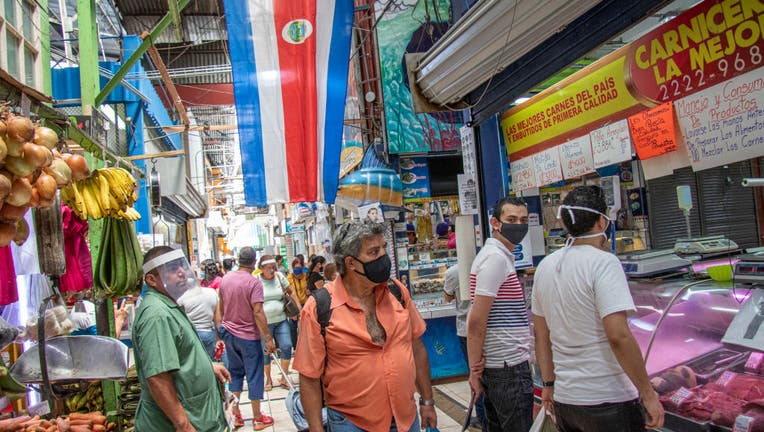
FILE - Shoppers buy at Mercado Central wearing face masks on July 16, 2020 in San Jose, Costa Rica. (Photo by Arnoldo Robert/Getty Images)

The Costa Rica Tourism Board has announced that it will begin allowing some U.S. citizens to visit, but only residents from six states will be allowed.

Beginning Sept. 1, only residents of New York, New Jersey, New Hampshire, Vermont, Maine and Connecticut may enter the country. 

RELATED: Experts say decline in new US COVID-19 cases is result of masks, insufficient testing

Costa Rica announced the loosening of its coronavirus restrictions on Aug. 19, and the nation’s tourism board gave an updated list of tourists from which countries can visit. 

According to the tourism board’s website, the list is reviewed periodically. 

Costa Rica had closed its borders on March 18 when its government said dozens of truckers from neighboring countries had tested positive for the novel coronavirus. 

The measures to stop the spread of COVID-19, including a policy of testing anyone at the border trying to enter the country, ultimately impacted trade in the region and heightened tensions with neighboring Nicaragua, according to reports from the Associated Press.

In response to a global economic disaster caused by global shutdowns aimed at stopping the spread of COVID-19, Costa Rica hopes to entice some American tourists to boost its economy. 

RELATED: 40% spike in known new child COVID-19 cases raises questions about school

The Central American nation recently opened its borders on Aug. 1 to a very select set of countries officials considered to be low risk, including residents from the European Union and Schengen Zone, the U.K., Canada, Uruguay, Japan, South Korea, Thailand, Singapore, China, Australia and New Zealand.

According to local reports, the country is also assessing infection rates in Colorado, Massachusetts and Pennsylvania, and will determine if residents from those states may enter the country.