

Ice Bucket Challenge returns to Arizona after former Cardinals player was diagnosed with ALS
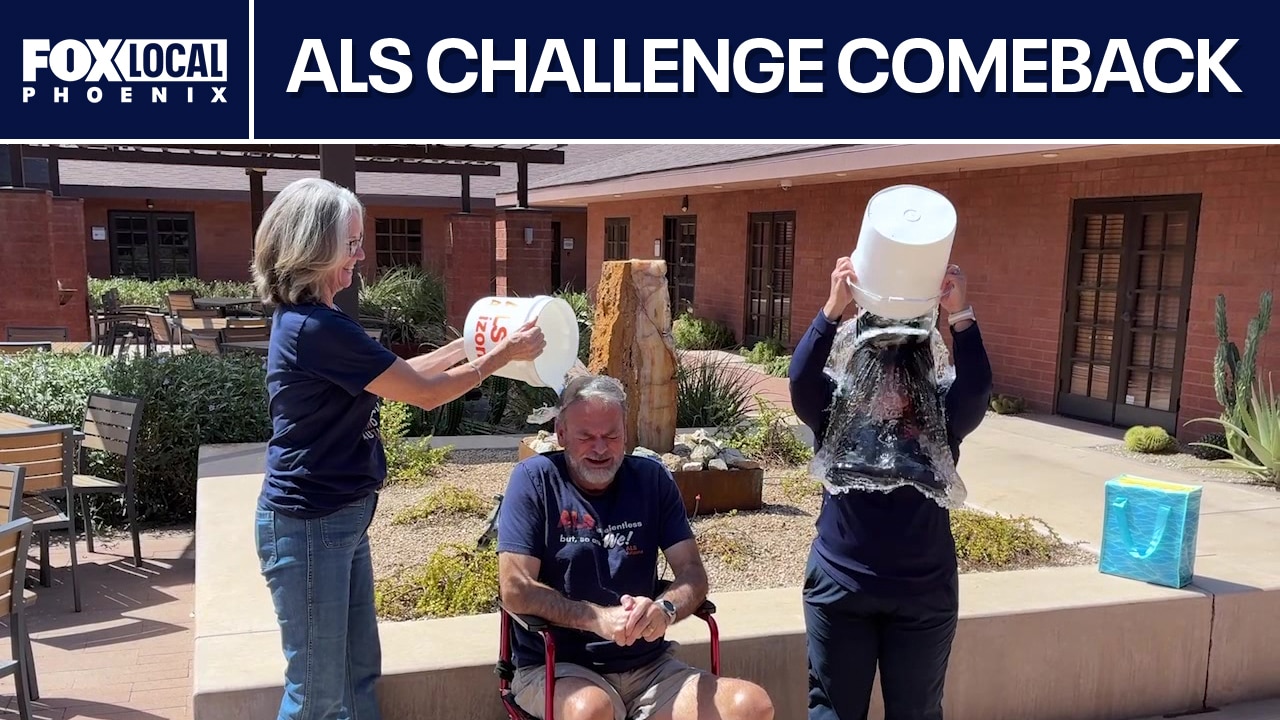
Fmr. Cards player inspires ALS challenge relaunch
Former Arizona Cardinals player Chris Johnson's ALS diagnosis inspired the return of the Ice Bucket Challenge that took social media by storm over a decade ago. FOX 10's Megan Spector reports.
PHOENIX - The viral sensation that flooded the internet over a decade ago is back.
What we know:
The ALS Ice Bucket Challenge is making a major comeback across the country and right here in Arizona. This time, NFL fans are leading the charge.
It's a familiar splash with a renewed purpose. The challenge is relaunching after former Arizona Cardinals player Chris Johnson revealed his diagnosis.
"There's a broader understanding of what ALS is," said Taryn Norley, ALS Arizona president and CEO. "Before we had to really tell people— this is ALS, you maybe know it as Lou Gehrig's disease."
The backstory:
The original challenge increased awareness of ALS, and raised $115 million for research.
However, the goal is still unfinished.
"Unfortunately, there is no cure right now," Norley said. "We are starting to see a lot more treatment options, and we have a lot of hope into what the research is doing."
What they're saying:
Currently, ALS is still a terminal disease, with an average life expectancy of two to five years.
"I remember that day very, very well, and I think most people that get diagnosed with ALS remember the day they found out," said Doug Clough, who was diagnosed with ALS in 2014.
Clough was diagnosed when the first challenge went viral, and he says that wave of support brought immediate hope.
"There was hope," Clough said. "Because now it’s getting attention. Now there’s money being raised for it. And different organizations were uniting."
Now, he's glad to see the fight continue.
"I still remember Chris Johnson playing for the Cardinals," Clough said. "And I’ll tell you what, it was so fun to watch him run through the line. I was a baseball player so to see what we did and how our bodies are being ravaged by this disease where I can’t walk. Other people can’t lift their arms or they can’t talk."
What's next:
For Clough, the return of the challenge renews that hope.
"Seeing what it did before, it may not have the same financial impact," Clough said. "It may have a greater financial impact. I don’t know. But what I do know is I see people doing it and I see people enjoying it because they’re doing something for some group of people that need it and because they did it 12 years ago."
The Source: Information in this report was gathered from Taryn Norley, ALS Arizona president and CEO, and Doug Clough.