

Surprise Police officer cleared in license plate reader system review
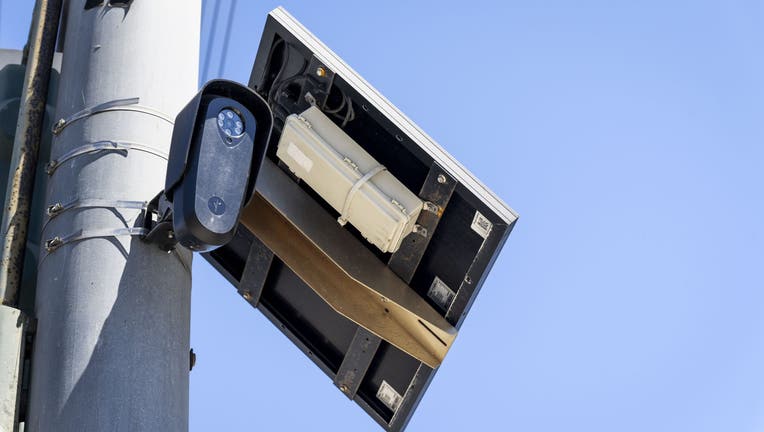
A Flock Safety camera on a traffic light post. (Photo by Paul Bersebach/MediaNews Group/Orange County Register via Getty Images)
SURPRISE, Ariz. - A Surprise Police officer who was accused of misusing Automated License Plate Reader (ALPR) technology has been cleared of any wrongdoing, the department announced on Aug. 26.
What we know:
On Aug. 12, the city of Surprise said it was suspending its ALPR technology after a routine audit "identified an anomaly in the use of the system."
"The City has launched an investigation into a potential violation of its ALPR policy, and a Surprise Police officer has been placed on administrative leave until the investigation can be completed," the city said previously.
Now, the unidentified officer involved has been cleared of any misuse.
"Consistent with established department protocols, a police officer was placed on administrative leave two weeks ago while this formal review was conducted. The completed investigation confirms that the officer’s use of the system was appropriate and was conducted for legitimate public safety purposes. The officer has been fully cleared and will return to full duty status this week," the police department said.
The anomaly ended up being technical, not a policy violation.
"Specifically, the abnormality was caused by accessing the ALPR system through a web browser bookmark, making it appear that the officer was repeatedly searching for the same vehicle rather than simply accessing the system through a bookmark," the department explained.
What they're saying:
"Public trust is earned through our everyday interactions and how we respond when our actions are under review. When we found an anomaly in our audit, we immediately let the community know about it," said Surprise Police Chief Evan Becher. "I am thankful to report that there was no evidence of misuse. I appreciate the officer’s professionalism throughout the investigative process, as well as his commitment to serving our city. For more than two years, our employees entrusted with sensitive information from the ALPR system have consistently demonstrated the integrity, judgment and professionalism our community expects of them."
On Aug. 13, the city let Flock Safety know it was canceling its ALPR contract and requested the cameras be deactivated and removed.
"The Surprise Police Department has also suspended access to all ALPR networks," the department said. "The City understands the importance of using technology to achieve public safety objectives. Moving forward, the City plans to assess the needs of the police department and evaluate various public safety technologies based on that assessment, which may include ALPRs."
Surprise Police say they began using ALPRs over two years ago – using 28 cameras around the city.
Dig deeper:
Surprise isn't the only city dealing with the fallout of using Flock cameras. On Aug. 26, Tempe announced it had turned off its ALPRs and is ending its Flock contract as well – the city clarifies that it did not find misuse.
The Apache Junction Police Department says officer Joshua McDaniel misused the technology to track down his wife. He resigned from his job.
Chandler Police launched an investigation into misuse, leading officer Maurisio Miranda to resign and the city to end its Flock contract.
Town leaders in Cave Creek removed all automated license plate readers, citing resident privacy concerns and the theft of a camera at Carefree Highway.
The other side:
The Buckeye Police Department is sharing how it's remaining transparent amid the scrutiny of ALPRs.
"The Buckeye Police Department is committed to providing public safety service the community expects and deserves. In our efforts to uphold the highest standards, the department strives to have the right tools, training and technology to safely resolve emergencies and investigate crime," the department said.
The technology has been in the city since 2022, and it uses 77 cameras.
"The specific technology used by the Buckeye Police Department captures a photo of the back of a passing vehicle and compares the license plate number to active law enforcement alerts. ALPRs have effectively helped Buckeye police locate missing and vulnerable people, wanted persons and stolen vehicles. Investigators have also used the technology to develop leads in a variety of cases resulting in suspect arrests and justice for crime victims," police said.