

Outdoor play could reduce negative impacts from screen time in young children, study finds

What should kids be doing instead of screen time?
The World Health Organization recommends parents cap their child's daily screen time at two hours.
NEW YORK - Studies have linked higher screen time in infancy to suboptimal neurodevelopment in children, including an increased risk of delayed language development, emotional problems, and poorer academic performance through preschool ages and childhood.
"This is alarming because the age of first use [of screen time] is becoming lower," authors of the Hamamatsu Birth Cohort Study for Mothers and Children, a recently released study, wrote.
Yet, this new study also suggests this risk could be mediated by an increase in outdoor play.
In the cohort study, published on Jan. 23 in Jama Network, more than 800 children born between Dec. 2007 and March 2012 were studied with multiple follow-ups between 1 year and 4 years of age. The analysis was conducted between April and June 2021.
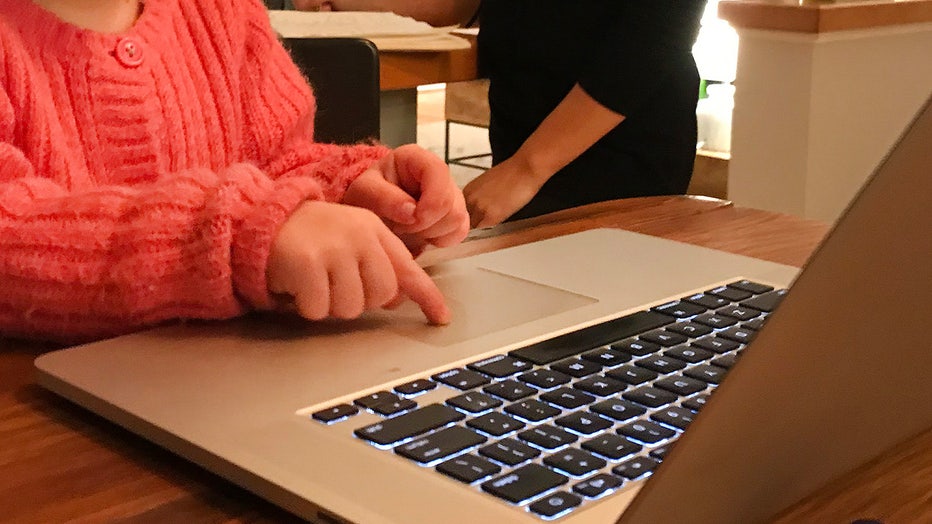
A three year old girl playing on her mothers Apple Mac Book Pro computer as her mother works with a notebook and pen in the background in their home in Madison, Connecticut, 4th December 2017. Photo by Tim Clayton/Corbis via Getty Images)
Screen time longer than one hour each day at 2 years old was coded as higher screen time, and outdoor play at age 2 years 8 months, six or seven days per week, was coded as frequent outdoor play.
Researchers in Japan and New York interviewed the parents of the participating children about their children’s lifestyles to measure screen time. Questions included, "During a normal week, how many hours a day does your child watch TV?" and "How many days during a normal week does your child go and stay outside for 30 minutes or longer to make him/her breathe hard?"
Researchers found that higher screen time, greater than 1 hour per day, at 2 years old was associated with both lower communication and daily living skills at age 4 years old. Yet, 18% of the association was mediated and alleviated by the frequency of outdoor play at 2 years and 8 months of age.
"Higher screen time at age 2 years was directly associated with poorer communication at age 4 years. It was also associated with daily living skills, but frequency of outdoor play at age 2 years 8 months alleviated it, suggesting outdoor play mitigated the association between higher screen time and suboptimal neurodevelopment," the study authors wrote.
RELATED: Diabetes likely to surge in US children and teens by 2060, study finds
Researchers say the findings suggest that outdoor play may mitigate the connection between higher screen time and later suboptimal neurodevelopment, implying the potential for intervention.
They say future research should specify the nature of the associations and intervention measures, enabling targeted interventions that reduce the potential risk of screen time.
"Further, updating guidelines regarding media use is extremely important for parents, educators, researchers, and the children themselves," the researchers continued.
They also note limitations including the use of parental reports to measure screen time, which may have resulted in underestimation.
AAP guidelines on screentime for children, infants
Screen time refers to the amount of time spent watching or using screen devices, such as televisions, video game systems, tablets and smartphones.
The American Academy of Pediatrics (AAP) recommends that babies younger than 18 months get no screen time at all. The exception to this rule is video chatting with grandparents or other family members or friends, which is considered quality time interacting with others.
The AAP says toddlers 18 months to 24 months old can start to enjoy some screen time with a parent or caregivers, explaining that children this age can learn when an adult is there to reinforce lessons.

How to limit babies' exposure to toxic heavy metals
Some popular baby foods have higher levels of toxic heavy metals than others. Charlotte Brody, the national director of Healthy Babies Bright Futures, discusses how parents can limit their children's exposure.
By age 2, AAP says it’s okay for kids to watch up to 1 hour a day of high-quality educational programming.
AAP also notes the importance of scheduling plenty of non-screen time into your child's day.
RELATED: FDA proposes new limits for lead in processed baby foods
"Playtime is important for learning and building creativity," the AAP said. "Schedule lots of time for hands-on learning and interacting with caregivers and friends. Also, encourage your child to be physically active every day."
AAP continued, "Most of a baby's brain development happens in the first 2 years of life. That's why it's so important for babies and toddlers to explore their environment and experience many sights, sounds, tastes, and textures. Interacting and playing with others helps children learn about the world around them."
Yet, some critics claim that much of the research backing up the guidelines is correlational, cross-sectional or based upon self-reporting and not all research effectively differentiates between different types of screen time.
This story was reported from Los Angeles.