

People use emojis to mask their negative feelings, study suggests
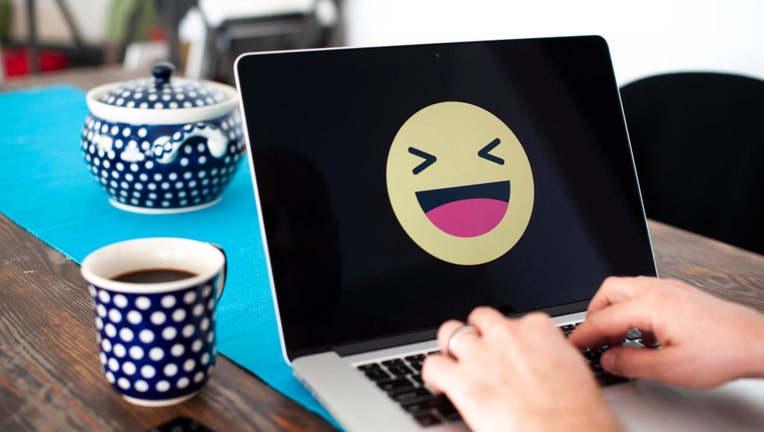
FILE - A laptop with a laughing emoji face displayed is seen in this photo illustration on Oct. 15, 2018. (Photo by Jaap Arriens/NurPhoto via Getty Images)
In day-to-day life, people often mask their negative emotions in an effort to keep the peace. One example of this could be offering a polite smile when someone receives an unwanted gift.
On the flip side, people getting married often feel they should show extreme happiness or tears of joy at the altar to convey their contentment of tying the knot.
In psychology, the term for these social norms is "display rules," which differ by culture and determine how, when, and where to express – or not express – certain emotions.
Although display rules can help promote friendship and good-will between people, they can also have negative consequences for the person choosing to hide or change how they express their emotions, according to researchers behind a new study.
With more social interactions occurring over text message and online, these display rules are also evolving. Researchers at the University of Tokyo began investigating whether there are display rules that apply to emoji, and how these might affect a person’s well-being.
Their study, published last week in the journal Frontiers in Psychology, suggests people use positive emojis to both express positive feelings and mask the more negative ones.
"As online socializing becomes more prevalent, people have become accustomed to embellishing their expressions and scrutinizing the appropriateness of their communication," study author Moyu Liu with the University of Tokyo said in a statement. "However, I realized that this may lead us to lose touch with our authentic emotions."

Does dark chocolate make us happy?
A recent study suggests that eating chocolate, especially dark chocolate, is linked to lower odds of depressive symptoms.
People sometimes use smiling emojis to mask negative feelings
The study included 1,289 participants who use Simeji, the most-downloaded emoji keyboard in Japan, and how they used emojis to either express or mask their feelings.
The participants gave demographic data, answered questions about their subjective well-being, and rated how often they use emojis. They were also given messages with different social contexts, responded to them as they normally would, and then rated the intensity of the expression of their emotions.
Liu’s team found that people frequently choose to express more emotions with emojis when speaking with close friends, and participants expressed the least emotion towards "higher-status individuals."
Intense expressions of emotion came with matching emojis, the researchers found – unless people felt the need to mask their true emotions. For example, people sometimes used smiling emojis to mask their negative feelings.
The team found that negative emojis generally only used when the negative feelings were very strong, according to the study.
Expressing emotions with emojis was also associated with higher subjective well-being, compared to those who masked their emotions.
"With online socializing becoming ever more prevalent, it is important to consider whether it is causing us to become more detached from our true emotions," Liu said. "Do people require a ‘shelter’ to express their genuine emotions, and is it possible to break free from pretense and share our true selves in online settings?"
Liu noted some limitations of the study, including how the Simeji keyboard is extremely popular among young women – and the participants skewed more toward females and Gen Z.
The researchers said a broader pool of participants would provide a fuller picture of the display rules around emojis.
"First, the highly gender-imbalanced sample may have led to stronger results," Liu cautioned. "Future research should explore potential gender differences in emoji display rules and examine the structural issues surrounding the formation of these emotion cultures."
Liu also noted how Japanese culture, specifically, has more of an emphasis on "interpersonal harmony and concealment of negative emotions," which may have also influenced the results.
"I would welcome the opportunity to expand this study and investigate the display rules for emojis across different genders and cultures," Liu added. "Collaboration with scholars from diverse cultural backgrounds would be invaluable in this endeavor, and I am open to any contact."
This story was reported from Cincinnati.