

Thin Blue Warning: How Arizona law enforcement can use warning shots despite Shannon's Law

'Huge liability': Debate over law enforcement agencies allowing warning shots in AZ
Warning shots remain an active policy in a handful of Arizona law enforcement departments. Most of the 40+ agencies surveyed prohibit the practice, citing safety. FOX 10 Investigator Justin Lum has more on why these departments can bypass Shannon's Law.
PHOENIX - Arizona law enforcement agencies have the option to fire warning shots, but it’s a rare and controversial tactic.
Until November, the Sedona Police Department allowed the practice under specific circumstances. But policing experts argue that firing a gun into the air to deter a threat conflicts with state law.
What they're saying:
In the responses from more than 40 law enforcement agencies, a majority gave a resounding "no" on a questionable tactic. We discovered some departments allow warning shots — raising serious concerns about legality, accountability and public safety.
We can confirm that the Sedona Police Department’s policy no longer allows officers to use warning shots. Ex-Deputy Chief Ryan Kwitkin says it’s about time.
"It's unsafe to fire warning shots. This isn't the Wild West," Kwitkin said.
Kwitkin is the plaintiff in an ongoing lawsuit against the city. Kwitkin is suing the city of Sedona and some of its top officials, including the police chief. The city has denied the allegations and cannot comment on pending litigation.
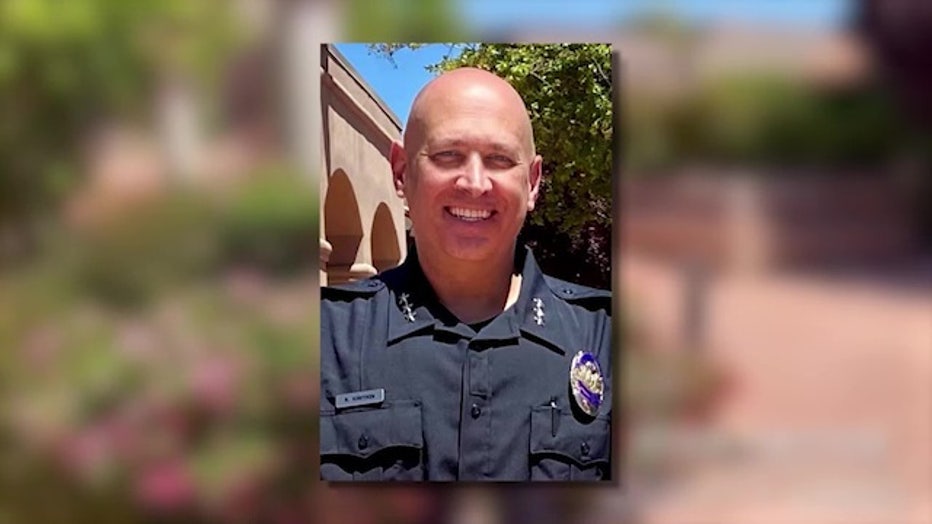
Former Sedona Deputy Police Chief Ryan Kwitkin
Kwitkin was fired in August 2024, months after being placed on paid administrative leave.
His attorney claims his termination was unlawful and that Kwitkin faced retaliation from Chief Stephanie Foley for raising policy concerns — like the ability to fire warning shots.
"I went to Chief Foley and explained that under no circumstance should we allow warning shots," Kwitkin said.
When asked what the chief's response was, Kwitkin said: "That we're not changing the policy. That it's only under certain circumstances."
When the Sedona Police Department was asked if there have been any documented incidents involving warning shots since 2020, records show none were fired in the last five years.
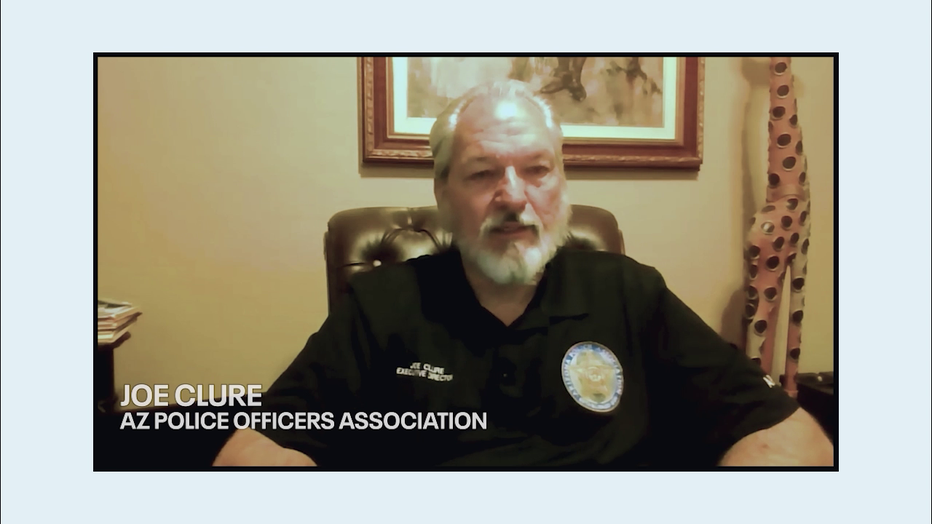
Joe Clure, executive director for the Arizona Police Officers Association
"Why would they leave it in their policy for so long until just recently?" we asked Joe Clure, executive director for the Arizona Police Officers Association. "Frankly it's clear they have some leadership challenges at the Sedona Police Department."
Clure has publicly questioned the Sedona PD’s leadership and the previous warning shot policy.
Here’s what Sedona’s policy used to say: "Warning shots or shots fired for the purpose of summoning aid are discouraged and may not be discharged unless the member reasonably believes that they appear necessary, effective, and reasonably safe."
FOX 10 obtained the modified policy, which says, "Firing a firearm in a manner commonly referred to as a ‘warning shot’ is expressly prohibited in all circumstances."
"But a lot of the concerns that I brought up were for the best interests of the citizens of Sedona, the police department, and just moving the department into the 21st century of best police practices," Kwitkin said.
Clure said, "I think by anybody's standard risk management should be screaming about that because it is a huge liability, I believe, and very dangerous for the community to have that even as a possibility."
Dig deeper:
FOX 10 Investigates reached out to dozens of law enforcement agencies across Arizona to ask if their policies allow warning shots.
We received more than 40 responses from major agencies like Phoenix, Scottsdale and Tempe, along with the Maricopa County Sheriff’s Office. Nearly all of them said warning shots are prohibited.
Here are some of the reasons:
Mesa PD’s policy says: "… they may prompt a suspect to return fire and may endanger innocent bystanders."
Pinal County Sheriff’s Office replied by saying: "Like firing a deadly weapon as a warning? That is not allowed."
Flagstaff PD’s policy says: "Warning shots are rarely effective and pose a danger to the officer and the community if used in lieu of deadly force on a suspect."
Forty out of 44 agencies that responded say no to warning shots. That’s 90%.
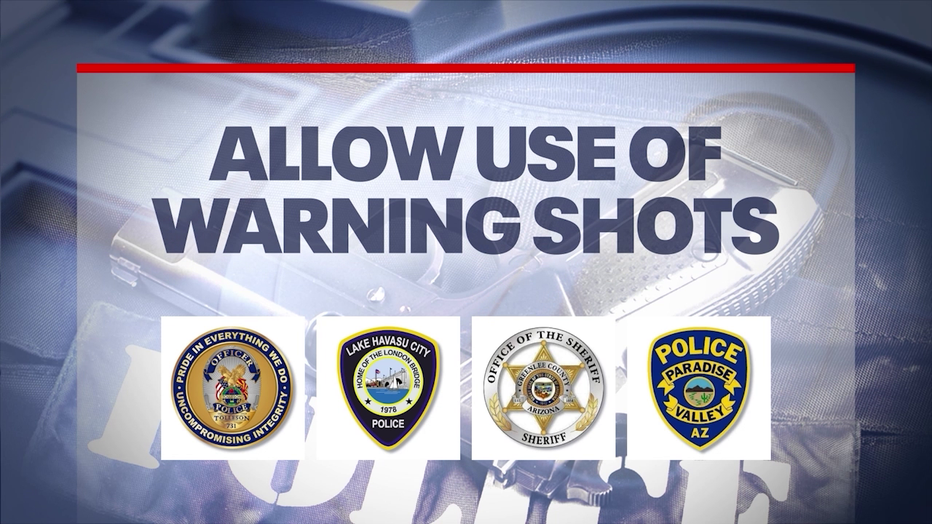
The four agencies on the opposite end:
- Tolleson Police say warning shots are "generally" discouraged unless the officer believes it’s necessary, effective and safe.
- Lake Havasu City PD and the Greenlee County Sheriff’s Office have the same language in their policies.
- Paradise Valley PD says, "Officers will not generally, fire warning shots" — but use-of-force decisions are discretionary and must be "objectively reasonable" based on the circumstances.
Big picture view:
"We created a law for just that reason, to prevent those types of rounds being fired so that they don't to prevent them from inadvertently striking another innocent person," Clure said.
The law is called Shannon’s Law. It is named after 14-year-old Shannon Smith, who was in the backyard of her Phoenix home when she was killed by a stray bullet in June 1999.
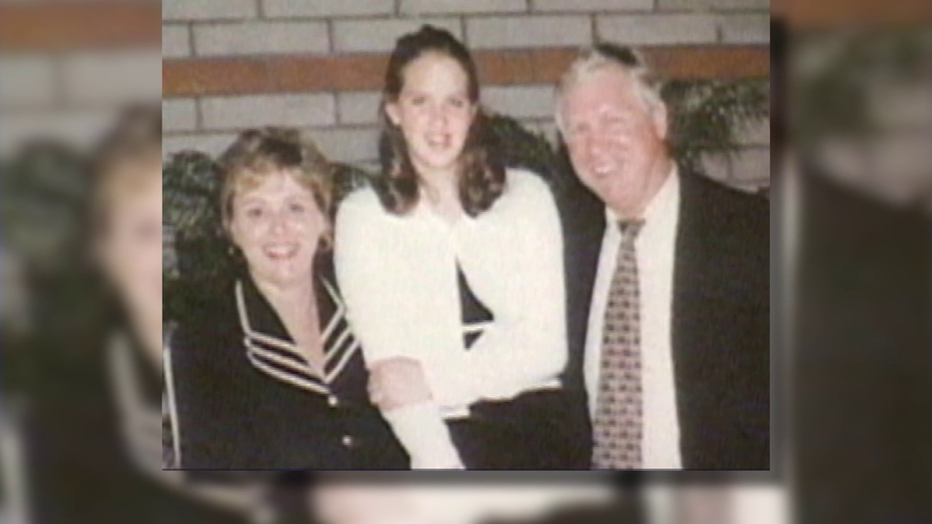
Center: Shannon Smith
"When we met with the police, they told us that this is something that goes on all the time. That this is something we have to live with. We said 'oh no, this is something that the community does not have to live with.' Something that can be stopped," said Lory Smith, Shannon's mother, in a 2007 news report.
In 2000, Shannon’s parents worked hard to pass Shannon’s Law, making it a Class 6 felony to negligently fire a gun into the air within the limits of any Arizona municipality.
But the statute lists some exceptions, like a special permit of the chief of police of the municipality.
Benjamin Taylor, attorney at Taylor & Gomez Law
"What they have is what you call governmental immunity. So, a lot of times a law enforcement officer can be immune or exempt from Shannon's Law if they're using it in a reasonable manner. That's where they can fire in the air. And Shannon's Law wouldn't apply to law," said Benjamin Taylor, attorney at Taylor & Gomez Law.
But the risk, he says, is obvious. For law enforcement agencies, the approach to policy is "to each their own."
"A simple fix and solution would be to change your policy. Don't train your officers in the academy that they're allowed to shoot a warning shot," Taylor said.
AZPOST is the state’s Peace Officers Standards and Training Board. Its executive director tells FOX 10 that AZPOST doesn’t have the authority to direct internal policies of law enforcement agencies on warning shots.
Clure says it’s common sense for chiefs and sheriffs to ban it for good.
"Just because it's the police officer firing that round doesn't mean that that bullet's any less dangerous or any more apt to go strike an unintended victim," Clure said.
Policies are changing
The Round Valley Police Department is changing its policy after being asked if officers could fire warning shots. This department was recently investigated by the Department of Public Safety for misconduct issues.
Interim Chief Jeff Sharp said Round Valley’s original policy says it’s generally discouraged to fire warning shots unless deemed necessary and reasonably safe. But immediately following our questions about the policy, he amended it to say, "Warning shots are not authorized," which shows it’s up to the respective agency’s chief or sheriff to decide.
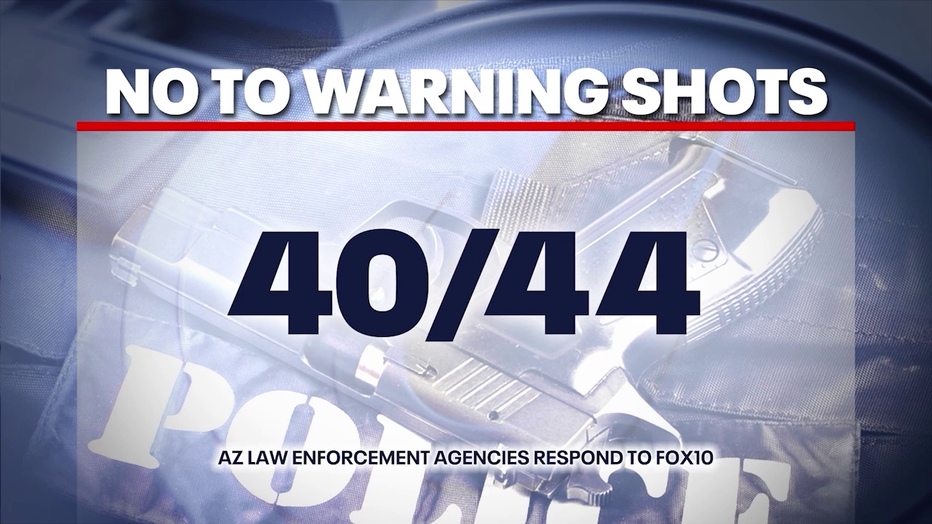
The list of departments that said they do not use warning shots:
- Peoria Police
- Goodyear Police
- Pinal County Sheriff's Office
- El Mirage Police
- Maricopa County Sheriff's Office
- Flagstaff Police
- Surprise Police
- Phoenix Police
- Apache Junction Police
- Mesa Police
- Chandler Police
- Gilbert Police
- Glendale Police
- Arizona State University Police
- Gila County Sheriff's Office
- Yuma Police
- Avondale Police
- Cottonwood Police
- Bullhead City Police
- Florence Police
- Mohave County Sheriff's Office
- St. Johns Police
- Quartzsite Police
- Prescott Police
- Holbrook Police
- Welton Police
- South Tucson Police
- Oro Valley Police
- Yuma County Sheriff's Office
- Navajo County Sheriff's Office
- Round Valley Police
- Clarkdale Police
- Thatcher Police
- Sierra Vista Police
- Marana Police
- Show Low Police
- Wickenburg Police
- Page Police
- Tucson Police
- Tempe Police