

2026 Election: Arizona Prop 144 explained: What to know about new voter ID rules, election administration
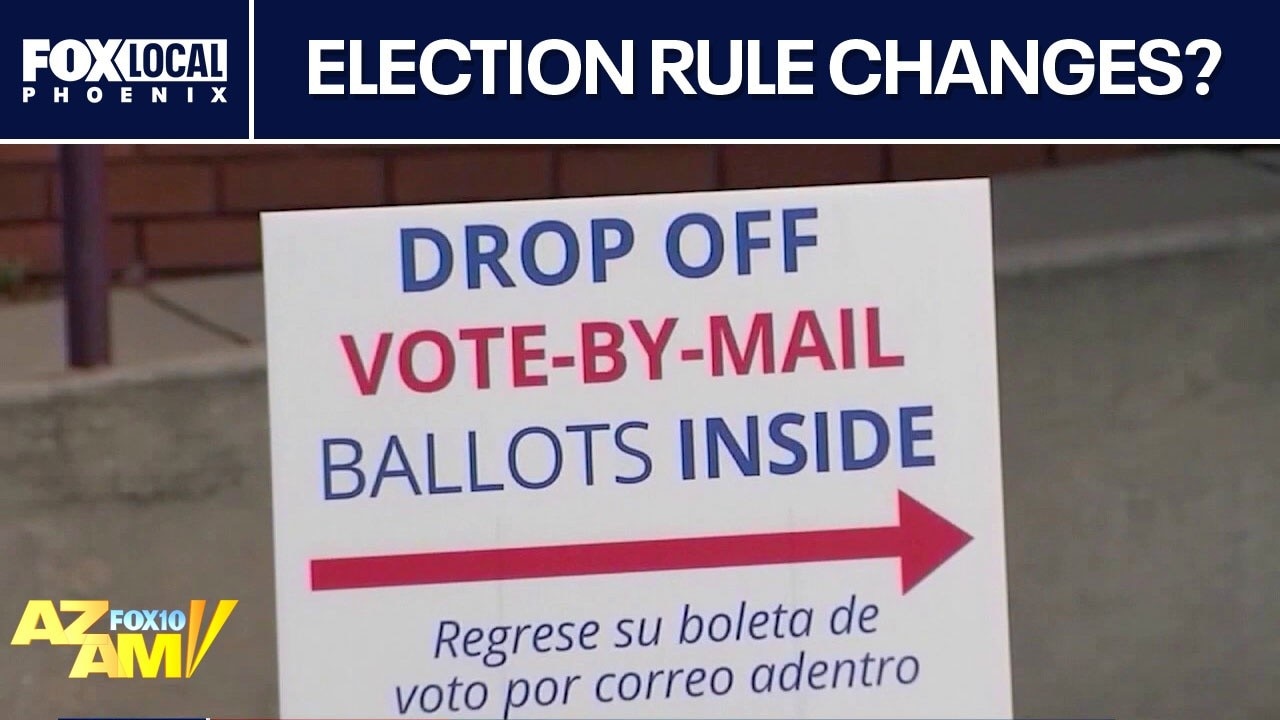
Prop 144 proposes major changes to election, voter ID rules
Proposition 144 would require voters to present government-issued identification for all voting methods, including mail-in ballots.
PHOENIX - Arizona voters will decide on a constitutional amendment this November that proposes sweeping updates to state election laws, including stricter voter identification requirements, bans on foreign campaign contributions, and new rules for ballot counting.
What is Prop 144?:
The measure, appearing on the ballot as Proposition 144, is known as the "Fast Accurate Secure Transparent Election Results Act" or the "Fast Election Results Act." If passed by voters, it would add Section 19 to Article VII of the Arizona Constitution.
Key provisions of the proposed constitutional amendment include:
- Voter eligibility: Reaffirms that only United States citizens who meet constitutional and legal qualifications may register and vote in Arizona elections, specifying that elections will be decided solely by eligible citizen voters.
- Foreign contributions: Prohibits foreign nationals from donating or spending money—or anything of value—to influence Arizona elections. It also makes it illegal for anyone to knowingly accept these contributions.
- Voter identification: Requires every voter to present valid government-issued proof of identity before casting a ballot in any election, whether voting in person or by any other method.
- Election Day tabulation: Mandates that all voters be given the option to have their ballots tabulated directly at their voting location on Election Day to reduce administrative delays and speed up results.
- Voting regulations: Authorizes the state legislature and the public to pass laws governing elections, including early voting and mail-in voting. These laws must be rationally connected to legitimate state interests, such as timely results, efficient administration, security, and public trust in election integrity.
The resolution notes that these changes would not alter federal laws governing the process for overseas military voters under the Uniformed and Overseas Citizens Absentee Voting Act (UOCAVA).
Timeline:
The measure was passed by the Arizona House of Representatives on Feb. 9, 2026, and by the Senate on June 12, 2026, before being filed with the Secretary of State's office on June 15, 2026.
Arguments for Prop 144:
Proponents of the measure argue that locking these standards into the state constitution will restore public trust, streamline ballot counting, and safeguard elections against foreign influence and voter fraud.
State Rep. Alexander Kolodin, a Phoenix Republican who sponsored the act and is running for Arizona Secretary of State, said the measure sets a clear standard for the state.
"Arizonans of every party agree on something simple: our elections should be secure, transparent, honest, and follow the law — and every eligible citizen's vote should count," Kolodin said. "I sponsored the FAST Act to write that common-sense standard directly into our Constitution, where politicians and bureaucrats can't water it down."
Supporters also emphasize that onsite tabulation on Election Day will prevent long delays in reporting election results.
Jan Mittelstaedt, a Phoenix voter, pointed to past elections as a reason to pass the measure, noting it gives voters the option for onsite tabulation to eliminate "the delays that dragged Maricopa County's count out for nearly two weeks in 2022."
Kristin Baumgartner, county chair for the Yavapai County Republican Committee in Prescott, rejected criticisms that requiring government-issued photo ID creates barriers for voters, comparing it to daily routines like boarding an airplane, buying alcohol, or opening a bank account.
"Secure elections expand trust and participation, not suppress it," Baumgartner said. "Strong safeguards protect the voices of legal voters—the very foundation of our Republic."
Longtime election worker Valerie Williamson of Peoria called the on-site tabulation provision a "game-changer" for workers and voters alike, while Phoenix resident Cynthia Ketcherside noted that "the longer counting drags on, the more room there is for doubt."
Click here to read more arguments for Prop 144.
Arguments against Prop 144:
Opponents, however, contend that the proposition creates unnecessary bureaucratic barriers that would disproportionately affect early and mail-in voters, as well as vulnerable populations.
Will Humble, executive director of the Arizona Public Health Association in Phoenix, argued that Arizona's existing vote-by-mail system is already secure through signature verification and cure processes.
"Proposition 144 replaces our current system (that works) with a bunch of bureaucratic red tape, especially for people who vote by mail," Humble said. "When voting becomes harder, people with the fewest resources often face the biggest obstacles to vote. That includes older adults, people with disabilities, rural residents, caregivers, and people working long hours."
Opponents also raised logistical concerns about how identity verification would work for mail-in voters. Isabel Caputi, deputy political development director at Lumen Strategies and an out-of-state college student, noted that requiring government-issued proof of identity for every ballot method lacks clear execution details.
"This would effectively and permanently disenfranchise voters like me who must vote by mail," Caputi said. "This amendment is excessively vague, with no clear details on how this would be enacted."
Christopher Gilfillan, political and development director at Lumen Strategies, added that early voting is widely used across the state and should not be restricted. "Voting by mail is such a luxury that Arizona should treasure, not limit," Gilfillan said, warning that the measure could "effectively silence the legitimate voices of students, veterans, workers, and the disabled."
Faith leaders also urged caution regarding embedding permanent voting restrictions into the state constitution. Solveig Muus, director of the Lutheran Advocacy Ministry in Arizona, emphasized that constitutional changes are difficult to undo if they cause unintended harm.
"Constitutional amendments are difficult to correct if they create unintended harm," Muus said. "In a time when many people already feel excluded from public life, our laws should invite eligible citizens into participation, not make them feel suspect."
Click here to read more arguments against Prop 144.
The Bottom Line:
A YES vote means: You want to change the Arizona Constitution to require government-issued ID for all voters (including mail-in voters), ban foreign money in state elections, give Election Day voters the option to tabulate their ballots onsite for faster results, and reaffirm that only U.S. citizens can vote in Arizona.
A NO vote means: You want to keep the state constitution as it is, maintaining the current election rules—including signature verification for mail-in ballots—without adding new ID rules for mail-in voting or constitutional mandates for onsite tabulation.
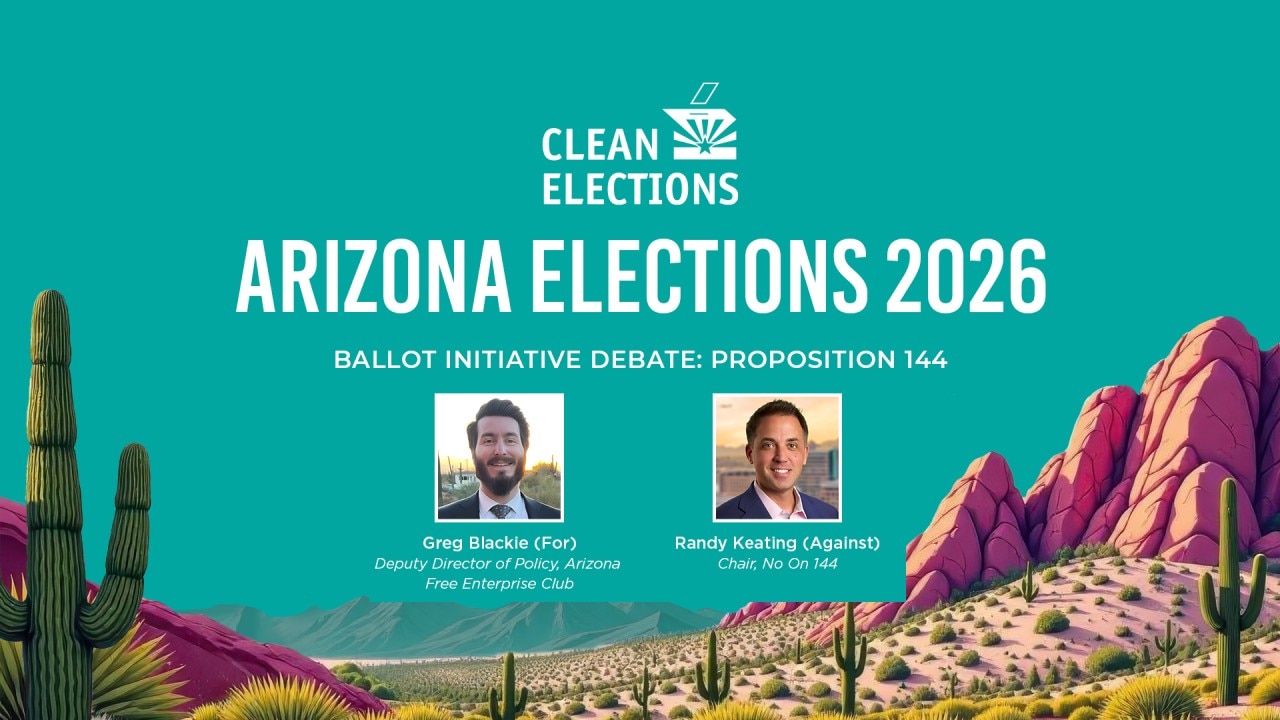
Prop 144 sparks debate over future of mail-in voting
A debate between Greg Blackie and Randy Keating on Oct. 1 addresses Proposition 144's impacts on mail-in voting, election security, and constitutional rules.
MORE: Prop 144 debate examines proposed voter ID mandates, Arizona mail-in voting
What's next:
If approved by voters, the amendment would take effect for all elections held on or after Jan. 1, 2028, with the state legislature required to appropriate any funds necessary to implement it. It also contains a severability clause, ensuring that if any single provision is ruled invalid, the remaining parts of the measure would stay in effect.
Important dates
The general election will be held Nov. 3.
Voters using mail-in ballots must request them by Oct. 23 and either mail them by Oct. 27 or deliver them to a drop-off location by 7 p.m. Nov. 3.
Polling places will be open from 6 a.m. to 7 p.m. on Election Day, and in-person voters must show valid identification.
The Source: Information in this report was gathered from the Arizona Secretary of State's website; State Rep. Alexander Kolodin, a Phoenix Republican who sponsored the act and is running for Arizona Secretary of State; Jan Mittelstaedt, a Phoenix voter; Kristin Baumgartner, county chair for the Yavapai County Republican Committee in Prescott; Valerie Williamson, a longtime election worker of Peoria; Cynthia Ketcherside, a Phoenix resident; Will Humble, executive director of the Arizona Public Health Association in Phoenix; Isabel Caputi, deputy political development director at Lumen Strategies and an out-of-state college student; Christopher Gilfillan, political and development director at Lumen Strategies; and Solveig Muus, director of the Lutheran Advocacy Ministry in Arizona.