

Bird flu latest: Another 1.8 million chickens to be killed on Nebraska farm
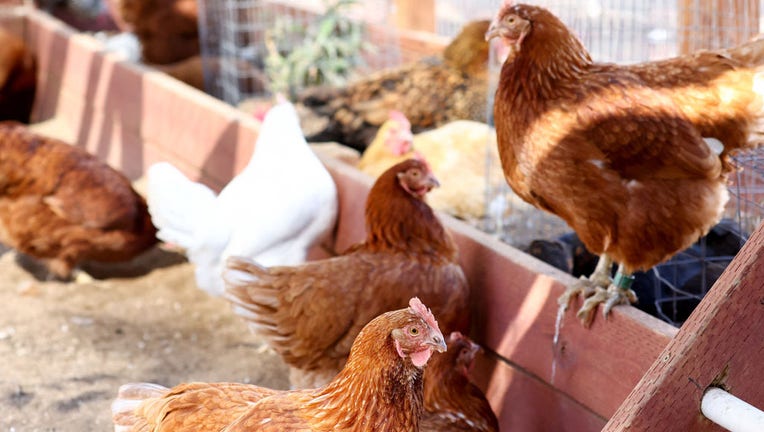
Rescued chickens gather in an aviary at Farm Sanctuary’s Southern California Sanctuary on October 5, 2022 in Acton, California. (Photo by Mario Tama/Getty Images)
OMAHA, Neb. (AP) - Nebraska agriculture officials say another 1.8 million chickens must be killed after bird flu was found on a farm in the latest sign that the outbreak that has already prompted the slaughter of more than 50 million birds nationwide continues to spread.
The Nebraska Department of Agriculture said Saturday that the state's 13th case of bird flu was found on an egg-laying farm in northeast Nebraska's Dixon County, about 120 miles (193 kilometers) north of Omaha, Nebraska.
Just like on other farms where bird flu has been found this year, all the chickens on the Nebraska farm will be killed to limit the spread of the disease. The U.S. Department of Agriculture says more than 52.3 million birds in 46 states — mostly chickens and turkeys on commercial farms — have been slaughtered as part of this year's outbreak.
Nebraska is second only to Iowa’s 15.5 million birds killed with 6.8 million birds now affected at 13 farms.
In most past bird flu outbreaks the virus largely died off during the summer, but this year's version found a way to linger and started to make a resurgence this fall with more than 6 million birds killed in September.
RELATED: Deadly bird flu returns to Midwest earlier than expected after lull
The virus is primarily spread by wild birds as they migrate across the country. Wild birds can often carry the disease without showing symptoms. The virus spreads through droppings or the nasal discharge of an infected bird, which can contaminate dust and soil.
Commercial farms have taken a number of steps to prevent the virus from infecting their flocks, including requiring workers to change clothes before entering barns and sanitizing trucks as they enter the farm, but the disease can be difficult to control. Zoos have also taken precautions and closed some exhibits to protect their birds.
Officials say there is little risk to human health from the virus because human cases are extremely rare and the infected birds aren't allowed to enter the nation's food supply. Plus, any viruses will be killed by properly cooking poultry to 165 degrees Fahrenheit.
But the bird flu outbreak has contributed to the rising prices of chicken and turkey along with the soaring cost of feed and fuel.