

FDA proposes ban on food additive found in some sodas, fruity sports drinks
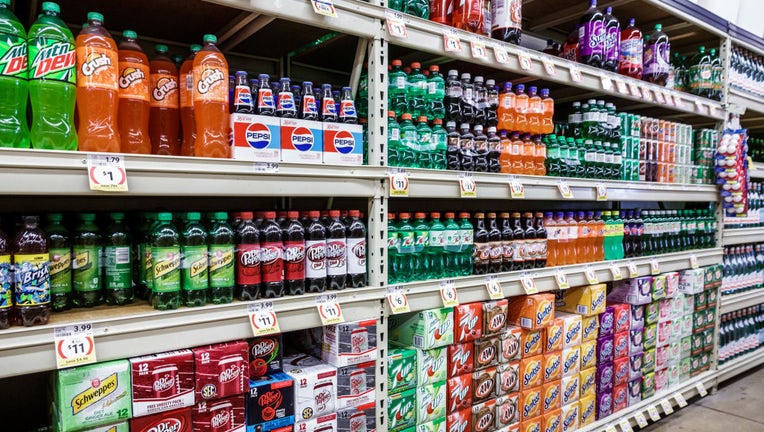
FILE - A stocked soda aisle is pictured in a file image. (Photo by: Jeffrey Greenberg/Education Images/Universal Images Group via Getty Images)
WASHINGTON - The U.S. Food and Drug Administration is moving to ban the use of brominated vegetable oil (BVO), a food additive once more widely used in popular drinks like Mountain Dew and Powerade but has been slowly phased out amid potential health risks.
BVO is a food ingredient used to keep citrus flavorings from separating and floating to the top of the beverage, according to the FDA. At one point, it was found in a wide range of drinks sold in the U.S., but health problems related to the ingredient prompted public pressure for brands – including Coca-Cola and PepsiCo – to start removing it from their products.
RELATED: Peeps maker to remove cancer-linked red dye No. 3 from popular Easter candy
The food ingredient has been linked to several health hazards, including potential harm to the thyroid, liver, and heart. On Thursday, the FDA said it concluded that BVO in food is no longer safe after studies in rodents linked the ingredient with harm to the thyroid, a vital hormone gland that plays a major role in the metabolism, growth and development of the human body.
Other research has linked BVO to neurological and reproductive issues, as well as headaches, irritation of the skin and mucous membranes, fatigue and loss of muscle coordination and memory, according to the Environmental Working Group, a consumer health advocacy nonprofit.
"Based on these data and remaining unresolved safety questions, the FDA can no longer conclude that the use of BVO in food is safe," the FDA said in a statement.

Popular nasal decongestants are ineffective, FDA says
The leading decongestant used by millions of Americans is ineffective, according to an FDA advisory panel. LiveNOW's Carel Lajara spoke with Dr. Peter Chin-Hong about the newly released research. More LiveNOW from FOX streaming video
BVO has been banned from drinks sold in Europe and Japan for years. In October, California passed the first law in the U.S. to ban the ingredient, in addition to three other harmful chemicals, from food sold and produced in the state.
"The FDA has known for decades that brominated vegetable oil is harmful to human health," Scott Faber, the Environmental Working Group’s senior vice president for government affairs, said in a statement. "While we’ve waited for federal action on this toxic chemical, states – like California – and some major beverage companies have stepped up to remove BVO from their products and get it off grocery store shelves."
Faber noted how BVO can still be found on the market, including "so-called off-brand products" that are sometimes sold regionally.
"Today’s announcement will ensure everyone has access to products that don’t contain BVO," Faber added.
BVO was originally considered "generally recognized as safe" by the FDA, but that designation was removed in 1970. The agency later allowed it to be used "on an interim basis" in limited quantities.
The FDA noted how many beverage makers have reformulated their products to replace BVO with an alternative ingredient over the years and that few beverages in the U.S. still contain it today.
"Consumers who wish to avoid products that contain brominated vegetable oil may do so by looking for it by name in the ingredients list," the FDA said. "Reassessing the safety of food ingredients as new, relevant data become available, is a priority for the FDA and a key part of our food safety mission."
Public comments about the FDA’s proposed rule can be submitted by Jan. 17, 2024.
This story was reported from Cincinnati.