

Can coronavirus spread from mail or packages? No, health experts say

World Health Organization discusses coronavirus myths
In addition to whether the virus can spread from mail or packages, the WHO notes if certain remedies or treatments are effective in preventing infection.
LOS ANGELES - The outbreak of the novel coronavirus has prompted travel restrictions, cancellations of major events, and broader guidelines for maintaining health and safety. It has also caused many to wonder how the virus itself can spread, and if it’s safe to touch mail or receive packages from areas that may be affected by COVID-19.
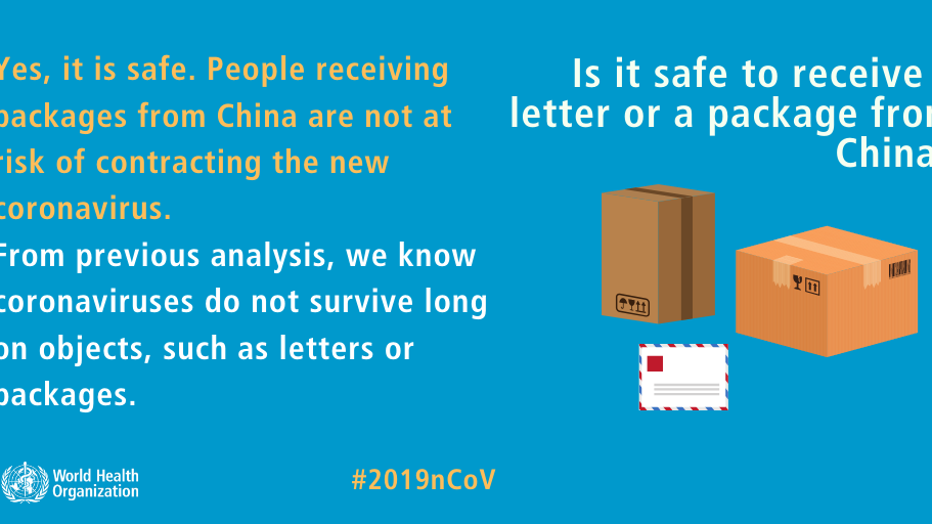
The World Health Organization (WHO), however, notes that is safe to receive packages from places that have been affected by the virus, such as China.
On their website, the WHO states that “people receiving packages from China are not at risk of contracting the new coronavirus. From previous analysis, we know coronaviruses do not survive long on objects, such as letters or packages.”
The WHO also breaks down other myths regarding COVID-19, such as whether hand dryers are effective in killing it and stopping its spread, or if UV disinfection lamps can be used to kill the virus. According to the WHO:
- Are hand dryers effective in killing the virus? No.
-Can ultraviolet disinfection lamps kill the virus? They should not be used and can cause skin irritation.
-Are thermal scanners effective in detecting the virus? They can help to determine if someone has a fever because of infection, but not determining if people who are not sick yet have the virus.
-Does spraying chlorine/alcohol over one’s body kill the virus? No.
-Can pets spread the virus? There is no evidence that companion pets can be infected with or spread the virus.
-Do pneumonia vaccines protect against the virus? No.
-*Are antibiotics effective in preventing/treating the virus? No.
-Does rubbing one’s nose with saline protect against the virus? No.
-Does eating garlic help prevent infection? No.
-Does putting on sesame oil block the virus? No.
-Are older or younger people more or less susceptible to the virus? People of all ages are susceptible, although older individuals and those with preexisting medical conditions may be “more vulnerable to becoming severely ill.”
-Are there medications to prevent/treat the virus? As of yet, there is no specific medicine to prevent or treat the coronavirus, although individuals who are or at risk of being infected can receive treatment to alleviate symptoms.
This story was reported from Los Angeles.