

COVID-era testing method could help identify obesity, asthma, other health conditions
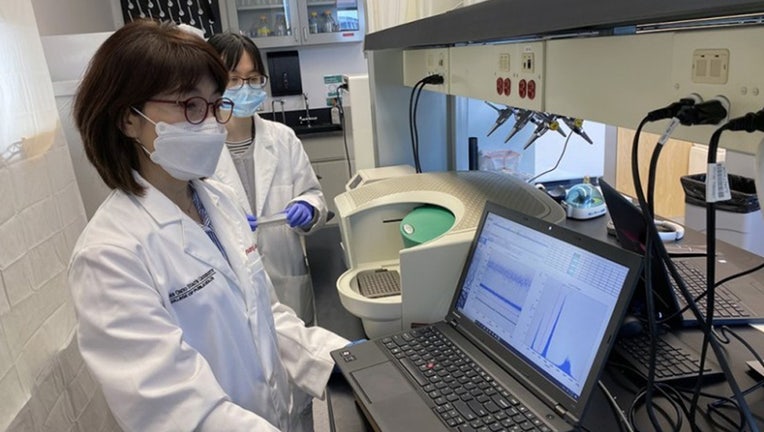
Ohio State researcher Jiyoung Lee examines wastewater samples in her lab. (The Ohio State University)
Health researchers are taking a lesson from the COVID-19 pandemic and showing how it can be used to track chronic disease and health behaviors, as well as demographic and socioeconomic conditions.
Big picture view:
A new Ohio State University study shows how wastewater monitoring, which came to the fore during the pandemic as a way to track the spread of coronavirus, can be used more broadly to identify patterns affecting a community.
The study’s authors believe it could identify populations facing potential health problems more quickly, giving health officials and political leaders a chance to direct resources there even sooner.
What they're saying:
"During the pandemic, the world learned how to use wastewater to track infectious disease. We asked, what else can it tell us?" said Emma Lancaster, the study’s lead author and a former doctoral student in Ohio State’s College of Public Health.
RELATED: Rare yellow burbot stuns biologists in NY harbor: 'One-in-a-million catch'
The backstory:
Lancaster explained that she was inspired by the use of wastewater monitoring during the pandemic and wanted to know how much more she could track. For the study, her team took 27 samples from nine treatment plants that serve 1.3 million people across eight communities that are in both rural and urban areas.
"Wastewater offers a unique way to understand the health of whole communities, not just the people who show up in clinics," said Jiyoung Lee, professor and chair of environmental health sciences at Ohio State and the study’s senior author.
The results
Each of the cities studied had its own bacterial profiles, the study found, adding that the big difference was in the bacteria associated with an individual’s gut microbiome. The researchers associated some of the bacteria with the rates of conditions like obesity, high blood pressure, asthma, and other chronic conditions. They also identified links to smoking, depression, physical activity, and unemployment.
In general, the researchers determined rural areas had more of the bacteria, as well as more of the chronic health conditions.
What they're saying:
"In many cases, poor health outcomes are worse in rural areas and to see these distinct indicators of poorer gut microbiome health in these rural areas offers us clues to some of what is driving that," Lancaster said.
Dig deeper:
The study’s authors highlighted a specific bacterial group, Desulfovibrio, which they connected to eight health factors, including obesity, high blood pressure, and stroke.
The Source: Information for this article was taken from The Ohio State University. This story was reported from Orlando, Florida.