

Energy Department says advanced nuclear reactor achieves first criticality milestone
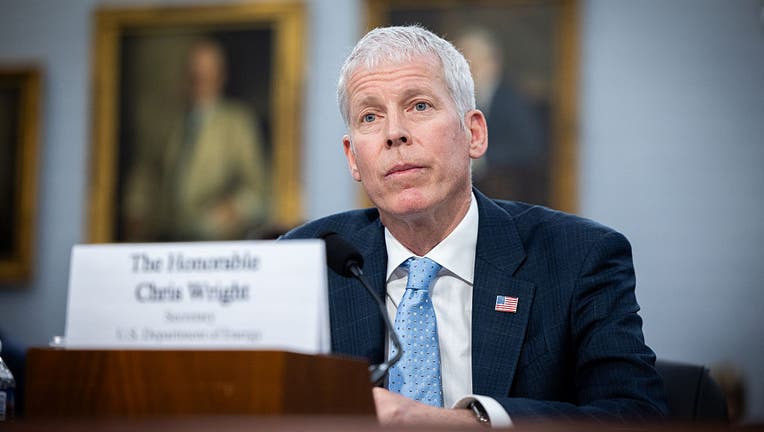
Secretary of Energy Chris Wright testifies during a budget hearing in front of the House Committee on Appropriations Subcommittee on Energy and Water Development and Related Agencies at the Rayburn House Office Building in Washington, DC, United Stat
The Energy Department says a small nuclear reactor being developed at a national laboratory has achieved a key milestone, paving the way for it to begin generating electricity within the next few years.
The microreactor being developed by Antares Nuclear Inc. at the Idaho National Lab reached "criticality" on Thursday, Energy Secretary Chris Wright said. The milestone occurs when a nuclear reactor achieves a self-sustaining chain reaction capable of producing a steady release of energy.
What they're saying:
Antares is the first private company to bring an advanced reactor to criticality under a pilot program begun last year by the Trump administration meant to supercharge nuclear energy production in the U.S. The demonstration was conducted in partnership with the Energy Department and other contractors with support from the U.S. Army.
"We are very excited by this news today," Wright said Friday on a call with reporters. "I think June 4th will be a historic day in the American nuclear renaissance."
Antares and its partners "have shown America can do bold things," Wright added. "America has great technology, great entrepreneurs that are ready to drive energy innovation to power our future, lower energy costs and make our country more powerful."
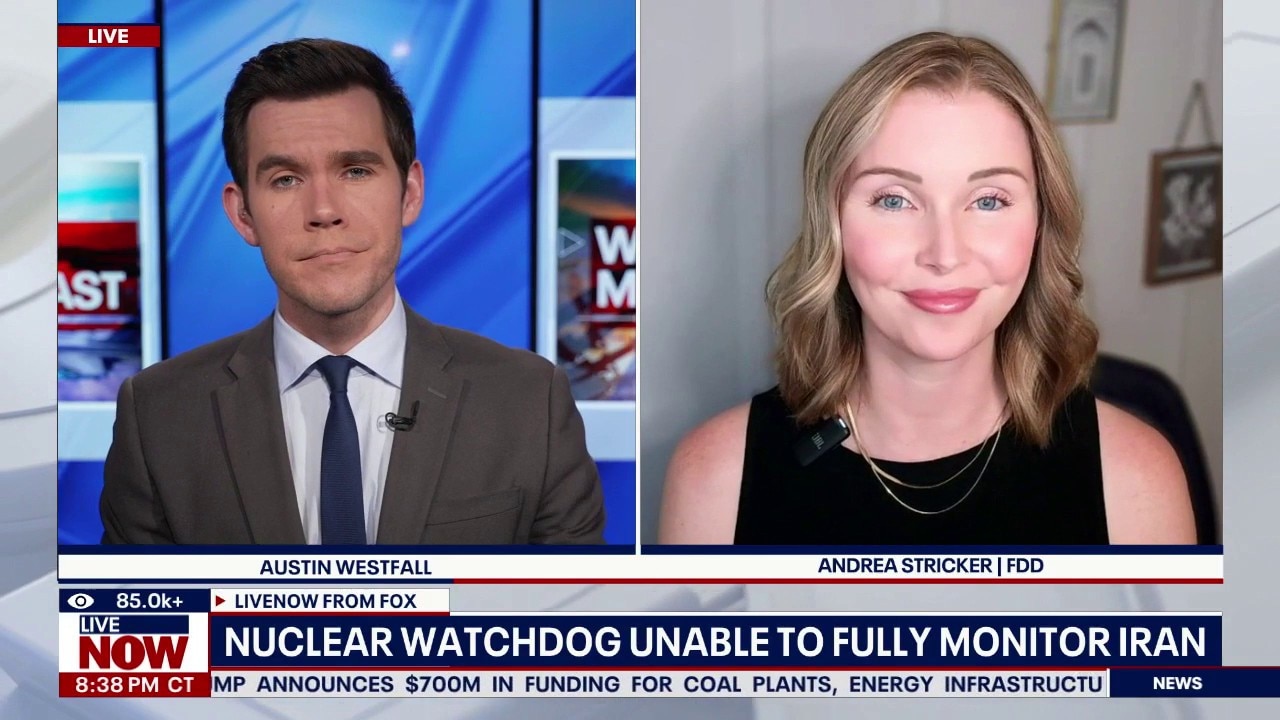
Nuclear watchdog unable to fully monitor Iran
Andrea Stricker with the Foundation for Defense of Democracies joins LiveNOW's Austin Westfall to discuss new reporting from the Associated Press on the UN's nuclear watchdog being unable to inspect nuclear facilities in Iran.
Big picture view:
The achievement shows that the Trump administration’s push to remove regulatory barriers is helping to advance new nuclear technologies, Wright said.
The backstory:
President Donald Trump signed executive orders in May 2025 intended to speed up the development of nuclear power, including steps that grant Wright authority to approve some advanced reactor designs and projects. Trump's orders limit some authority of the Nuclear Regulatory Commission, the independent safety agency that has regulated the U.S. nuclear industry for five decades.
The other side:
Skeptics warn that nuclear energy poses risks and say microreactors may not be safe or feasible and have not proved they can meet demand for a reasonable price.
While the Antares system is years away from commercial use, achieving criticality is a notable step. The California-based company, which is initially targeting military applications, said it expects to begin producing electricity by late 2027 and see its systems deployed in the field by the end of 2028, CEO Jordan Bramble said Friday.
"Nuclear in America has been defined for too long by delays, by companies that said they would and then didn’t," Bramble said in a written statement.
At a briefing on Friday, Bramble said achieving criticality "is the first step on a roadmap toward producing electricity ahead of deploying this technology for customer sites."
"Microreactors are a technology that’s here today," he added. "2026 is the year where microreactors are becoming real. We’re months to years out from being able to start deploying this technology to military installations."

Energy costs push inflation higher as war continues
LiveNOW’s Austin Westfall is speaking with economist Dr. Mike Walden as new data shows that energy costs, including gasoline, increased last month, as did the cost of food at a rate not seen since last December. This comes as inflation had been dropping more or less steadily before conflict in the Middle East began. Reports show that consumer prices were up 3.8% last month compared to April 2025.
What's next:
The Trump administration has set a goal of achieving the criticality milestone in at least three test reactors by July 4 — the nation's 250th anniversary.
Officials have selected 11 advanced reactor projects, including Antares, to move their technologies toward deployment.
In February, the Pentagon and the Energy Department for the first time airlifted a small nuclear reactor from California to Utah, demonstrating what they say is the country's potential to quickly deploy nuclear power for military and civilian use. The nearly 700-mile flight transported a 5-megawatt microreactor manufactured by Valar Atomics in southern California to Hill Air Force Base in Utah.
The reactor — which did not have nuclear fuel — eventually will be able to generate up to 5 megawatts of electricity, enough to power 5,000 homes, said Isaiah Taylor, CEO of Valar Atomics. The company hopes to start selling power on a test basis next year and become fully commercial in 2028, he said.
Edwin Lyman, director of nuclear power safety at the Union of Concerned Scientists, said the transport flight, which attracted significant news coverage, was little more than a publicity stunt.
He offered a similar response to the claims by Antares and Wright.
"This stunt is a rudimentary first step that has absolutely no bearing on whether the Antares reactor will be safe or commercially viable," Lyman said in an email Friday.
The Energy Department's statement that the test "confirms that the reactor can operate safely" is false, Lyman said, adding that more testing of the reactor is needed.
The administration has not resolved how nuclear waste will be disposed, although Wright has said the Energy Department is in talks with Utah and other states to host sites that could reprocess fuel or handle permanent disposal. States including Tennessee, Nebraska and Idaho have expressed interest in handling nuclear waste.
The Source: The Associated Press contributed to this report. The story is based primarily on statements from Energy Secretary Chris Wright and Antares Nuclear CEO Jordan Bramble, who discussed the reactor's achievement of criticality during a briefing with reporters and in written comments. This story was reported from Los Angeles.