

Hair relaxers may affect women's fertility, study suggests
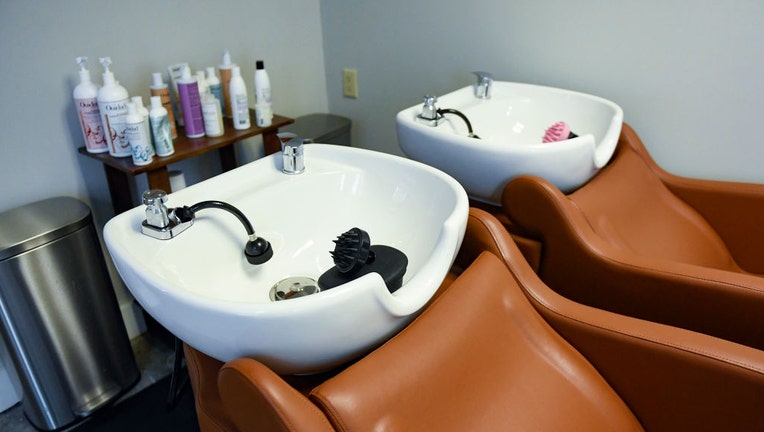
FILE - The hair-washing sinks at a salon in West Reading, Pennsylvania, on June 22, 2021. (Photo by Ben Hasty/MediaNews Group/Reading Eagle via Getty Images)
BOSTON - The use of hair straighteners or "relaxers" may affect a woman's ability to become pregnant, according to a new study – building on a growing body of research linking reproductive health issues with exposure to toxic chemicals in beauty products.
The team behind the new study, published this week in the American Journal of Epidemiology, said it also underscores the racial disparities in exposure to toxic chemicals in beauty products and health problems that may occur as a result.
Chemical hair straighteners are treatments applied to "relax" the curls, breaking the protein bonds in hair. The study found that use of these treatments was linked to a slight reduction in one’s ability to conceive.
Current and former use of hair relaxers, greater frequency and duration of use, as well as sustained scalp burns from the products, were all associated with lower chances of becoming pregnant, the researchers found.
The study involved nearly 11,300 participants of the Pregnancy Study Online (PRESTO), an ongoing study since 2013 that enrolls individuals in the U.S. and Canada who are planning to get pregnant and is funded by the National Institutes of Health.
The participants provided information on several aspects of hair relaxer use from 2014 to 2022.
Participants who reported having used relaxers were more likely to be older, have less education and annual income, a higher body mass index, to smoke, be unmarried and be residents of the Southern United States, compared to those who never used hair relaxer. They were also more likely to take longer to get pregnant, according to the study.
Former and current use of hair relaxers was the highest among Black participants, followed by Hispanic participants, the researchers said. More than half of Black participants reported using their first relaxer before age 10, compared with 1% to 17% among other racial and ethnic groups.
Participants who used hair relaxers for at least 10 years, or at least five times per year, had the lowest fertility rates, according to the research. However, the study results did not show clear dose-response patterns.

Author shares story of battling infertility
Bailey Henry, 32, spoke with FOX Television Stations about her journey with multiple miscarriages and how the trauma led to her "life's work."
Phthalates, phenols, and parabens are a few of the chemicals in relaxers that may contribute to reduced fertility, the researchers said. They cautioned that the full set of ingredients is rarely included on product labels and more research is needed to better understand the specific mechanisms by which relaxers may impact fertility.
The study authors also noted how societal pressure to conform to Eurocentric beauty norms and racial discrimination, such as restrictions on Afrocentric hairstyles in the workplace and schools, contribute to disproportionate use of these toxic beauty products by individuals of color.
"Our work underscores the importance of expanding research on the reproductive health effects of beauty product use to promote environmental justice and increase health equity," study lead author Lauren Wise, a professor of epidemiology at Boston University’s School of Public Health, said in a statement.
A separate study from the NIH, published last fall, found that women who use chemical hair straightening products may also have a higher risk of developing uterine cancer, compared to women who didn’t use them.
The study, which included data from nearly 33,500 U.S. women between the ages of 35 and 74, found no such link for other hair products, including hair dyes, bleach, highlights, or perms. But those who reported using hair straightening products more than four times in the previous year were found to be more than twice as likely to go on to develop uterine cancer, the study found.
RELATED: Most women can't spot signs of aggressive form of breast cancer — here's what to know
This story was reported from Cincinnati.