Flood Watch
from SAT 11:00 PM MST until MON 5:00 AM MST, North Phoenix/Glendale, Aguila Valley, Mazatzal Mountains, Tonopah Desert, Gila Bend, San Carlos, East Valley, Northwest Pinal County, Northwest Valley, Southeast Valley/Queen Creek, Globe/Miami, Deer Valley, Fountain Hills/East Mesa, Apache Junction/Gold Canyon, Buckeye/Avondale, Tonto Basin, Rio Verde/Salt River, South Mountain/Ahwatukee, Dripping Springs, Southeast Gila County, Pinal/Superstition Mountains, Scottsdale/Paradise Valley, New River Mesa, Sonoran Desert Natl Monument, West Pinal County, Superior, Cave Creek/New River, Central Phoenix, Northwest Plateau, Eastern Cochise County below 5000 ft including Douglas/Wilcox, Upper Gila River and Aravaipa Valleys including Clifton/Safford, Southeast Pinal County including Kearny/Mammoth/Oracle, Western Pima County including Ajo/Organ Pipe Cactus National Monument, Dragoon/Mule/Huachuca and Santa Rita Mountains including Bisbee/Canelo Hills/Madera Canyon, Tucson Metro Area including Tucson/Green Valley/Marana/Vail, Tohono O'odham Nation including Sells, Baboquivari Mountains including Kitt Peak, Upper San Pedro River Valley including Sierra Vista/Benson, Chiricahua Mountains including Chiricahua National Monument, Galiuro and Pinaleno Mountains including Mount Graham, Santa Catalina and Rincon Mountains including Mount Lemmon/Summerhaven, White Mountains of Graham and Greenlee Counties including Hannagan Meadow, South Central Pinal County including Eloy/Picacho Peak State Park, Upper Santa Cruz River and Altar Valleys including Nogales, Yavapai County Mountains, Little Colorado River Valley in Navajo County, Western Mogollon Rim, Coconino Plateau, Yavapai County Valleys and Basins, Oak Creek and Sycamore Canyons, Grand Canyon Country, Little Colorado River Valley in Coconino County, Marble and Glen Canyons, Northern Gila County, White Mountains, Kaibab Plateau, Eastern Mogollon Rim, Little Colorado River Valley in Apache County

NASA's Voyager 1 to reach historic 16 billion-mile distance from Earth next month
Published October 30, 2026 12:19 PM MST

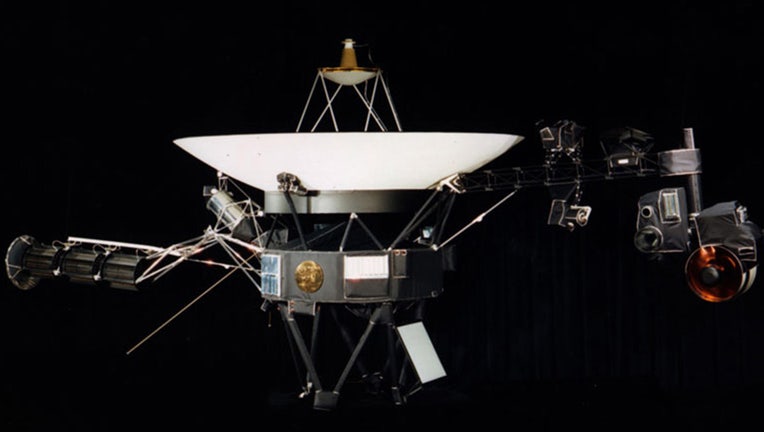
FILE - The Voyager spacecraft. (NASA/JPL-Caltech)

NASA’s Voyager 1 spacecraft has been traveling for nearly 50 years into deep space. 

In that time, it has accomplished historical feats and gathered invaluable data about our solar system.

But next month, it’ll mark yet another historic milestone as the spacecraft will reach approximately one light-day away from Earth – that’s about 16 billion miles away – the furthest any spacecraft has ever traveled. 

Where is Voyager 1 going? 

Dig deeper:

Voyager 1 is trekking across the cosmos and headed toward a star called AC +79 3888, also known as Gliese 445, according to NASA.

The spacecraft is expected to pass the star in about 40,000 years. 

Big picture view:

Voyager 1’s mission is to travel where no spacecraft has traveled before. 

It discovered active volcanoes on Jupiter’s moon Io and collected detailed information on Saturn’s rings, just to name a few of its accomplishments.

Voyager 2

Voyager 2 is Voyager 1’s twin. Though it was launched before 1, Voyager 2’s mission was to explore all four of the solar system’s largest planets and collect data on them. 

After making its way to Neptune, NASA extended the spacecraft’s mission to explore interstellar space and beyond, just like its twin. 

The Golden Record

The backstory:

Voyagers 1 and 2 carry a time capsule on board to potentially communicate with extraterrestrials, should they encounter them.

Known as the Golden Record, the messages on these 12-inch gold-plated copper disks contain sounds and images selected to portray life and culture on Earth. 

Each record is encased in an aluminum jacket, along with a cartridge and needle. Instructions in a symbolic language on how to play the record are also included. 

The Source: Information for this article was taken from NASA’s Voyager 1 and Voyager 2 mission websites. This story was reported from San Jose. 

Air and SpaceU.S.News