

Police clarify kratom warning after Ole Miss student deaths: What they're saying
What to know about kratom after Ole Miss student deaths
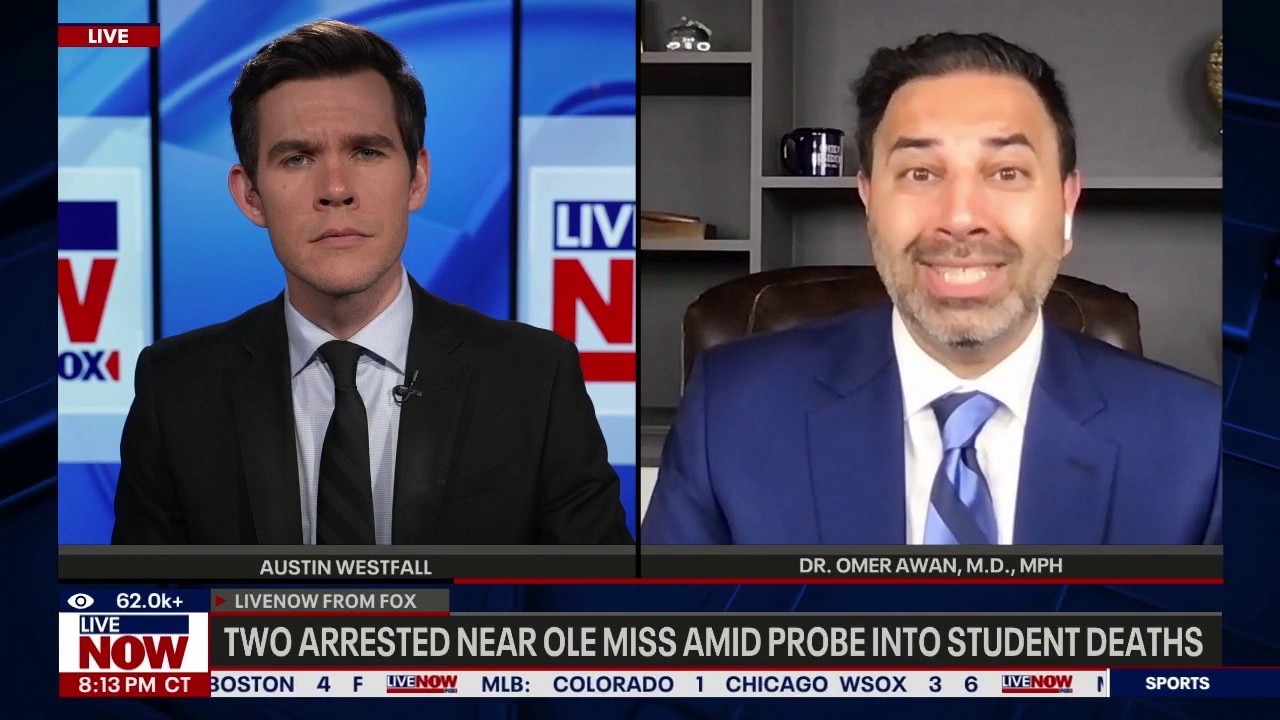
Physician Dr. Omer Awan joins LiveNOW's Austin Westfall to dive into what kratom is after the substance was found packaged near the bodies of two students at Ole Miss this week.
OXFORD, Miss. - Police investigating the deaths of two University of Mississippi students who were both found near packages of kratom products are clarifying their statements on the substance as the investigation continues.
In a news release from the county’s drug task force, investigators are calling on state lawmakers to ban synthetic opioid compounds, and to distinguish them from "traditional botanical kratom."
Student deaths prompt kratom warning
What we know:
Ole Miss students Aidan Hamilton, 18, and Robert Strang, 20, were both dead on Sept. 21, each found near similar packages of kratom or synthetic kratom. According to Fox News Digital, investigators said Hamilton "could have died due to a Pulmonary Edema," a finding consistent with a drug overdose. When first responders reached Strang's house near campus, he was found "cold to the touch."
Packaging found near both students had the brand Modus on it, according to court documents reviewed by Fox News Digital. The tablets are described as Smax Pseudo-DHM; pseudoindoxyl and MGM-15 (DHM) – two synthetic opioids recently banned by the Drug Enforcement Administration – were among the ingredients on the pack found near Hamilton.
In September, Hamilton made multiple purchases at Puffs Vape, Tobacco and Beer Store in Oxford. After the student deaths, investigators searched the store and said they found "more than 500 units of products believed to contain kratom-related substances, along with THC products and other suspected controlled substances."
Two store employees – Yahya Mohamed Mosleh, 51, and Islam Mohamed, 18 – were arrested and face a charge of possession of a controlled substance with intent to distribute, according to court documents.
RELATED: What to know about kratom after Ole Miss student deaths
Police have repeatedly said it’s still unknown whether the kratom-related products caused or contributed to the student deaths, but the county’s drug task force urged people to avoid taking kratom "out of an abundance of caution."
What they're saying:
"From the earliest stages of these two separate death investigations, investigators recognized the possibility that illegal or dangerous substances may have been involved," the task force said Wednesday.
"During the investigations, packaging associated with kratom-related products was discovered at both locations. This information prompted law enforcement to issue a public safety warning out of an abundance of caution. That warning was not a declaration that kratom or any specific substance caused either death. It was a proactive effort to inform the public of a potential danger while investigators worked to determine the facts."
What's next:
Investigators are still waiting for full toxicology reports to determine their cause of death.
"Until those results are received and evaluated, we will not speculate about what substances, if any, contributed to these deaths," the task force said.
Police say the investigation into the deaths of two University of Mississippi students has brought attention to the "important distinction between traditional botanical kratom and manufactured, concentrated or chemically altered kratom-related produc
What is kratom?
The backstory:
Dr. Omer Awan, a radiologist and senior public health contributor for Forbes, said kratom is a plant-based extract that can have varying effects depending on the dose: at low doses it can act as a stimulant, and at higher doses it can act as a sedative.
He said people take it for pain relief, to boost their mood and sometimes to treat opiate withdrawal because of its opioid-like effects.
The Food and Drug Administration has not approved kratom for any medical use and does not regulate kratom products that are sold in the U.S. The unregulated products are available at retail stores, gas stations and online. They come in powder form, liquid form, capsules, gummies, "all sorts of different forms," Awan said in an interview with LiveNow from FOX.
Proponents say that in its pure form, kratom is a safe, natural herbal supplement that can help manage pain, anxiety and depression and ease the effects of opioid withdrawal.
RELATED: Kratom poisonings spikes, what you need to know about the herbal drug
Doctors who treat addiction, however, say people can quickly become dependent on it, leading to withdrawal symptoms. A U.S. Food and Drug Administration webpage is blunt: Don’t use it.
The agency says it carries the risk of serious adverse effects, including liver toxicity, seizures and substance use disorder.
In rare cases, it’s been associated with deaths, though kratom was usually used in combination with other drugs in those cases, and the contribution of kratom in the deaths is unclear, the agency says on its website.
Kratom is legal at the federal level, but some state and local governments prohibit it.
Kratom vs. ‘chemically altered kratom-related products’
Dig deeper:
Although the FDA’s warning against kratom is broad, the drug task force said this week that the Ole Miss student deaths and subsequent kratom warning have "brought renewed attention to an important distinction between traditional botanical kratom and manufactured, concentrated or chemically altered kratom-related products."
They pointed to a recent action by the U.S. Drug Enforcement Administration that made three synthetic opioid compounds illegal: Mitragynine pseudoindoxyl (MGPI), MGM-15 (dihydro-7-hydroxymitragynine), and MGM-16 (9-fluoro-dihydro-7-hydroxymitragynine). They are minor compounds of kratom that are manufactured as "concentrated opioid products, not traditional botanical kratom."
"These developments raise important questions about how emerging synthetic substances are identified, regulated and prosecuted at the state level," the drug task force said.
"Families deserve answers. Communities deserve protection. Law enforcement deserves clear, enforceable laws that keep pace with emerging drug threats … We cannot afford to wait for another tragedy before addressing the dangers these substances pose to Mississippians."
The Source: This article includes information from the Lafayette County Metro Narcotics task force, Dr. Omar Awan, The Associated Press, Fox News Digital and previous FOX Local reporting.