

Trump wants Alaska's Denali to revert to 'Mt. McKinley': Name drama explained

Trump details day one executive orders
President Donald Trump delivered his inaugural address inside the Rotunda and detailed his first day in office executive orders.
During his inaugural address, President Donald Trump suggested he wants to revert the name of North America’s tallest mountain — Alaska’s Denali — to Mount McKinley, originally named after the 25th U.S. president, William McKinley.
"We will restore the name of a great president, William McKinley, to Mount McKinley, where it should be and where it belongs," Trump said Monday after swearing in at the U.S. Capitol.
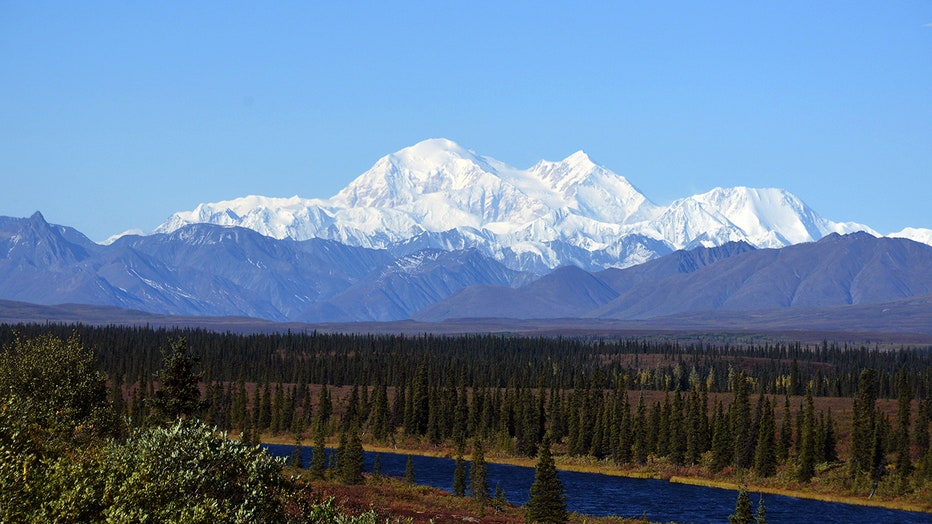
A view of Denali, formerly known as Mt. McKinley, on September 1, 2015 in Denali National Park, Alaska. According to the National Park Service, the summit elevation of Denali is 20,320 feet and is the highest mountain peak in North America. (Photo by
MORE: Watch live coverage of Trump's Inauguration Day
Here's a look at why Trump wants to make this change, and the decades-old conflict about what the peak should be called.
Why was Mount McKinley renamed Denali?
The backstory:
Former President Barack Obama changed the official name to Denali in 2015 to reflect the traditions of Alaska Natives as well as the preference of many Alaska residents. The federal government in recent years has endeavored to change place-names considered disrespectful to Native people. "Denali" is an Athabascan word meaning "the high one" or "the great one."
A prospector in 1896 dubbed the peak "Mount McKinley" after President William McKinley, who had never been to Alaska. That name was formally recognized by the U.S. government until Obama changed it over opposition from lawmakers in McKinley’s home state of Ohio.
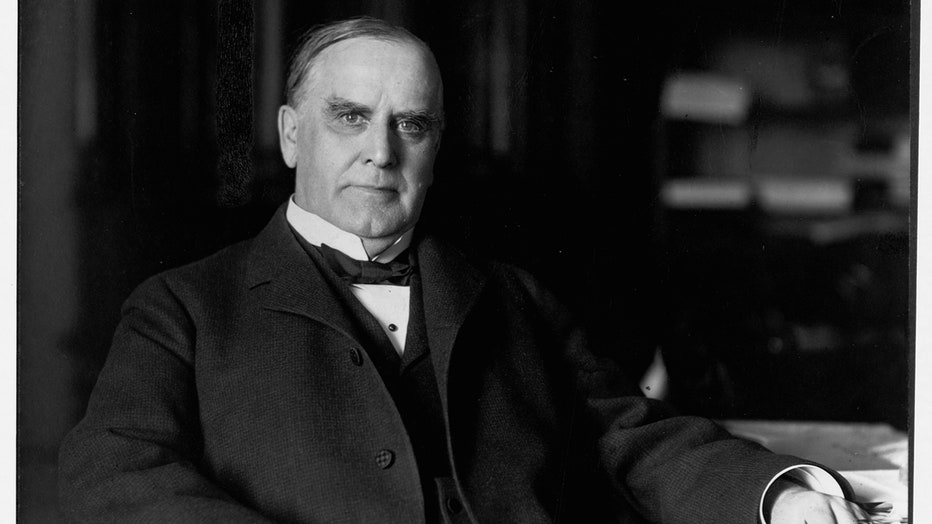
President William McKinley (Photo by Library of Congress/Corbis/VCG via Getty Images)
Alaska and Ohio have been at odds over the name since at least the 1970s. Alaska had a standing request to change the name since 1975, when the legislature passed a resolution and then-Gov. Jay Hammond appealed to the federal government.
Known for its majestic views, the mountain is dotted with glaciers and covered at the top with snow year-round, with powerful winds that make it difficult for the adventurous few who seek to climb it.
What they're saying:
Trump suggested in 2016 that he might undo Obama’s action, but he dropped that notion after Alaska’s senators objected. He raised it again during a rally in Phoenix on Sunday.
"McKinley was a very good, maybe a great president," Trump said in December. "They took his name off Mount McKinley, right? That’s what they do to people."
He revisited this topic in his inaugural address after suggesting that the Gulf of Mexico should be renamed the "Gulf of America."
"President McKinley made our country very rich through tariffs and through talent," Trump said. "He was a natural businessman and gave Teddy Roosevelt the money for many of the great things he did, including the Panama Canal, which has foolishly been given to the country of Panama."
The other side:
Trump’s suggestion drew quick opposition within Alaska.
"Uh. Nope. It’s Denali," Democratic state Sen. Scott Kawasaki posted on the social platform X Sunday night.
Republican Sen. Lisa Murkowski, who for years pushed for legislation to change the name to Denali, conveyed a similar sentiment in a post of her own.
"There is only one name worthy of North America’s tallest mountain: Denali — the Great One," Murkowski wrote on X.
Various tribes of Athabascan people have lived in the shadow of the 20,310-foot (6,190-meter) mountain for thousands of years.
Who was President William McKinley?
Dig deeper:
McKinley, a Republican native of Ohio who served as the 25th president, was assassinated early in his second term in 1901 in Buffalo, New York.
He was shaking hands with people passing through a receiving line when a man fired two shots into his chest at point-blank range. Doctors had expected McKinley to recover but gangrene then set in around the bullet wounds.
According to the McKinley Museum, he's known for "leading the nation to victory in the Spanish-American War and raising protective tariffs to promote American industry."
The Source: This article uses reporting from the Associated Press and McKinley Museum.