

Americans' average household incomes are higher than ever, Census data shows
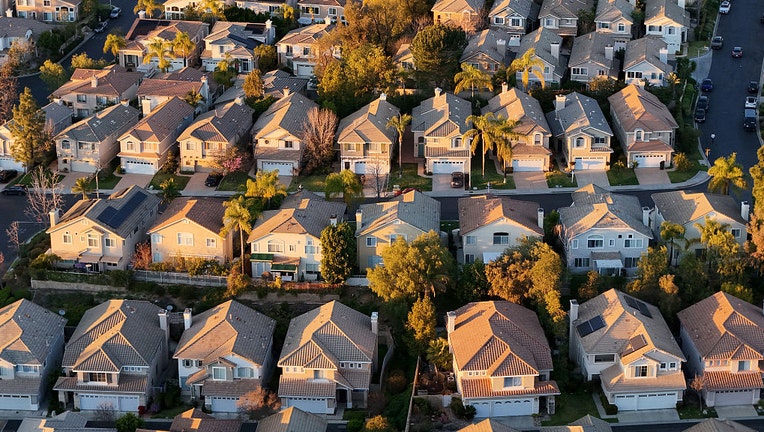
FILE-In an aerial view, two-story single family homes line the streets of neighborhood on January 13, 2026 in Thousand Oaks, California. (Photo by Kevin Carter/Getty Images)
The average household incomes in the United States hit a record high in 2025 based on recent Census Bureau data.
Americans' median household income was $87,460 in 2025, representing an increase of 2.6% from the 2024 estimate of $85,210. Household income last year was the highest on record dating back to 1967.
Americans' 2025 median household income by categories
Americans’ household incomes climb
By the numbers:
A Census report released Tuesday found that between 2024 and 2025, median income grew among different racial demographics, with White households’ income rising 3.0%, 2.9% for non-Hispanic White households, and 4.8% for Black households. However, median income did not change substantially for Asian or Hispanic households.
RELATED: US poverty rate hits record low as median household income reaches new high
Separately, the report also noted that earnings for Americans found that women’s median earnings grew 3.2% in 2025, while men’s earnings dipped slightly. For full-time, year-round workers, the female-to-male earnings ratio last year rose to 83.9% from 80.6% in 2024.
Furthermore, data assessed post-tax income, which the Census describes as money income net of federal and state taxes and credits, and payroll taxes (FICA). According to the Census report, median post-tax household income rose by 3.1% from $73,760 in 2024 to $76,060 in 2025.
U.S. sees declining poverty rate
Dig deeper:
Census data also showed that the official poverty rate dropped 0.5% points to 10.2% in 2025.
The report noted that the average poverty threshold for a family of four in 2025 was $32,970, which is defined by the Office of Management and Budget (OMB) data and updated for inflation using the Consumer Price Index.
Additionally, the official poverty rate for children dropped to a historic low of 13.4% in 2025. And between 2024 and 2025, the official poverty rate for Hispanic individuals dipped to a historic low of 13.9%.
Last year, the Supplemental Poverty Measure, which factors in taxes, government benefits, housing, work and medical expenses, was at 13.1%, almost 3 percentage points above the federal government's official poverty rate, according to the Census data.
Health insurance coverage in the U.S.
The other side:
The Census report reviewed the number of Americans covered under health insurance in 2025, with data showing 26.7 million people (7.9%) were uninsured for the last year, which wasn’t significantly different from 2024.
The number of individuals covered by public health insurance was 35.8% in 2025, not statistically different from 2024. While Medicare coverage increased by 0.6 percentage points, Medicaid coverage decreased by 0.5 percentage points.
Public health coverage for Americans between the ages of 19 to 64 declined in 2025 to 17.3%. This was fueled by a 0.6-percentage-point decrease in Medicaid coverage for adults 19 to 64 years old.
Last year, approximately 41.5% of adults 65 years and older held private coverage, down 2.8 percentage points from 2024.
The Source: Information for this story was provided by Census Bureau data analyzing income, poverty, and health insurance coverage in 2025. This story was reported from Washington, D.C.