

CDC issues travel advisories for 32 countries over spread of polio: What we know

Polio outbreak in Gaza: new vaccination campaign
A polio case was reported in Gaza for the first time in 25 years. A 10-month-old boy contracted the disease, and is now paralyzed in the leg. The U.N. health agency is launching a vaccination campaign on Sunday. The goal is to vaccinate 640,000 Palestinian children against polio. Dr. Peter Chin-Hong, infectious disease expert, joins LiveNOW from FOX to explain the dangers of the disease, and the importance of the vaccinations.
The U.S. Centers for Disease Control and Prevention has raised its polio travel advisory to a Level 2 for 32 countries where the disease is spreading.
That means Americans who plan to visit these countries should take extra precautions before their trips. Here’s the latest:
Countries with polio circulating
- Afghanistan
- Algeria
- Angola
- Benin
- Burkina Faso
- Cameroon
- Central African Republic
- Chad
- Côte d'Ivoire
- Democratic Republic of the Congo
- Djibouti
- Ethiopia
- Finland
- Gaza
- Germany
- Ghana
- Guinea
- Israel
- Niger
- Nigeria
- Pakistan
- Papua New Guinea
- Poland
- Senegal
- Somalia
- South Sudan
- Spain
- Sudan
- Tanzania
- United Kingdom
- Yemen
- Zimbabwe
Traveling to countries with polio
What you can do:
The CDC says before you travel internationally to any country, make sure you are up-to-date on your polio vaccines, which are given to children in four separate doses. If you are traveling to one of the countries with polio circulating and have been fully vaccinated for polio, you can receive a single, lifetime booster dose of polio vaccine before you go.
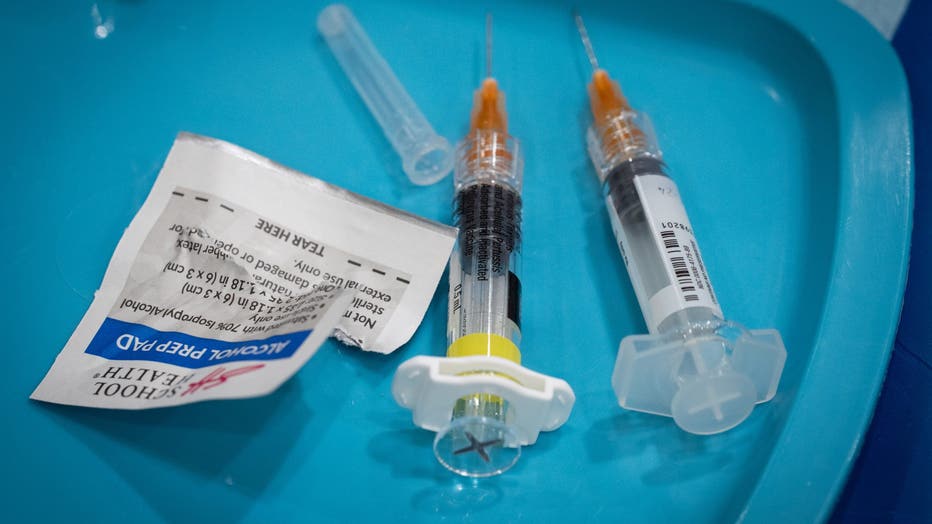
FILE: The CDC is warning travelers to take extra precautions against polio when traveling to any of the 32 countries on the polio list (Photo by Sarah L. Voisin/The Washington Post via Getty Images)
What is polio?
Big picture view:
Polio is an infection caused by a virus that mostly affects children under 5. Most people infected with polio don’t have any symptoms, but it can cause fever, headaches, vomiting and stiffness of the spine. In severe cases, polio can invade the nervous system and cause paralysis within hours, according to the WHO. The U.N. agency estimates that 1 in 200 polio cases results in permanent paralysis, usually of the legs. Among children who are paralyzed, up to 10% die when their breathing muscles are paralyzed.
RELATED: McConnell slams polio vaccine critics in apparent warning to RFK Jr.
The virus spreads from person to person, entering the body through the mouth. It is most often spread by contact with waste from an infected person or, less frequently, through contaminated water or food.
Polio has existed for centuries; ancient Egyptian hieroglyphics show children walking with canes, with the wasted limbs characteristic of polio victims.
Eradicating polio
The backstory:
Before the first vaccine was developed in the 1950s, polio was among the most feared diseases. An explosive 1916 outbreak in New York killed more than 2,000 people and the worst recorded U.S. outbreak in 1952 killed more than 3,000. Many people who survived polio suffered lifelong consequences, including paralysis and deformed limbs. Some people whose breathing muscles were paralyzed required "iron lung" chambers to help them breathe.
The World Health Organization passed a resolution to eradicate polio in 1988, spurred on by the success of eliminating smallpox eight years earlier. Their original target was to wipe out polio by 2000. It was considered eliminated in North and South America in 1994, according to the Mayo Clinic, though sporadic cases have popped up in the U.S. since then.
RELATED: US drops number of vaccines it recommends for every child: What to know
Polio cases have dropped by more than 99% in the years since the WHO resolution, but eradicating it completely is extraordinarily difficult. Stopping polio outbreaks means vaccinating at least 95% of the population everywhere, including in conflict-ridden countries and poor regions with broken health systems and other priorities.
In July 2022, an unvaccinated young adult from Rockland County, New York, contracted polio and became paralyzed, the first U.S. case in nearly a decade.
The U.S. Department of Health and Human Services still recommends that children are fully vaccinated against polio, despite decreasing the number of recommended vaccines for children in January.
The Source: This article includes information from the CDC, The Associated Press, the Mayo Clinic and previous FOX Local reporting.