

FAA grounds Blue Origin's New Glenn rocket after satellite placed in wrong orbit, resulting in lost payload
FAA grounds Blue Origin after satellite orbit failure
The Federal Aviation Administration is investigating a failed satellite deployment following a Blue Origin New Glenn launch from Florida’s Space Coast. While the rocket launched and landed successfully, the mission fell short of its primary objective, raising concerns across the commercial space industry.
ORLANDO, Fla. - The Federal Aviation Administration is investigating a failed satellite deployment following a Blue Origin New Glenn launch from Florida’s Space Coast.
While the rocket launched and landed successfully, the mission fell short of its primary objective, raising concerns across the commercial space industry.
What we know:
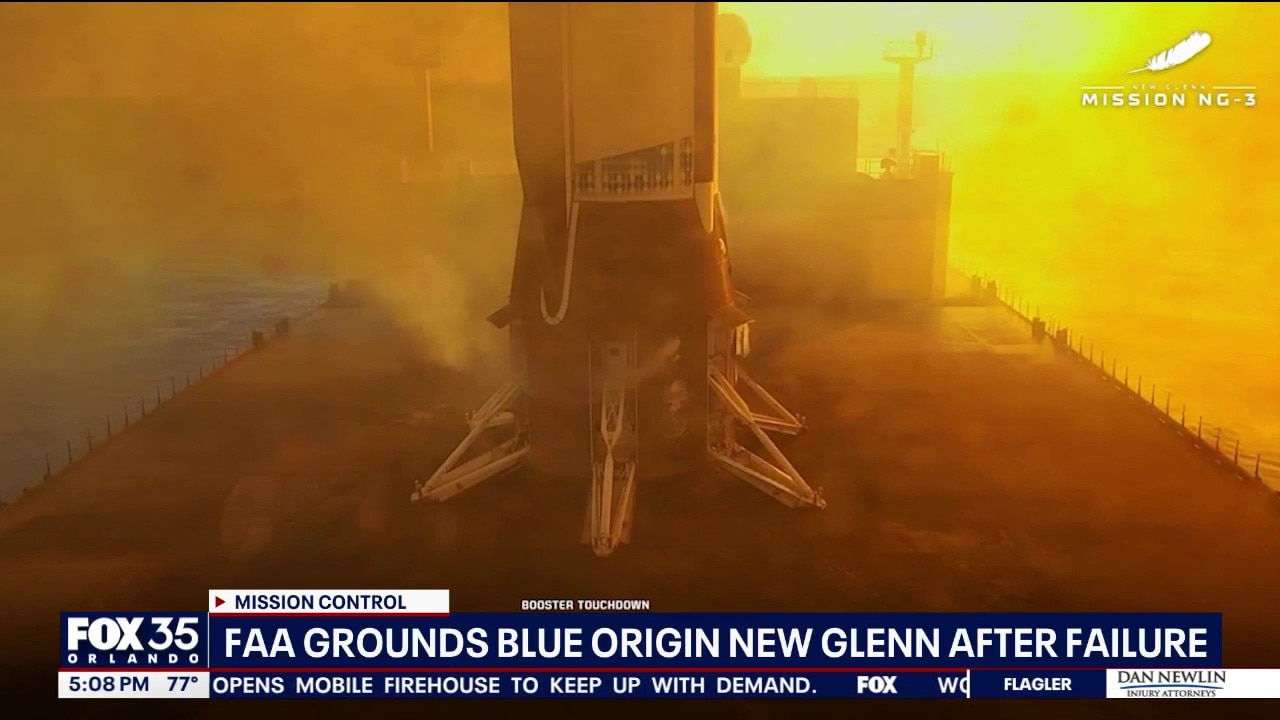
The New Glenn rocket lifted off on Sunday without major issues, and its first-stage booster successfully landed on a drone ship, marking a technical achievement for Blue Origin. However, the payload — a communications satellite built by AST SpaceMobile — was placed into the wrong orbit, making it unusable.
The satellite, known as BlueBird 7, was intended to support direct-to-cellphone broadband service. Instead, it was deployed into a much lower orbit than planned, leaving it without enough propulsion to reach operational altitude. The satellite is expected to reenter Earth’s atmosphere and be destroyed.
The lost payload represents a financial setback worth hundreds of millions of dollars and sent the company’s stock (NASDAQ: ASTS) lower on Monday. AST SpaceMobile is competing with firms including SpaceX and Amazon in the satellite communications market.
The FAA has since grounded the New Glenn rocket pending the outcome of its investigation.
What we don't know:
Officials have not confirmed the exact cause of the failure. Early analysis suggests a problem with the rocket’s upper stage, possibly involving incomplete or failed engine burns after liftoff.
It remains unclear whether the issue was due to hardware malfunction, software error or flight sequencing. Blue Origin has not released detailed technical data from the mission.
What they're saying:
Blue Origin CEO Dave Limp announced the incident through a social media post and said that with FAA oversight they hope to learn from the data and implement the improvements needed to quickly return to flight operations,
"Early data suggest that on our second GS2 burn, one of the BE-3U engines didn’t produce sufficient thrust to reach our target orbit," he explained on Monday.
He said they have been in steady communication with the team at AST SpaceMobile.
"We appreciate their partnership, and we’re looking forward to many flights together."
AST SpaceMobile said it does not expect long-term disruption to its plans.
CLICK TO DOWNLOAD THE FOX LOCAL APP
"The company continues to expect an orbital launch every one to two months on average during 2026 … and it continues to target approximately 45 satellites in orbit by the end of 2026."
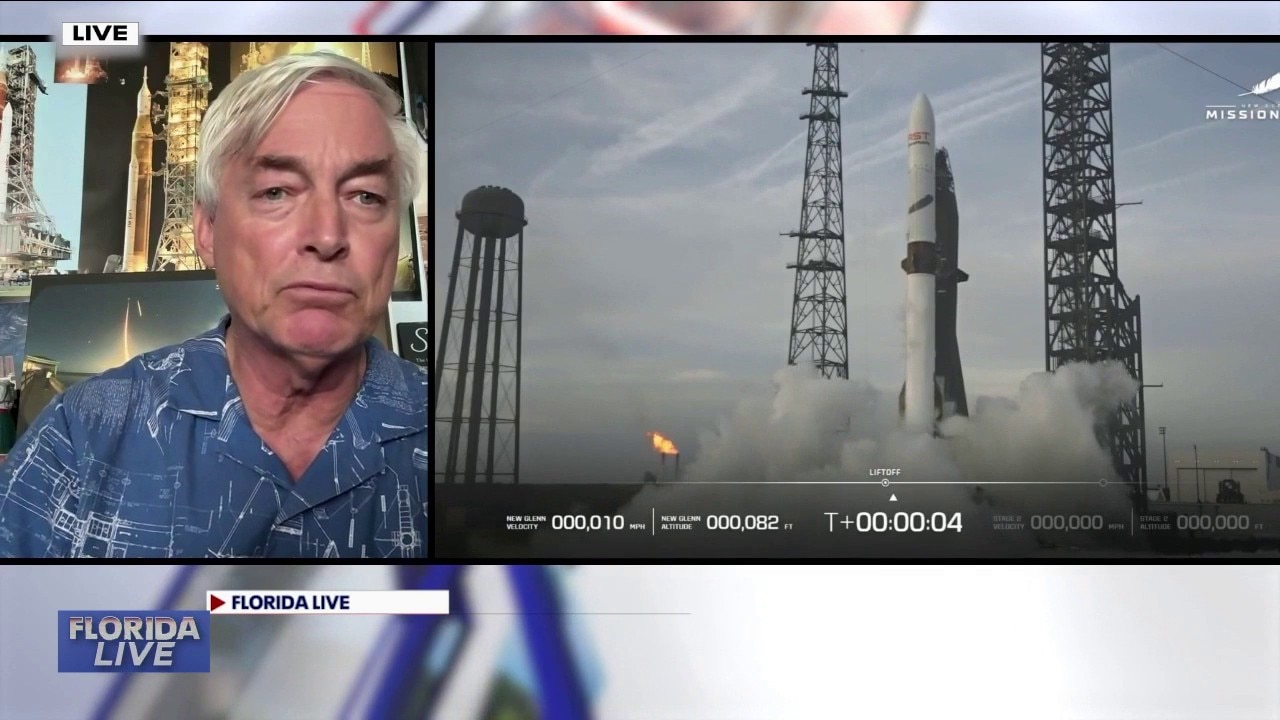
Space analyst Ken Kremer, of Space UpClose, said the issue likely involved the rocket’s upper stage. While an initial engine burn occurred, subsequent burns may have failed or ended prematurely, leaving the satellite in a much lower orbit than planned — roughly 100 miles instead of several hundred.
FAA investigates Blue Origin over lost payload incident
The Federal Aviation Administration is investigating a failed satellite deployment following a Blue Origin New Glenn launch from Florida’s Space Coast. While the rocket launched and landed successfully, the mission fell short of its primary objective, raising concerns across the commercial space industry.
Kremer added that the mission’s outcome ultimately defines its success.
"The launch is a failure, because they lost the satellite," Kremer said. "The objective is to get the payload to orbit. Nobody cares otherwise."
He noted that while upper-stage problems are not uncommon in the industry — and companies like SpaceX have recovered from similar issues — Blue Origin faces pressure to resolve the problem quickly as it seeks to establish reliability in a competitive launch market.
"This has serious repercussions for Blue Origin and that company, AST, but for NASA too, because NASA needs this for the human lander," Kremer added.
The backstory:
AST SpaceMobile is building a constellation of satellites designed to connect directly to standard mobile phones, competing with companies like SpaceX and Amazon.
BlueBird 7 would have been the company’s eighth satellite in orbit. The firm says additional satellites — up to BlueBird 32 — are already in production, with several nearly ready for launch.
Big picture view:
The failure is a setback not only for AST SpaceMobile but also for Blue Origin as it seeks to establish New Glenn as a reliable heavy-lift rocket. The vehicle is expected to support commercial, military and NASA missions, including future lunar operations tied to returning astronauts to the moon.
SIGN-UP FOR FOX 35'S BREAKING NEWS, DAILY NEWS NEWSLETTERS
With the rocket now grounded, Blue Origin faces pressure to resolve the issue quickly in an increasingly competitive launch market where reliability is critical.
Timeline:
The launch took place from Florida’s Space Coast and initially appeared successful, with a clean liftoff and booster landing. Problems became apparent after the upper stage failed to deliver the satellite to its intended orbit. By the following day, the FAA had classified the event as a mishap and ordered the rocket grounded while an investigation began.
The Source: This story was written based on information shared by Blue Origin, AST SpaceMobile, the Federal Aviation Administration, and Ken Kremer of Space UpClose.