

Gas price relief may take time despite oil falling, experts say
Phoenix gas remains stagnant as crude oil prices drop amid ceasefire deal with Iran
The closing of the Strait of Hormuz has impacted the price of oil, but the price of a gallon of gas hasn't gotten better. FOX 10's Steve Nielsen learns more on how long it could take to get relief at the pump.
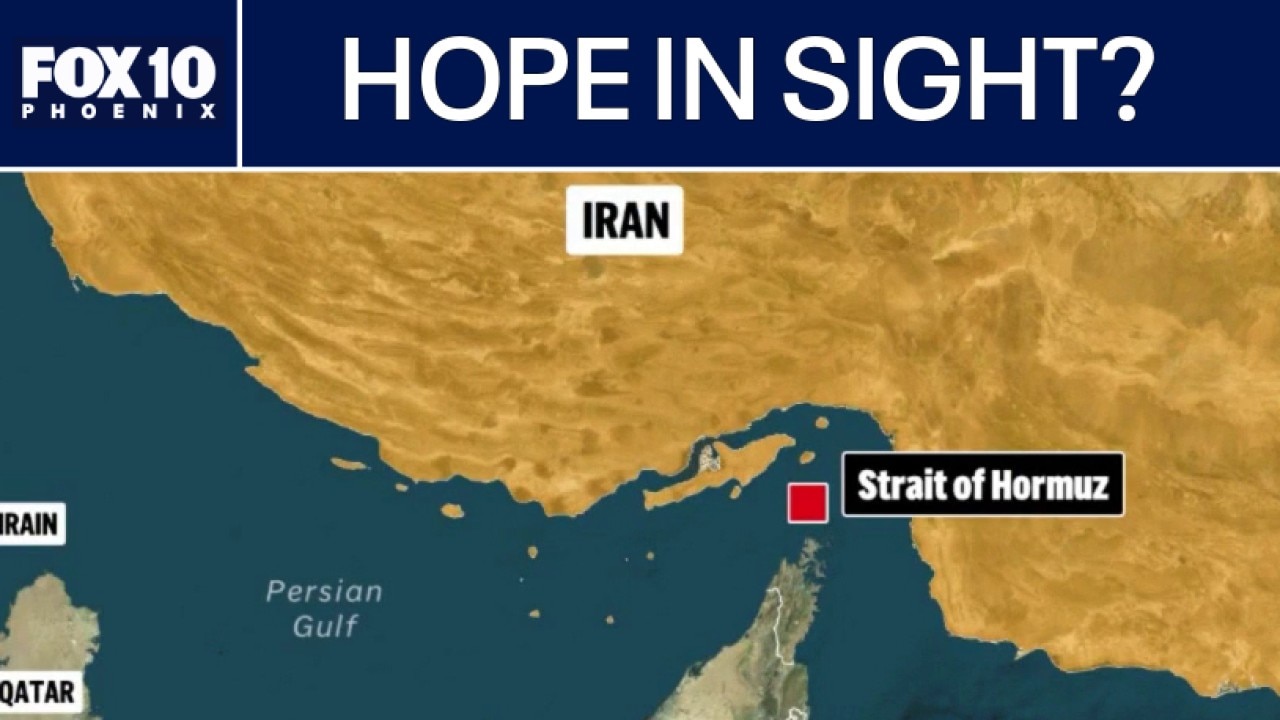
PHOENIX - The Strait of Hormuz closed Wednesday, where 20 percent of the world's oil transits, in response to Israeli attacks on Lebanon. While oil is cheaper today, the price of a gallon of gas hasn't gotten better yet.
Local perspective:
"I try not to look," Ashley Wilson said as she fills her gas tank. "I try not to look and hope for the best."
Wilson said it usually costs her $30 to fill up her car. Now, it takes more than $50 for her to get back in the car and on the road. Through the Valley, prices hovered around $4.90.
"Kids and groceries and everything, it’s insane. We’re all struggling," Wilson said.
Joseph, a cab driver, said his income is all thanks to driving his cab, so the war in Iran hit his wallet hard.
"It does have an effect because we have to pay for the gas out of our own pocket," Joseph said. "I hope the powers that be out there realize, ‘Hey, the people are struggling.’ At least have some heart for a change and realize people are trying to make an honest living."
By the numbers:
The ceasefire announcement on April 7 made huge swings on the price of crude oil, from $112 a barrel back down to $96.
"The announcements we’re seeing are pretty much having an effect on the oil market almost per hour," Aldo Vazquez with AAA Arizona said.
He said it may take days to feel that relief, but be aware.
"Sure, it’s possible in the coming days, but as we’ve seen, these global events can change on a dime and can cause prices to spike up again," Vazquez said.
Big picture view:
It all comes down to the Strait of Hormuz. Although it is not fully open, Shirvin Zeinalzadeh at ASU's School of Politics and Global Studies said there is reason for hope.
"Various allegations and counter allegations being made, but I think on the whole, the fact both governments are actually acknowledging and declaring this ceasefire as something that’s happening is something we can look forward to, some kind of progress being made," Zeinalzadeh said.
The backstory:
Iran closed the Strait of Hormuz in response to Israeli attacks on Lebanon on April 8, less than 24 hours after President Trump announced a two-week ceasefire and that he'd be pulling back his threats.
He posted on Truth Social that "a whole civilization will die tonight, never to be brought back again" referring to if Iran failed to make a deal that included reopening the Strait of Hormuz. Trump gave a deadline of 8 p.m. E.T., and the ceasefire was announced just before 7 p.m. E.T.
What's next:
Formal talks will begin soon, as the prices so far remain high and stagnant.
"Diplomacy appears to have prevailed; however, there’s a very long road ahead before final just and lasting peace can be met," Zeinalzadeh said.
The Source: This information was provided by experts with AAA Arizona and ASU School of Politics and Global Studies and previous reports.