

Scientists discover a surprising pattern in one of the deadliest brain cancers
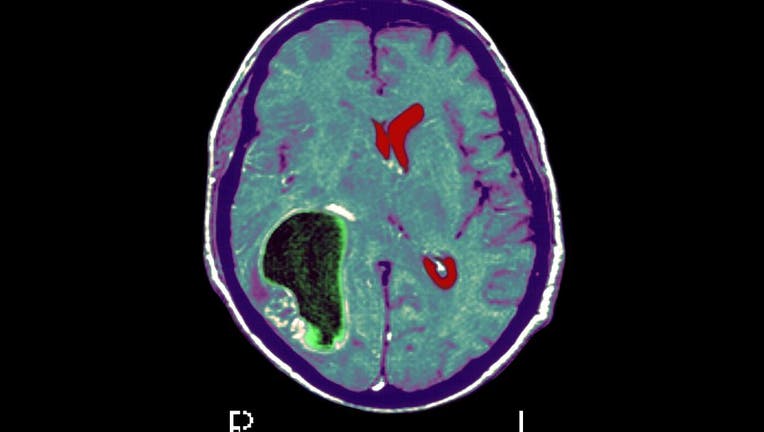
Glioblastoma (Photo By BSIP/Universal Images Group via Getty Images)
Scientists say they have discovered a pattern that glioblastoma, one of the most aggressive types of brain cancer, appears to follow as it grows.
The finding could help researchers develop better treatments for a disease that is difficult to remove and often returns after treatment.
Dig deeper:
An international research team used artificial intelligence and advanced tools to study more than 1 million cancer cells from 12 people with glioblastoma. The patients were treated at Cambridge University Hospitals NHS Foundation Trust.
Researchers examined how the cells worked, where they were located, how they interacted with nearby cells and how likely they were to change.
The study found that glioblastoma cells appear to move through three main stages:
At first, some cancer cells act like brain stem cells, which help create new brain cells. These cells gather around the outer edge of the tumor and can produce other types of cancer cells.
RELATED: Targeted drug shrinks tumors in 3 out of 4 patients with advanced breast cancer
As the tumor grows, the cells begin acting like cells involved in repairing an injury. This helps the tumor expand and creates a layer of cells inside it.
Later, the center of the tumor receives very little oxygen. Cells in that area enter a survival mode that can make them more difficult to kill with treatment.
Glioblastoma has long been viewed as a chaotic cancer because it contains many different types of cells. Some can resist surgery, chemotherapy or radiation.
Connecting Cancer Survivors with Practical Resources
Shannon Miller, CEO of Salto Health, joined Ryan Schmelz on LiveNOW from FOX to discuss empowering cancer survivors during recovery. Her company provides a specialized gift registry designed to give patients practical support from loved ones throughout their treatment.
What they're saying:
"For too long, we’ve approached glioblastoma treatment knowing that each patient’s tumour contains a complex mixture of cancer cells, but without a clear understanding of how best to target them all," said Dr. Richard Mair, a brain surgeon and researcher at the Cancer Research UK Cambridge Institute.
The new findings suggest the cancer may be more organized than scientists previously believed.
"This research gives us an opportunity to think differently," Mair said. "If we can anticipate the different biological states a tumour is likely to adopt, we can begin to develop treatments that target multiple aspects of the disease from the very beginning."
The team also identified genetic signals that appear to push the cancer cells from one stage to the next. Researchers said future drugs could potentially block those signals and make the cancer cells easier to treat.
Another possible approach could focus on cells at the outer edge of the tumor. Those cells may be left behind after surgery and could help the cancer return.
RELATED: Childhood cancer risk may be higher after some fertility treatments, study finds
Researchers also found that each stage of the cancer’s growth is supported by a different environment inside the tumor. The tumor appears to create some of these environments by using the body’s own immune cells.
The study’s findings were published in the journal Nature. Researchers also tested their conclusions using lab-grown mini-brains, known as brain organoids.
The team has made its findings available through the GBM-Space atlas, a free online tool that allows scientists around the world to study glioblastoma.
"Glioblastoma has evaded understanding for years, despite being one of the most studied types of cancer tumour," said Dr. Omer Bayraktar, co-senior author of the study at the Wellcome Sanger Institute.
What's next:
The research is still in its early stages, and more studies are needed to determine whether the findings will lead to new treatments.
"This is early research, but it could help guide the development of treatments that target more of the tumour and keep cancer under control for longer, giving people more time with their loved ones," said Dr. Marianne Baker, a research information manager at Cancer Research UK.
The Source: The information in this story came from Cancer Research UK, which summarized findings from an international research team. This story was reported from Los Angeles.