

Utah and Arizona lawmakers push mental health days for kids amid pandemic
SALT LAKE CITY - When she was growing up, Sophie Corroon struggled to get through a ballet class or soccer tryout without having an anxiety attack.
The idea of going to sleepovers or being home alone left her feeling panicked. Corroon’s anxiety grew even more during high school in Salt Lake City, when the pressures of getting into college left her in tears at school or toiling for hours on assignments.
Corroon, now 20, has struggled with her mental health since fourth grade, and she’s not alone. And now, the coronavirus pandemic has multiplied the pressures on kids — many have spent almost a year doing remote learning, isolated from their friends and classmates. The portion of children's emergency-room visits related to mental health was 44% higher in 2020, compared with the year before.
State lawmakers are increasingly seeking more support for kids. This year, legislation proposed in Utah and Arizona would add mental or behavioral health to the list of reasons students can be absent from class, similar to staying out with a physical illness. Similar laws have passed in Oregon, Maine, Colorado and Virginia in the past two years.
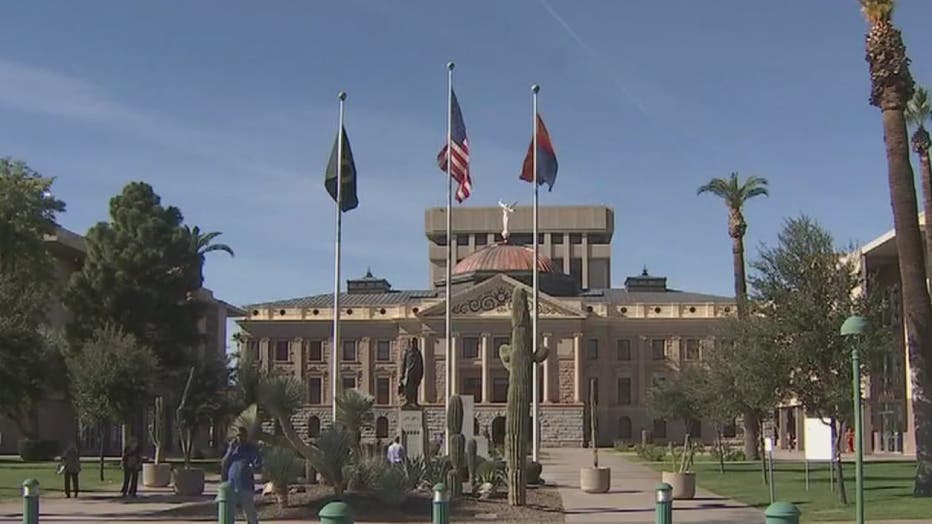
Arizona Legislature (file)
Offering mental health days can help children and parents communicate and prevent struggling students from falling behind in school or ending up in crisis, said Debbie Plotnick, vice president of the nonprofit advocacy group Mental Health America. Plotnick said mental health days can be even more effective when paired with mental health services in schools.
"We know that this year has been extra hard, and we know that it’s hard for young people," Plotnick said. "That’s why it’s so essential that students feel comfortable to come forward and say ... ‘I need to take some actions to support my mental health.’"
In Arizona, Democratic Sen. Sean Bowie has introduced a mental health day measure for the second time after legislation stalled in March as the pandemic took hold. Republican Gov. Doug Ducey has taken an interest in youth suicide and mental health, and Bowie said he’s confident it will be signed into law. The bill passed the state Senate unanimously on Jan. 25.
Conservative Utah passed a law in 2018 letting kids take time off school for a mental illness. A new proposal from Republican Rep. Mike Winder would allow absences for students to deal with other kinds of mental pressures to further normalize treating a mental health concern like a physical one.
Under the Utah bill, which passed out of committee Friday and will move to the House floor, mental health days would be treated like any other excused absence, Winder said. A parent would need to excuse their child, and students would still be expected to make up their schoolwork.
In Arizona, specific mental health day policies would be up to each school district, Bowie said.
Theresa Nguyen, a licensed clinical social worker, said she’s concerned about the potential long-term mental and academic effects that students may face from the pandemic. In addition to growing reports of anxiety and depression, Nguyen said, many students say they don’t feel like they’re absorbing class material virtually and they’re not getting enough support.
"They feel like, ‘Nobody cares that I’m struggling, so I’m basically being communicated to that I need to just deal with it by myself,’" said Nguyen, Mental Health America’s chief program officer. "And for a lot of youth, that means increased self-harm and suicide."
For the last few years, Utah leaders have searched for ways to reduce an alarming rate of youth suicides. The pandemic has lent urgency, with many young people isolated from friends and school activities.
Winder’s bill is modeled after a similar program in Oregon that his daughter, Jessica Lee, found through her work on a youth-focused committee with the Utah chapter of the National Alliance on Mental Illness. In Oregon, students are given five excused absences every three months, and those can be either physical sick days or mental health days.
Lee, who is a senior at Southern Utah University studying clinical psychology, said she was inspired by youth activists who successfully championed the Oregon bill in 2019.
Lee and Corroon both work with the committee to help teenagers navigate their mental health. Over the years, Corroon learned to manage her anxiety with medication and therapy and is now a sophomore at the University of Washington, where she plans to study public health.
Part of her routine is taking a step back to prioritize her mental health — a chance she says other kids deserve, too.
"I definitely needed those days to just stay home or seek out a resource rather than forcing myself to go to school and putting more stress on my mental health," Corroon said.
___
Eppolito is a corps member for the Associated Press/Report for America Statehouse News Initiative. Report for America is a nonprofit national service program that places journalists in local newsrooms to report on undercovered issues.