

Map: Average first freeze dates have shifted later for most of the US since 1970

When to expect your first freeze of the season
Here's when you can expect the first freeze of the season in your area.
Over the decades, the first freeze dates have shifted later for most of the U.S., according to a new report.
Climate Central analyzed how the first fall freeze date, which is the first day with minimum temperatures at or below 32°F, has changed since 1970 in 204 U.S. cities.
First freeze is later for most of US
By the numbers:
According to the data, the first freeze now arrives later in 88% (179) of cities analyzed — 12 days later, on average, than in the early 1970s.
In addition, the first freeze is arriving at least two weeks later in 70 cities — especially cities across the Northeast, Ohio Valley and Upper Midwest.
Climate Central explained that a warmer fall will usually delay the first freeze of a season, and the data found that the fall season has warmed in every county across the contiguous U.S. since 1970.
Cities with longest delay of 1st freeze
Dig deeper:
The cities that have seen the longest delay in their first freeze are: Reno, Nevada (41 days later); Bend, Oregon (38 days later); Santa Maria, California (35 days later); Toledo, Ohio (29 days later); and Boise, Idaho (29 days later).
Later freeze can impact allergies, fall foliage, more
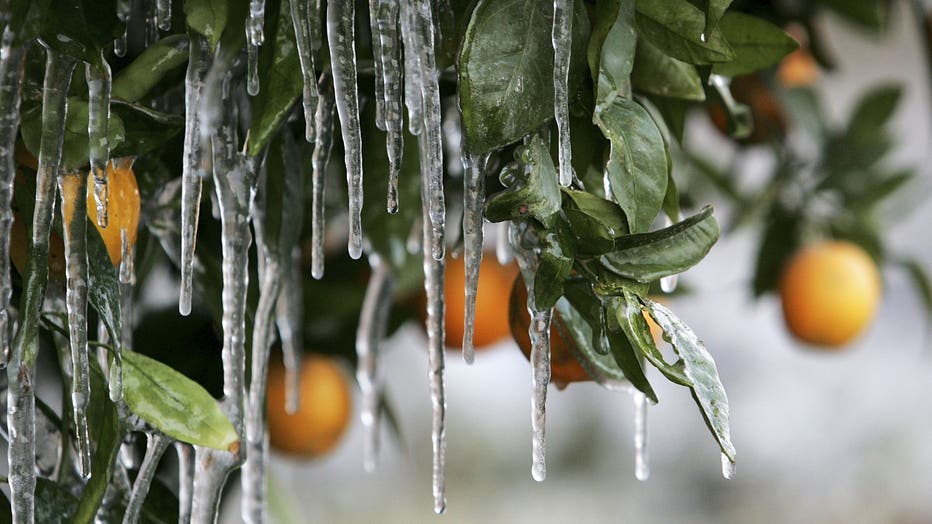
Icicles created by drip irrigation are illuminated by a cars headlights as they hang from an orange tree January 17, 2007 in Orange Cove, California. (Credit: Justin Sullivan/Getty Images)
Why you should care:
Climate Central explained that a later freeze can worsen fall allergies and lengthen pest seasons.
In most U.S. areas, ragweed pollen typically peaks in September and lasts through October. But warmer fall temperatures and a later fall freeze extend the ragweed growing season and the allergies that come along with it.
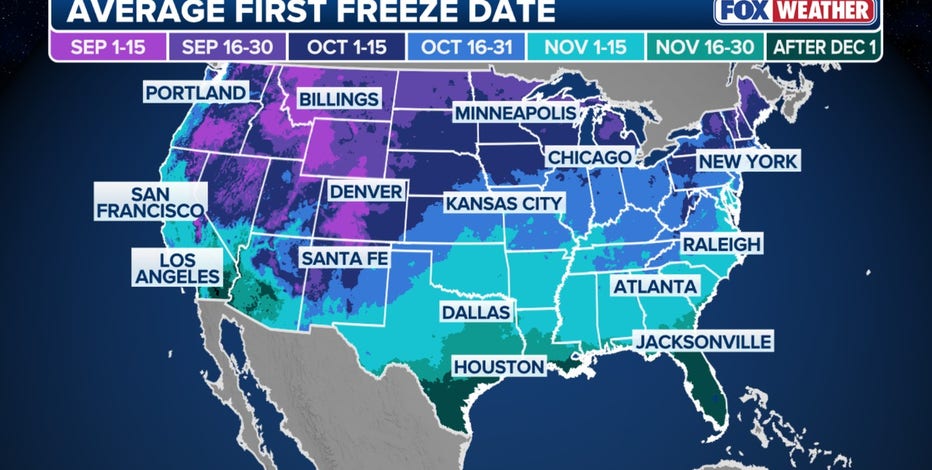
Here’s when to expect the first freeze of the season
The first freeze of the season may not be far away for many areas of the U.S.
Fall warming can also disrupt important ecological cues in forests, farms, and gardens – with potential effects on fall foliage as well as hibernation, bird migration, and fruit ripening, Climate Central said.
Warming driven by carbon pollution results in more freeze-free days each year and, therefore, longer annual growing seasons. According to Climate Central, the growing season is now more than two weeks longer on average across the contiguous U.S. compared to the beginning of the 20th century.
The Source: The information for this story was provided by Climate Central, which used local daily temperature data from 1970 to 2024. The annual first freeze date for each location was determined based on the first day of each year (starting August 1st) with a minimum temperature of 32°F or below. Locations without a consistent freezing season (defined as fewer than three months of minimum temperatures at 32°F or below) were excluded from the analysis. This story was reported from Los Angeles.