

USDA sued by states for attempts to collect food stamp data on Americans
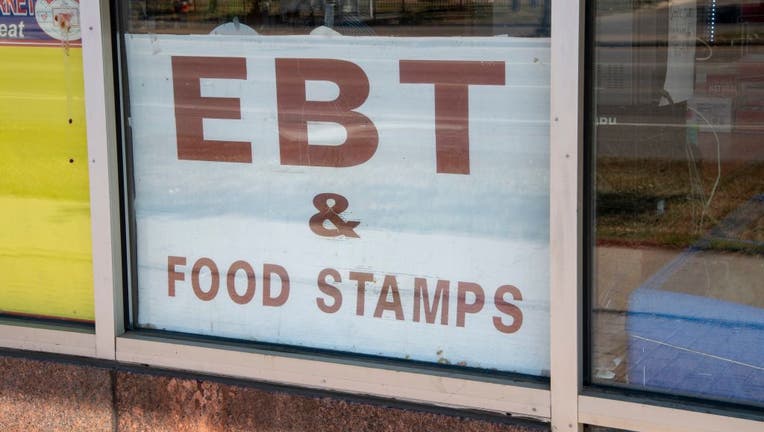
St. Paul, Minnesota, Grocery store with sign in window accepting Electronic benefit transfer cards and food stamps. (Photo by: Michael Siluk/UCG/Universal Images Group via Getty Images)
WASHINGTON - Twenty state attorneys general filed a lawsuit Monday against the Trump administration, challenging its demand for personal data from residents enrolled in a federally funded food assistance program, citing concerns the information could be used to facilitate mass deportations.
The backstory:
The U.S. Department of Agriculture told states last week that it had until Wednesday to hand over the data for those enrolled in its Supplemental Nutrition Assistance Program, or SNAP, which serves more than 42 million people nationwide. The USDA said the data will help it combat waste, fraud and abuse.

ICE cannot immediately take Abrego Garcia into custody
A federal judge in Maryland has prohibited the Trump administration from taking Kilmar Abrego Garcia into immediate immigration custody if he’s released from jail in Tennessee while awaiting trial on human smuggling charges, according to an order issued.
The data demand comes as the Trump administration has sought to collect private information on mostly lower-income people who may be in the country illegally. It has already ordered the Internal Revenue Service and the Centers for Medicare and Medicaid Services to share private information with the Department of Homeland Security to aid in deportation efforts.
RELATED: Michigan AG Nessel joins lawsuit against Trump to protect SNAP information
What they're saying:
The states' lawsuit seeks an injunction to block the data transfer. In the meantime, state attorneys general in the SNAP lawsuit said they will not disclose what they consider to be private information of recipients — including their immigration status, birthdates and home addresses — because they believe it would be a violation of privacy laws.
RELATED: Video: Conditions inside migrant holding cell in NYC high-rise; DHS denies overcrowding
"It’s a bait-and-switch of the worst kind," California Attorney General Rob Bonta said in a Monday afternoon news conference announcing the lawsuit. "SNAP recipients provided this information to get help feeding their families, not to be entered into a government surveillance database or be used as targets in the president’s inhumane immigration agenda."
"The federal government is demanding five years' worth of sensitive identifiable information on every single SNAP recipient in our state," Michigan Attorney General Dana Nessel said. "Not to improve the program, not to fight fraud but to put together a database and share information with entirely unrelated agencies including immigration enforcement."
The other side:
In May, the department announced it was seeking the data as part of President Donald Trump's executive order to obtain data from state programs to help root out fraud and waste. "For years, this program has been on autopilot, with no USDA insight into real-time data," USDA Secretary Brooke L. Rollins said in a statement at the time. "The Department is focused on appropriate and lawful participation in SNAP, and today’s request is one of many steps to ensure SNAP is preserved for only those eligible."
USDA officials declined a request for comment on the suit.

FBI arrests CA man who allegedly threw rocks at officers
A California man who allegedly threw concrete blocks at federal officers in Paramount in June was taken into custody at the U.S.-Mexico border, according to the Federal Bureau of Investigation.
Big picture view:
The USDA did not mention immigration enforcement in the announcement or later notices. It is not clear why USDA officials believe the data will help it weed out fraud and abuse. The agency claims the program is already "one of the most rigorous quality control systems in the federal government."
RELATED: CBP officers show support during accused migrant shooter's court appearance
Immigration advocates noted that the Trump administration has used the same argument to obtain other sensitive data, only to later admit it would be using the information to enhance its deportation operations. Trump administration officials, for example, initially claimed they were seeking state Medicaid data to fight fraud. Last week, a top immigration official conceded they would be utilizing that same information to locate immigrants.
Agency officials have threatened to withhold SNAP funding if states fail to comply with their demand for data.
While immigrants without legal status are ineligible to receive SNAP benefits, they can apply on behalf of their children who are U.S. citizens or those who are part of a mixed-status household.
Under the program, formerly known as food stamps, the federal government pays for 100% of the food benefits, but the states help cover the administrative costs. States are also responsible for determining whether individuals are eligible for benefits and for issuing those benefits to enrollees.
Immigration and data privacy advocates expressed alarm at the Trump administration’s efforts to obtain sensitive SNAP data maintained by states.
"The administration has all but told us that their intention is to comb this data and use it for unlawful purposes that include immigration enforcement," said Madeline Wiseman, an attorney with the National Student Legal Defense Network, which filed a lawsuit in May with privacy and hunger relief groups that are also challenging USDA’s efforts for SNAP data.
The Source: The Associated Press contributed to this report. This information comes from official statements by state attorneys general, public comments from USDA officials, and reporting on the ongoing legal battle. This story was reported from Los Angeles.