

Arizona weather forecast: Excessive heat brings 110+ degrees to Phoenix
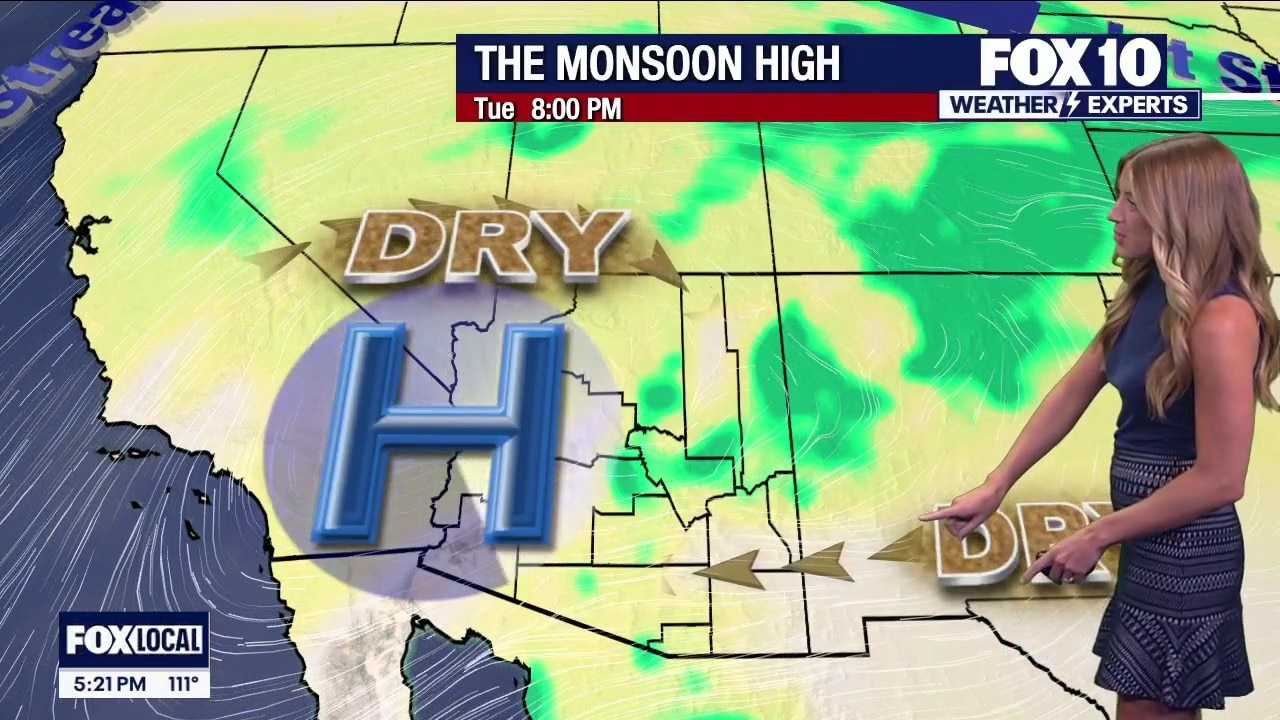
Heat dome limits rain chances before pattern shifts later this week
A heat dome and high pressure ridge are suppressing Phoenix storm activity. FOX 10's Erica Horvatin has more on the pattern shift later in the week that could bring improved rain chances.
PHOENIX - The hot spell continues all week across Arizona.
Tuesday:
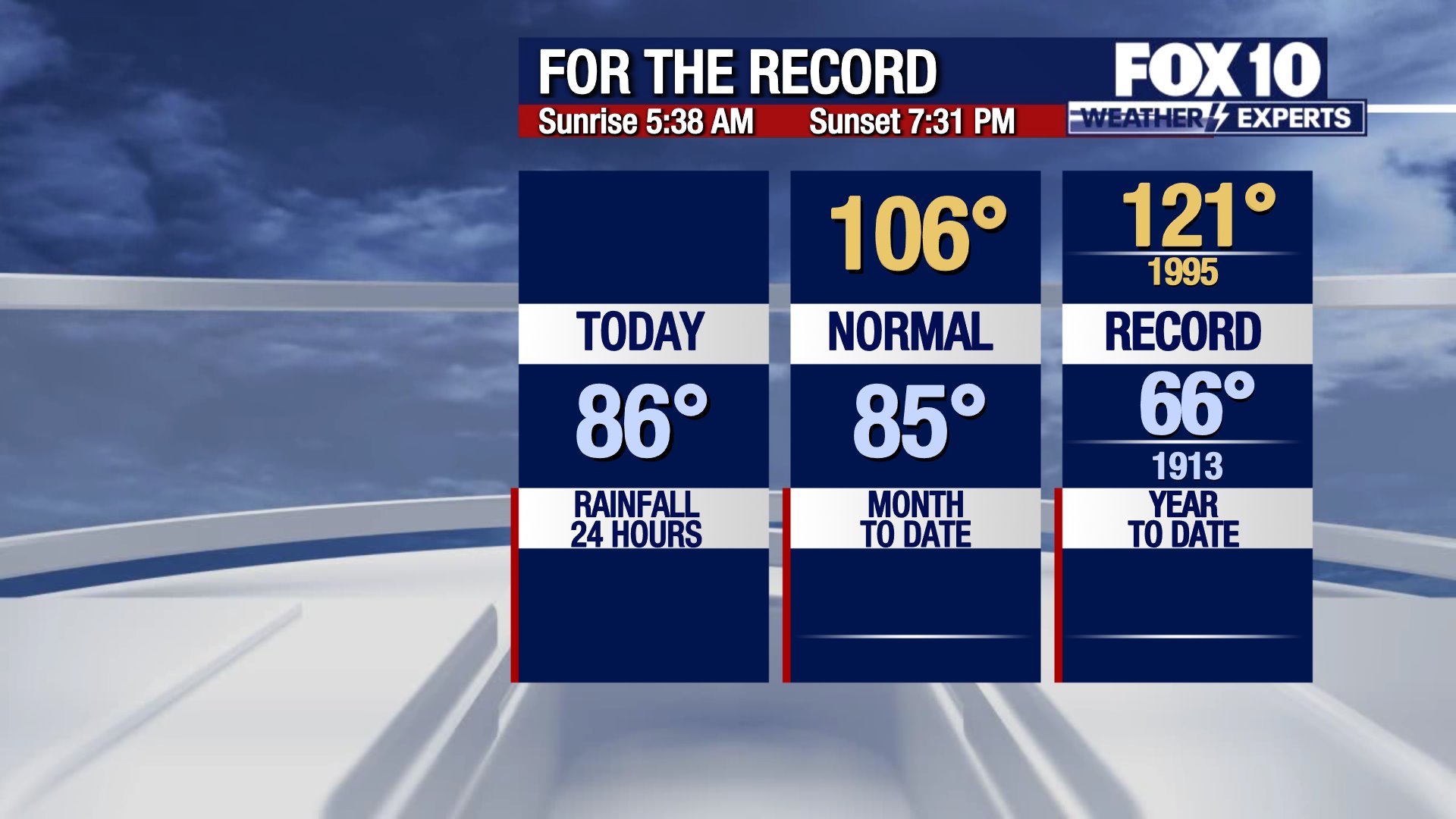
Tuesday was another scorcher, with a high of 113 degrees and a record-warm morning low of 92 degrees. It was the second day at the peak of the current heat wave, and temperatures will fall a couple of degrees through the rest of the week, hovering close to 110.
Extreme heat warnings will remain in effect for the deserts of southern and western Arizona through Friday evening, and the Grand Canyon below 4,000 feet through Thursday evening.
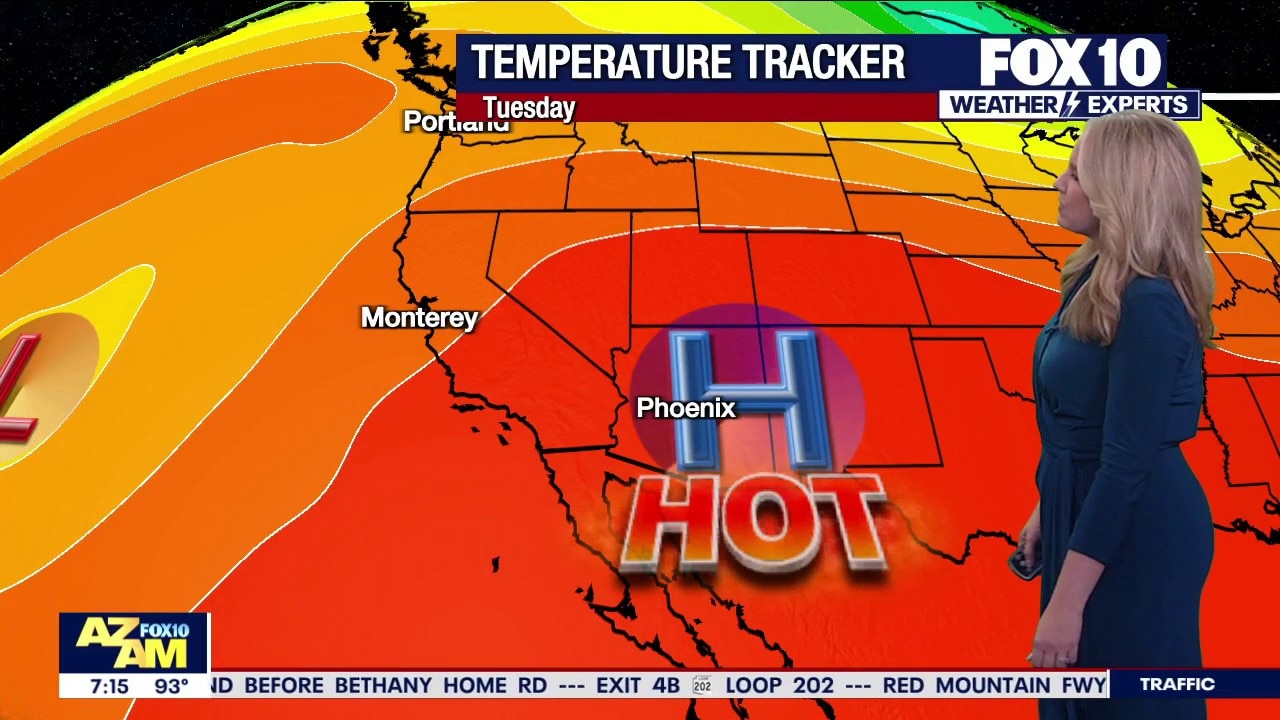
Arizona heat wave pushes highs to 113°F in Phoenix
High pressure keeps Phoenix temperatures over 110 degrees with slight storm chances ahead.
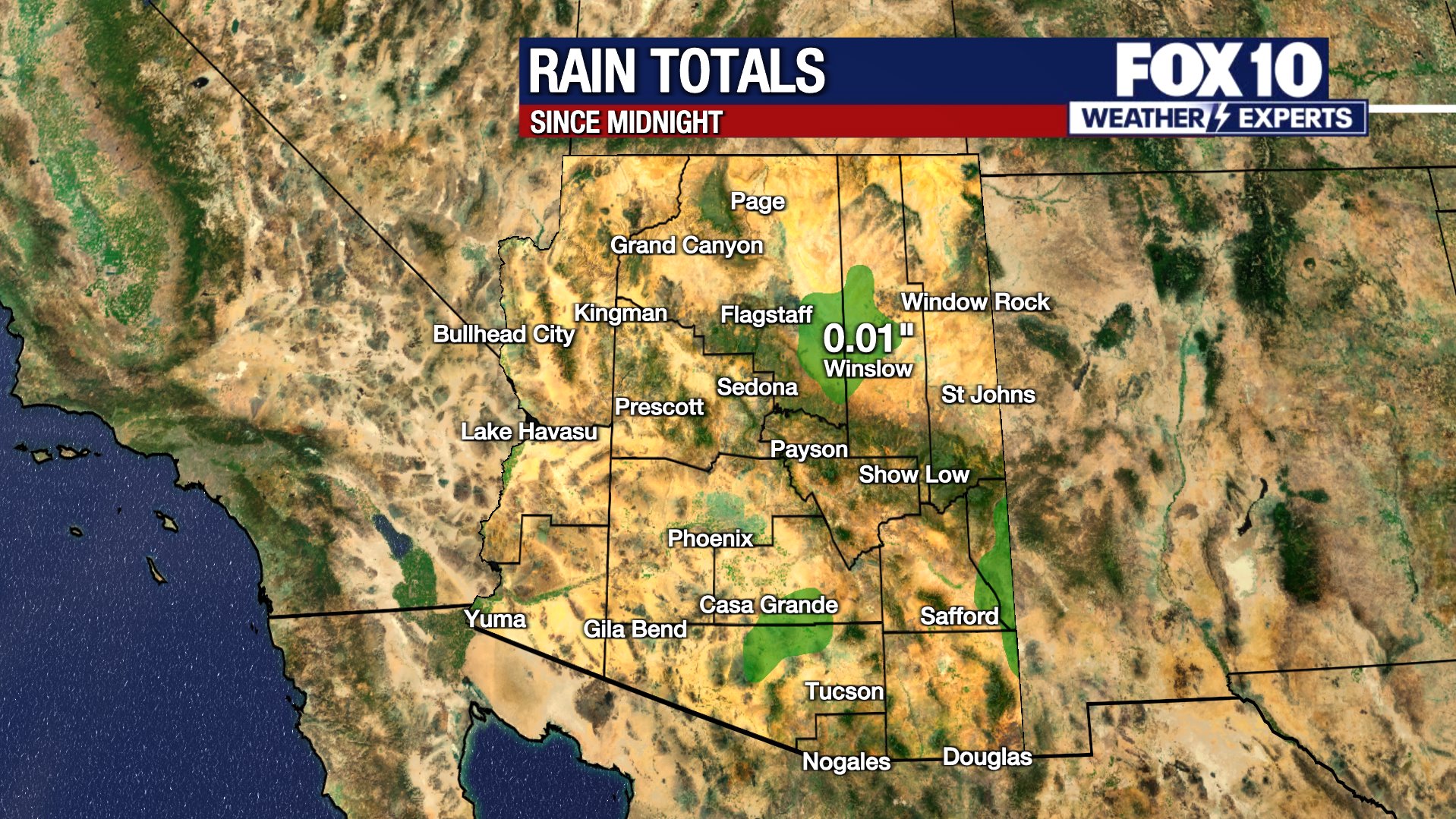
There are a few storms in east-central Arizona this evening, and rain will end by 10 p.m. The east Valley may see some breezy winds and light blowing dust from nearby storms, but it will be a dry night.
The Rest of the Week:
Wednesday will be mostly sunny with a low of 91 degrees and a high of 110. Storms will fire over the mountains of eastern Arizona and the Mogollon Rim during the afternoon, moving west throughout the evening. The Valley could see blowing dust and there is a slight chance for isolated storms. The chance of rain will increase a bit on Thursday for the Valley, but it is still only 20%.
The temperature will rebound to 111 degrees on Friday and 112 degrees on Saturday. Storm chances, although low, will linger through the weekend in Phoenix. The best chances will be over the higher terrain of northern or eastern Arizona.
You can always check the latest weather conditions by visiting the FOX 10 Phoenix weather page, or download the Free FOX 10 Weather app, which is available on Apple iOS and Android.
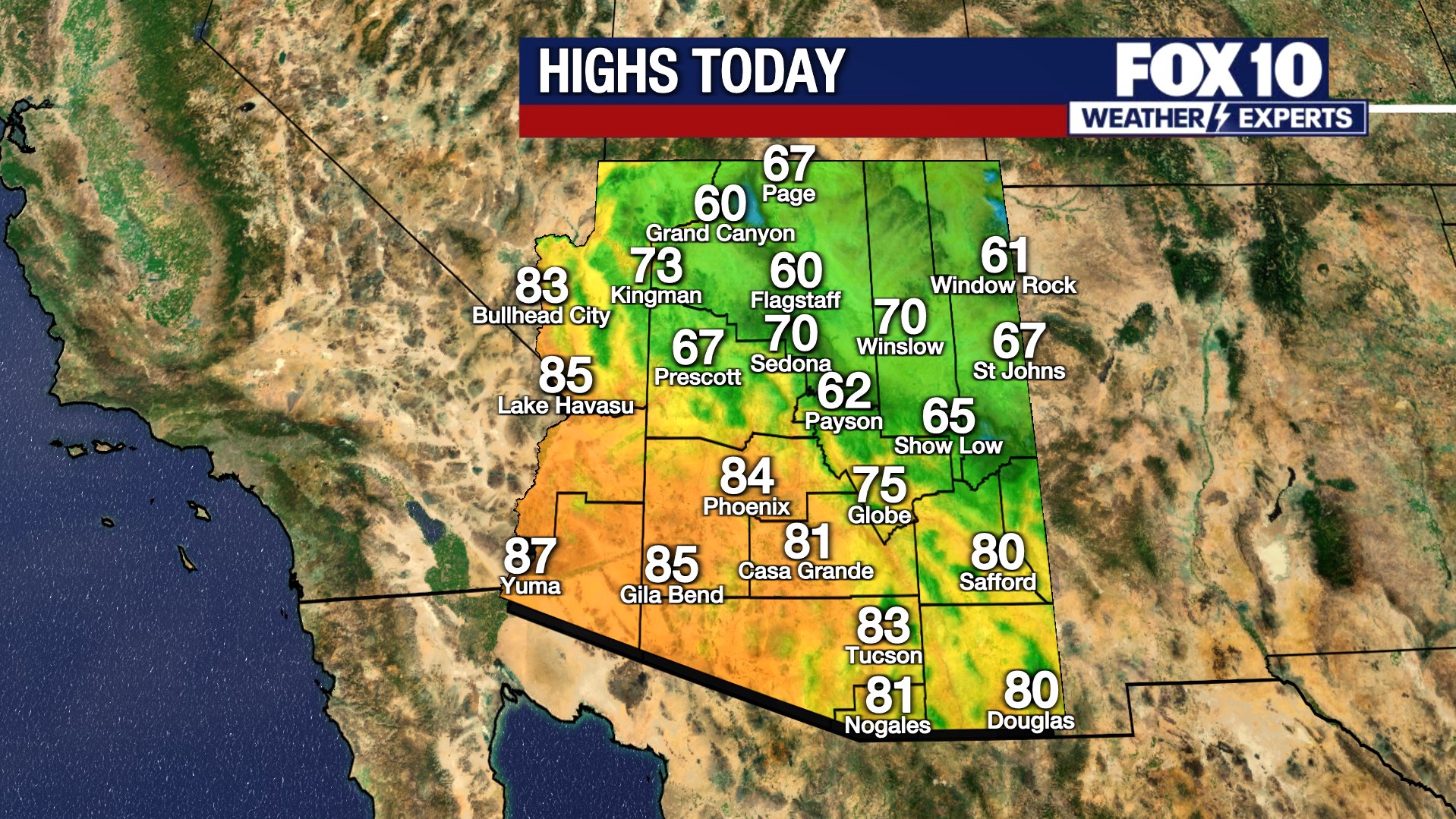
Scroll down this page for satellite and radar, day planner, records, current temperatures, 10-day forecast, forecast highs, and recent rainfall totals, plus live video feeds.





The following heat safety information was provided by the Scottsdale Fire Department.
What are Heat Emergencies?
Heat Cramps: Profuse sweating, fatigue, extreme thirst, muscle cramps
Heat Exhaustion: Headache, dizziness, weakness, nausea/vomit, Cool/moist skin
Heat Stroke: Elevated temp. +103degrees, confusion/irrational behavior, dry/hot skin, rapid shallow breathing, rapid weak pulse (shock), seizures, unconscious
What to do
- Get person into shade or cool location.
- Cool person with cool, wet cloths (neck, groin, armpits, head) and fan body.
- Sip cool water if person is alert.
- For muscle cramps, massage muscles gently, but firmly until relaxed.
- *If symptoms worsen, call 911.
What not to do
- Do not give anything by mouth if person is vomiting, unable to swallow or unconscious.
- Do not underestimate the seriousness of a heat emergency.
- Prevention/Preparation for hike/exercise in heat.
Know your limitations
- Hydrate (begins day prior to hike/exercise, hour before hike, during and after).
- Wear proper clothing, lightweight and light color, protect head, proper shoes.
- Always carry a cell phone and best to hike with company.
- Always tell someone where you are hiking and when to plan to return.
Preventing heat exhaustion/heat stroke
The Arizona Department of Health Services stated the following precautions can be taken to prevent heat exhaustion or heat stroke:
- Stay in air-conditioned buildings.
- Find a cooling center/hydration station.
- Limit outdoor activity during the hottest part of the day (mid-day).
- Check on at-risk friends, family, and neighbors at least twice a day.
- Drink water before, during, and after working or exercising outside.
- Check the UV Index.
- Check the heat risk map.
Road Conditions
- Call 511 anywhere in Arizona or 1-888-411-ROAD (7623)
Rain/flood safety tips
The American Red Cross' tips for heavy rain situations and flood safety:
- Turn around don’t drown! If you must drive and you encounter a flooded roadway, turn around and go another way.
- If you are caught on a flooded road and waters are rising rapidly around you, get out of the car quickly and move to higher ground.
- Tune in to your local radio, NOAA radio, or news channels for the latest updates.
- If your neighborhood is prone to flooding, be prepared to evacuate quickly.
- Follow evacuation orders and do not attempt to return until officials say it is safe.
- If power lines are down, do not step in puddles or standing water.
- If power is out, use a flashlight. Do not use any open flame as alternate lighting.
Preparing for a severe thunderstorm
The American Red Cross' tips for preparing for a severe thunderstorm:
- Put together an emergency kit.
- Know your community’s evacuation plan.
- Create a household disaster plan and practice it.
- Purchase a battery-powered or hand-crank radio
- Discuss thunderstorm safety with members of your household. Be aware that a thunderstorm could produce flooding.
- Pick a safe place in your home for household members to gather during a thunderstorm. This should be a place where there are no windows, skylights, or glass doors, which could be broken by strong winds or hail and cause damage or injury.
Be prepared and stay safe during the monsoon
"Most Valley residents know how quickly and furiously storms can move in and out, bringing strong winds, dust, rain, and flash flooding. These storms can cause interruptions in services, such as water, power, and gas," stated Captain Ashley Losch of the Glendale Fire Department.
GFD reminds residents of ways they can be prepared and stay safe:
- Have flashlights with extra batteries on hand.
- Have food that can be prepared without the need for cooking or refrigeration.
- Have at least one gallon of clean water for each person in the household.
- Have backup power for anyone requiring power for a medical device.
- Have backup power for cell phones that do not require charging.
- Have a first aid kit ready and accessible.
- Never drive into areas with flowing water; it takes less than 10 inches to wash a car away.
- Avoid flooded areas, such as washes.
- If waters are rising, seek higher ground.
- Do not approach downed power lines, the ground can be energized for up to 200 feet.
- Keep pets indoors during storms.
The Source: Information for this article was gathered by the FOX 10 Weather Experts.