

Spring 2026: What does The Old Farmer’s Almanac forecast for your area?
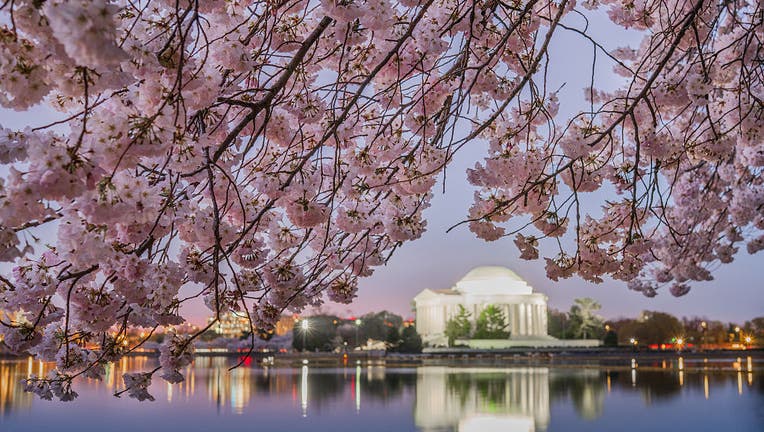
The Jefferson Memorial is framed in the blooming Cherry Blossom trees surrounding the Tidal Basin at daybreak on March 29, 2025, in Washington, DC. (Photo by J. David Ake/Getty Images)
The Old Farmer’s Almanac has unveiled its long-range weather predictions for Spring 2026, offering an early look at whether Americans can expect a chilly or warm season—and how much rain may be on the way.
Why you should care:
The forecast covers April and May and includes detailed outlooks for 18 regions across the country.
The annual spring forecast is widely followed by gardeners, farmers, travelers, and event planners seeking to prepare for shifting seasonal conditions.
RELATED: Trump administration revokes EPA's ability to regulate climate change
What will spring 2026 be like?
Dig deeper:
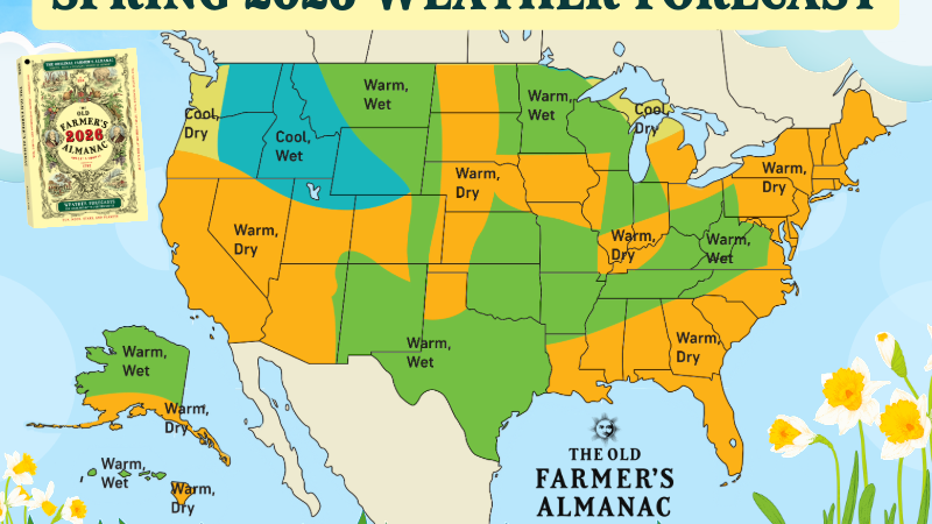
The spring forecast calls for warmer-than-average temperatures across most of the United States, though several areas—including parts of Washington, Oregon, Idaho, and portions of Montana and Colorado—are expected to experience near- or below-average conditions.
(Credit: The Old Farmer’s Almanac)
Much of the nation is projected to experience drier-than-average conditions this spring. However, wetter-than-normal weather is expected in the following regions:
- Upper Alaska
- Texas–Oklahoma
- Northern Appalachians
- High Plains
- Upper Midwest
- Intermountain region
The Old Farmer’s Almanac has divided its April and May long-range forecast into 18 distinct U.S. regions, highlighting expected temperature and precipitation trends across the country.
Northeast (Region 1)
Warmer-than-average temperatures are expected, particularly in May, which is forecast to run about 3°F above normal. Precipitation will be below average in both April and May, with no significant snowfall anticipated.
Atlantic Corridor (Region 2)
From Boston to Richmond, temperatures will trend warmer than usual, especially in northern areas where May could average 3°F above normal. Rainfall will be below normal in April and near normal in May.
Appalachians (Region 3)
This mountainous region will see slightly above-average temperatures. Rainfall will vary, with drier-than-normal conditions in the north and wetter-than-normal conditions in the south.
Southeast (Region 4)
Across the Carolinas and Georgia, temperatures will be warmer than usual. April is expected to be drier than normal, followed by slightly above-normal rainfall in May.
Florida (Region 5)
April temperatures will run warmer than average, while May returns to near normal. Rainfall will be below average in April before rebounding to typical levels in May.
Lower Lakes (Region 6)
Michigan and surrounding Great Lakes states will experience generally warmer-than-normal temperatures. Precipitation will be below average in eastern areas and above average in western portions.
Ohio Valley (Region 7)
Above-average temperatures are forecast for both April and May. Rainfall will be above normal in the eastern section of the region and below normal in the west.
Deep South (Region 8)
Temperatures will average warmer than normal overall, with April running about 4°F above average. May, however, is expected to dip slightly below normal. Precipitation will be higher than normal in northern areas and lower than normal in the south.
Upper Midwest (Region 9)
Eastern portions of the region will experience cooler and drier-than-normal conditions, while western areas will trend warmer with above-normal precipitation.
Heartland (Region 10)
Iowa, Missouri, and eastern Kansas and Nebraska can expect a notably warm April, with temperatures about 5°F above average. Rainfall will be below normal in northern areas and above normal in the south.
Texas–Oklahoma (Region 11)
April will bring well-above-average warmth, about 5°F higher than normal. In May, northern areas will cool to around 2°F below average, while southern sections remain slightly above normal. Rainfall is expected to be above average, with the potential for a tropical storm in late May.
High Plains (Region 12)
From Bismarck to Amarillo, temperatures will be warmer than usual, especially in April, which could run 5°F above average. Periods of extreme heat are possible later in the season. Rainfall will be below normal in the east and above normal in the west.
Intermountain (Region 13)
Northern areas—from Spokane to Salt Lake City—will be cooler and wetter than normal. Southern portions, including areas near Flagstaff, will trend warmer and drier than average.
Desert Southwest (Region 14)
Desert regions of New Mexico, Arizona, and southeastern California will see a warmer-than-usual April, followed by near-normal temperatures in May. Rainfall will be above normal in eastern areas and below normal in the west.
Pacific Northwest (Region 15)
Coastal areas from Seattle to Eureka will see near-average temperatures in April. In May, northern sections will cool below normal while southern areas warm above normal. Overall, conditions will be drier than usual.
Pacific Southwest (Region 16)
Temperatures will run above normal in both April and May, accompanied by below-average rainfall.
Alaska (Region 17)
Warmer-than-normal temperatures are expected statewide. Northern Alaska will see above-average precipitation, while southern areas trend drier than normal.
Hawaii (Region 18)
The state will experience warmer-than-usual temperatures this spring. Rainfall will be below normal in eastern areas but above normal across central and western sections.
The Source: The information in this story comes from The Old Farmer’s Almanac’s official long-range Spring 2026 weather forecast. This story was reported from Los Angeles.