

Babies born in Britain using DNA from 3 people

Author shares story of battling infertility
Bailey Henry, 32, spoke with FOX Television Stations about her journey with multiple miscarriages and how the trauma led to her "life's work."
Britain's fertility regulator on Wednesday confirmed the births of the U.K.'s first babies created using an experimental technique combining DNA from three people, an effort to prevent the children from inheriting rare genetic diseases.
Britain's Human Fertilization and Embryology Authority said fewer than five babies have been born this way in the U.K. but did not provide further details to protect the families' identities. The news was first reported by the Guardian newspaper.
In 2015, the U.K. became the world's first country to adopt legislation specifically regulating methods to help prevent women with faulty mitochondria — the energy source in a cell — from passing defects on to their babies.
The genetic defects can result in diseases such as muscular dystrophy, epilepsy, heart problems and intellectual disabilities. About one in 200 children in Britain is born with a mitochondrial disorder. To date, 32 patients have been authorized to receive such treatment.
READ MORE: FDA weighs over-the-counter birth control pill
For a woman with faulty mitochondria, scientists take genetic material from her egg or embryo, which is then transferred into a donor egg or embryo that still has healthy mitochondria but had the rest of its key DNA removed.
The fertilized embryo is then transferred into the womb of the mother. The genetic material from the donated egg comprises less than 1% of the child created from this technique.
"Mitochondrial donation treatment offers families with severe inherited mitochondrial illness the possibility of a healthy child," the U.K. fertility regulator said in a statement Wednesday. The agency said it was still "early days" but it hoped the scientists involved, at Newcastle University, would soon publish details of the treatment.
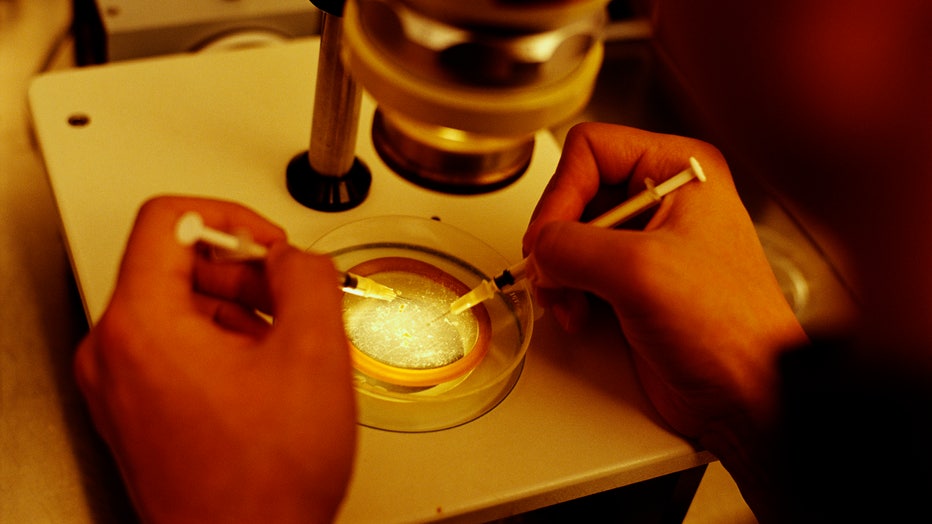
Scientists study specimens in a petri dish (Photo by David Butow/Corbis via Getty Images)
Britain requires every woman undergoing the treatment to receive approval from the Human Fertilization and Embryology Authority. The regulator says that to be eligible, families must have no other available options for avoiding passing on genetic disease.
Many critics oppose the artificial reproduction techniques, arguing there are other ways for people to avoid passing on diseases to their children, such as egg donation or screening tests, and that the experimental methods have not yet been proven safe.
Others warn that tweaking the genetic code this way could be a slippery slope that eventually leads to designer babies for parents who not only want to avoid inherited diseases but to have taller, stronger, smarter or better-looking children.
READ MORE: FDA approves robotic bassinet to help keep babies sleeping on their backs
Robin Lovell-Badge, a stem cell expert at the Francis Crick Institute, a biomedical research center in London, said it would be critical to monitor the babies' future development.
"It will be interesting to know how well the (mitochondrial donation) technique worked at a practical level, whether the babies are free of mitochondrial disease and whether there is any risk of them developing problems later in life," he said in a statement.
Scientists in Europe published research earlier this year that showed in some cases, the small number of abnormal mitochondria that are inevitably carried over from the mother's egg to the donor's can reproduce when the baby is in the uterus, which could ultimately lead to a genetic disease.
Lovell-Badge said the reasons for such problems were not yet understood and that researchers would need to develop methods to reduce the risk.
Doctors in the U.S. announced the birth of the world's first baby using the mitochondria donation technique in 2016, after the treatment was conducted in Mexico.