

Emu causes traffic back-up, hours-long pursuit on Maryland highway
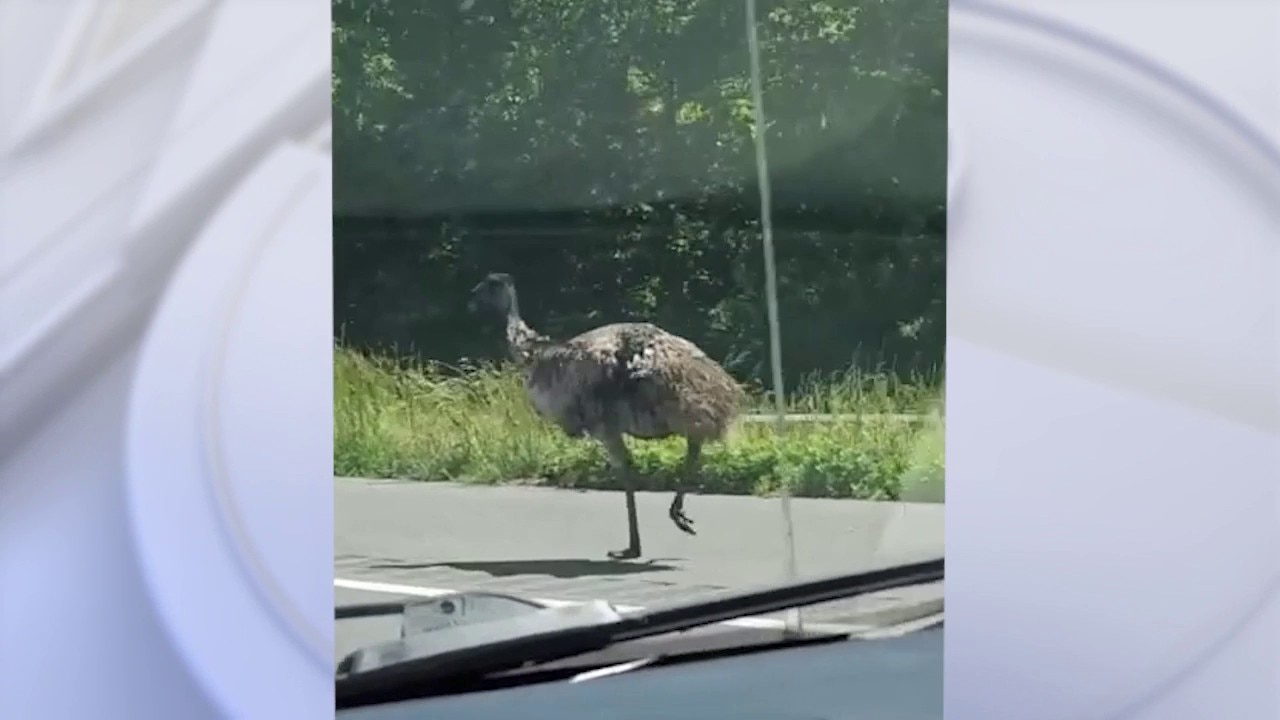
Escaped emu evades Maryland police for hours
An escaped emu held up traffic and led police on a hours-long pursuit on a highway outside Salisbury, Maryland, on Saturday, May 30. (Credit: James & Natalie Binder via Storyful)
SALISBURY, Md. - An escaped emu brought traffic to a crawl and led Maryland State Police on a lengthy pursuit over the weekend after the large flightless bird wandered onto a highway outside Salisbury.
According to Maryland State Police, troopers responded to reports of the runaway emu on the Salisbury Bypass at approximately 10:50 a.m. on Saturday, May 30. What followed was an unusual chase that lasted more than three hours as officers attempted to safely capture the bird.
Emu causes traffic back-up on Maryland highway
Big picture view:
Video recorded by James and Natalie Binder shows the emu striding along the shoulder of the highway while a state trooper cautiously approaches.
Despite multiple efforts to contain it, the bird repeatedly evaded capture, prompting a prolonged pursuit along the busy roadway.
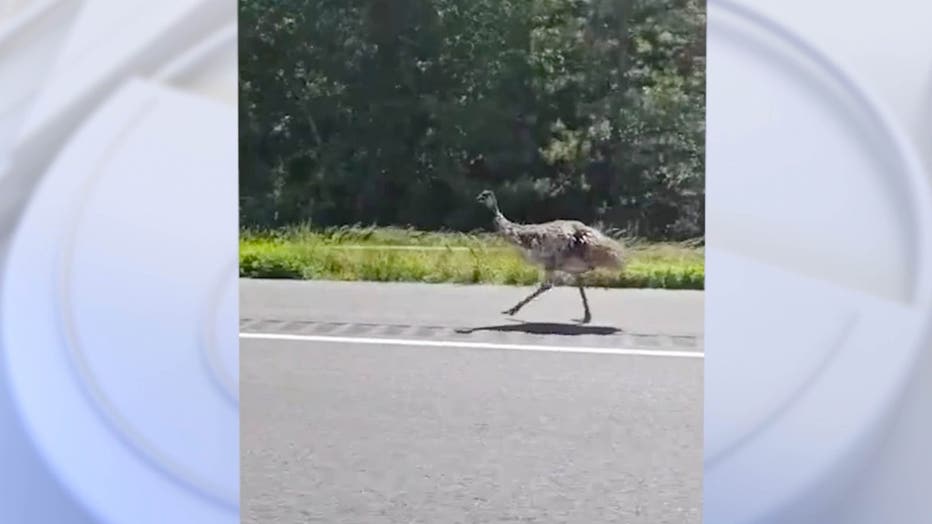
The escaped emu held up traffic and led police on a hours-long pursuit on a highway outside Salisbury, Maryland, on Saturday, May 30. (Credit: James & Natalie Binder via Storyful)
Around 1:30 p.m., the emu was struck by a vehicle while attempting to escape. Fortunately, authorities said the bird was not injured and continued running.
Troopers finally brought the pursuit to an end at about 2 p.m., telling video licensing company Storyful that they "were able to catch the emu with a dog leash."
The emu was returned to its owners. No injuries to motorists, troopers, or the emu were reported.
Emus can run up to 30 mph
Local perspective:
The emu is a large, flightless bird native to Australia. It is the second-tallest bird in the world, surpassed only by the ostrich, according to the Brookfield Zoo in Chicago.
RELATED: Emu and dogs have a blast playing chase at Florida farm
Emus are uncommon in the United States. While not endangered in their native Australia, their U.S. population sits around 12,000 to 13,000 birds spread across roughly 1,500 small-scale farms, zoos, and private residences.
Because they can run up to 30 mph and travel across county or state lines, they pose unique traffic and safety hazards.
The Source: This story was reported from Los Angeles. Storyful contributed.