

US existing-home sales jump to highest level since December
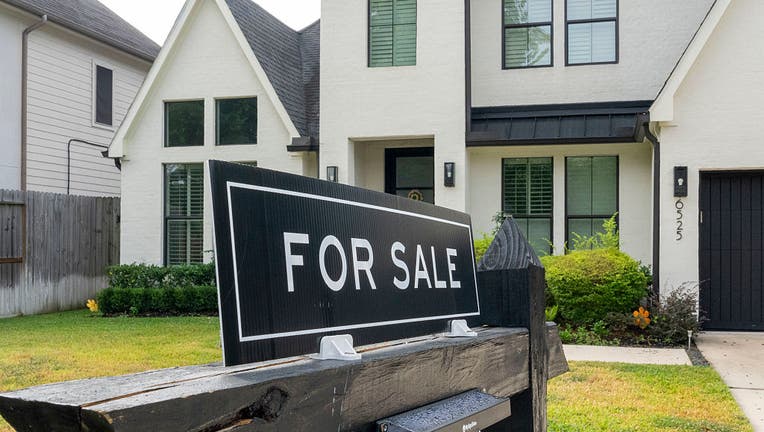
A for sale sign is seen in front of a house in a Spring Branch neighborhood in Houston, Monday, Oct. 27, 2025. (Kirk Sides/Houston Chronicle via Getty Images)
Sales of existing U.S. homes surged last month, reaching their highest level since December and marking a strong rebound in demand after a sluggish start to the spring homebuying season.
By the numbers:
Existing home sales rose 3.2% in May from the previous month to a seasonally adjusted annual rate of 4.17 million units, the National Association of Realtors said Tuesday. Sales also rose 3.2% compared with May last year.
Home sales increased from a year earlier in the Midwest, South and West, but fell in the Northeast, NAR said.
The latest sales figure topped the roughly 4.07 million pace economists were expecting, according to FactSet.
RELATED: Mortgage rates are moving again: What homebuyers need to know
Home sales have been mostly hovering close to a 4-million annual pace going back to 2023, far short of the historic norm that is closer to 5.2-million.
Sales rose last month even as mortgage rates have continued to mostly trend higher this spring, although they remain below where they were a year ago.
Home prices continued to rise nationally last month. The U.S. median sales price increased 1.3% in May from a year earlier to $429,300, an all-time high for any May on data going back to 1999, NAR said. Home prices have risen on an annual basis for 35 months in a row.

Impacts of a 50-year mortgage for homebuyers
President Donald Trump has mentioned a new plan to develop a 50-year mortgage that officials say could expand access to homeownership, though some experts are worried that longer-term mortgages could hamstring homebuyers. LiveNOW’s Andy Mac is learning more about how the proposal could impact homebuyers with Jason Mitchell, a real estate broker and the founder of the Jason Mitchell Group.
What they're saying:
Even so, home price growth is now lagging income growth in many areas. That, plus mortgage rates holding below where they were this time last year, is helping to improve affordability, giving the housing market momentum, said Lawrence Yun, NAR’s chief economist.
"I cannot definitively say if home sales are truly coming out of the slump, because we know that there’s still uncertainty related to the oil prices or how the mortgage rates will move," Yun said, adding that he expects home sales will emerge from their multi-year slump if the average rate on a 30-year mortgage drops back closer to 6%.
RELATED: These are the 50 fastest-growing neighborhoods in the US, according to data
Big picture view:
The U.S. housing market has been in a slump since 2022, when mortgage rates began to climb from pandemic-era lows. Sales of previously occupied U.S. homes were essentially flat last year, stuck at a 30-year low. They have remained sluggish so far this year. They were flat in April after declining from a year earlier through the first three months of this year.
Years of soaring home prices, especially in the early part of this decade when rock-bottom mortgage rates fueled a buying frenzy, have left many would-be homebuyers frozen out of the market. And a chronic shortage of homes for sale nationally, due partly to years of below-average new home construction, has helped prop up home prices even in a multiyear sales slump.
RELATED: Top 5 US housing markets where home prices are dropping right now
Homes purchased last month likely went under contract in March and April, when the average rate on a 30-year mortgage ranged from 6% — close to its lowest level in three and a half years — to 6.46%, according to mortgage buyer Freddie Mac. The average rate was at 6.48% last week, down from 6.85% a year earlier.
While the average rate has remained below where it was a year ago, it has been mostly trending higher since the war with Iran began, disrupting the passage of tankers ferrying crude oil from the Persian Gulf to customers worldwide and driving oil prices sharply higher. Expectations of high oil prices as the war continues have pushed up the long-term bond yields that lenders use as a guide to pricing home loans, causing mortgage rates to climb.
Dig deeper:
Despite the uncertainty over mortgage rates, first-time buyers accounted for 35% of home purchases last month, the highest share going back to June 2020, Yun said. Historically, they made up 40% of home sales.
Those who can afford to buy at current rates are likely benefitting from buyer-friendly trends in many markets. In May, median list prices were down 2.4% from a year earlier, the steepest drop on data going back to 2017, according to Realtor.com.
They also have more homes on the market to choose from, although home inventory levels remain well below historical norms.
RELATED: New data shows where mortgage delinquency is climbing the fastest
There were 1.55 million unsold homes at the end of May, up 3.3% from April and up 0.6% from May last year, NAR said. That’s still short of the roughly 2 million homes for sale that was typical before the COVID-19 pandemic.
May’s month-end inventory translates to a 4.5-month supply at the current sales pace. Traditionally, a 5- to 6-month supply is considered a balanced market between buyers and sellers.
The Source: The Associated Press contributed to this report. The information in this story comes primarily from data released by the National Association of Realtors (NAR), which reported May existing-home sales, home prices, inventory levels and buyer trends. This story was reported from Los Angeles.