

FDA advisers back 1st RSV vaccine for pregnant women that protects newborns

What is respiratory syncytial virus (RSV)?
RSV is a common respiratory virus that usually causes mild, cold-like symptoms.
A first-of-its-kind RSV vaccine for pregnant women guards their newborns against the scary respiratory virus -– and federal health advisers on Thursday backed Pfizer's shot despite some lingering questions.
RSV fills hospitals with wheezing babies each fall and winter, and the virus struck earlier than usual and especially hard in the U.S. this past year.
If the vaccine pans out, "many infants and their parents will breathe easier in the coming years," said Dr. Jay Portnoy, a member of the Food and Drug Administration advisory panel from Children’s Mercy Hospital in Kansas City, Missouri.
The idea: Give women a single injection late in pregnancy, between 24 weeks and 36 weeks, so they develop RSV-fighting antibodies that pass through the placenta — just like they pass protection against other bugs to their babies.
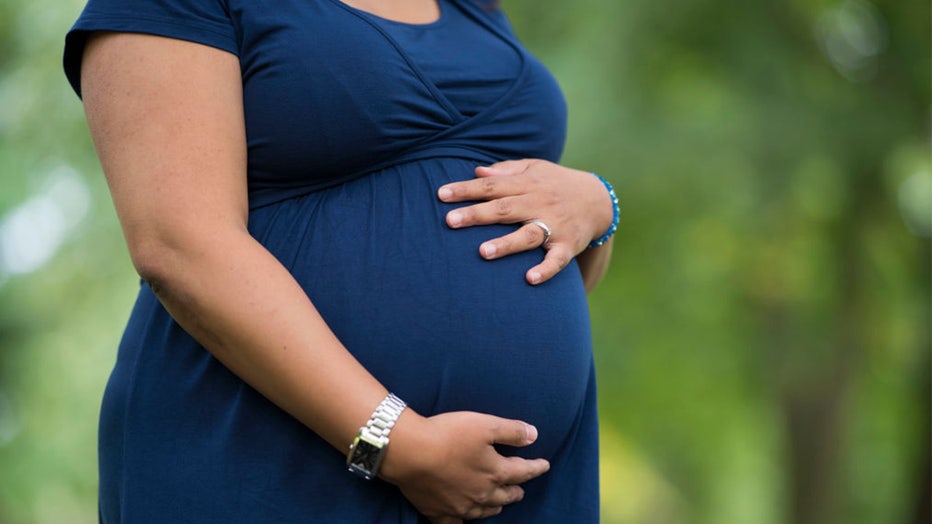
FILE - A pregnant woman holds her belly. (Matthew Horwood/Getty Images)
In Pfizer's international study of nearly 7,400 pregnant women, maternal vaccination proved 82% effective at preventing severe RSV during babies’ most vulnerable first three months of life. At age 6 months, it still was proving 69% protective against severe illness.
Pfizer said there were no signs of safety problems but the FDA did ask its scientific advisers to consider whether a slight difference in premature birth between vaccinated moms and those given a dummy shot was of concern. Debate over whether that was really a hint of trouble or just due to chance dominated the panel's daylong meeting.
Pfizer pledged to closely track the vaccine's real-world use for more evidence. Ultimately the advisers unanimously decided that the shot is effective — and voted 10-4 that there's adequate safety data. The FDA will consider Thursday's recommendations in making the final decision on approval.
"If you’re in any sense risking premature births with this vaccine, I think there will be a big price to pay," said Dr. Paul Offit of the Children’s Hospital of Philadelphia, among the panelists who voted "no" on the safety question.
If the FDA ultimately approves the maternal shot, it would mark a second milestone in the decades-long quest to prevent the respiratory syncytial virus. Earlier this month the FDA approved the world’s first RSV vaccine, rival GSK’s shot for older adults, who also are at high risk. There isn't a vaccine yet for children, but Pfizer is about to begin testing one.
Here are some things to know:
RSV is a common threat
For most healthy people, RSV is a cold-like nuisance. But it can be life-threatening for the very young –- infecting deep in the lungs to cause pneumonia or impeding babies’ breathing by inflaming their tiny airways. In the U.S. alone, between 58,000 and 80,000 children younger than 5 are hospitalized each year, and between 100 and 300 die, according to the Centers for Disease Control and Prevention.
"All young infants are at risk of severe disease with RSV," but postponing infection even by a few months lessens that risk, said CDC’s Dr. Katherine Fleming-Dutra.
VACCINE’S POTENTIAL IMPACT
Pfizer’s vaccine isn’t intended to prevent RSV infection but to avoid the worst outcomes. In late-stage testing, six infants born to vaccinated mothers had a severe RSV illness in their first three months of life compared to 33 infants whose mothers received a dummy shot. In addition, the vaccine cut in half the chances of needing any medical attention for an RSV infection by age 6 months.
The company predicts the U.S. could prevent as many as 20,000 infant hospitalizations a year, and 320,000 doctor visits, if enough pregnant women were vaccinated.
Safety data
Vaccine reactions included typically mild injection-site pain and fatigue. As for the prematurity question, vaccinated mothers had slightly more preterm infants –- 5.7% versus 4.7%. The vast majority were born just a few weeks early. That’s better than the nation’s preterm birth rate -- overall in the U.S., 1 in 10 babies were born premature last year –- and the study imbalance wasn’t statistically significant, meaning it could be due to chance.
Competitor GSK halted its own trials of a maternal RSV vaccine because of prematurity concerns, spurring questions about Pfizer's shot. Pfizer said the preterm difference in its study was fueled by participants in South Africa — for unknown reasons — and there was no difference spotted in the U.S. or other high-income countries.
"Do you hold hostage the potential benefits of the vaccine" without clear evidence of a problem, Dr. William Gruber, Pfizer’s senior vice president, asked the panelists.
"There is certainty that the vaccine works and will keep infants out of the hospital in the United States as soon as this winter," he said.
A total of 17 infants died during the study, five born to vaccinated mothers and 12 to those given a dummy shot. Researchers deemed none of the deaths related to the vaccine but FDA said it "is unable to exclude the possibility" that one infant’s death, stemming from extreme prematurity, might be related.
Vaccines always get close safety scrutiny but regulators are especially mindful of a major setback in the 1960s when an experimental RSV shot worsened infections in children. Eventually scientists figured out the problem and the RSV vaccines in the pipeline today are made with safer, modern methods -- yet still were tested first in older adults.
Another open question
FDA's advisers also cautioned that it's not clear which other vaccines given to pregnant women can be administered during the same doctor's visit. They pointed to data suggesting that a vaccine against whooping cough doesn't seem as strong if pregnant women receive it at the same time as the RSV shot.
What happens next?
FDA’s advisers already have recommended approving Pfizer’s vaccine for older adults, and the agency is expected to make a decision by month’s end. Whether to use the same shot in pregnant women will be a separate FDA decision, expected in August.
Meanwhile, rival GSK is gearing up for fall immunizations with its RSV vaccine for seniors. First, the CDC's advisers will debate next month whether all older adults or only those at high risk need vaccination.
Vaccines aren’t the only advance in the pipeline. High-risk infants can get monthly doses of a protective drug during RSV season, although CDC data shows too few receive it. European regulators recently approved the first one-dose option, from Sanofi and AstraZeneca, opening that type of protection to more infants. FDA’s advisers will debate that drug next month, too.
___
The Associated Press Health and Science Department receives support from the Howard Hughes Medical Institute’s Department of Science Education. The AP is solely responsible for all content.