

Map: 24 states sue Trump administration over FEMA disaster funding
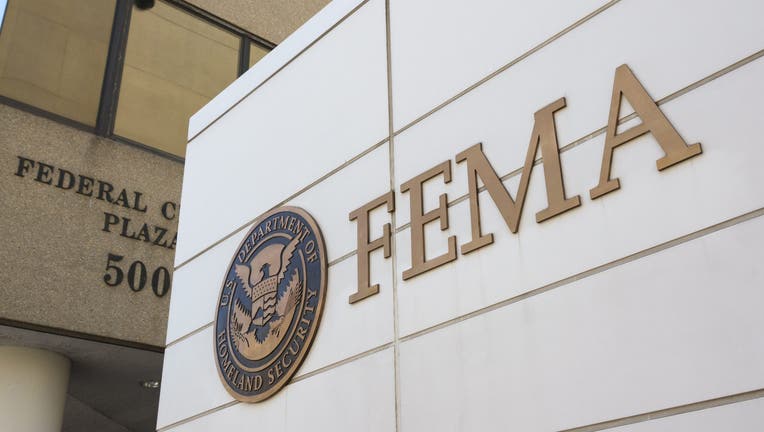
A Federal Emergency Management Agency (FEMA) sign is displayed at their headquarters on May 30, 2026 in Washington, DC. (Photo by Kevin Carter/Getty Images)
More than two dozen states are suing the Trump administration over a policy that requires them to comply with new election and immigration rules as a condition for receiving billions of dollars in federal disaster funding.
The lawsuit was filed against the Federal Emergency Management Agency, which is overseen by the Department of Homeland Security.
Why are states suing?
What they're saying:
The lawsuit argues that the Trump administration is requiring states to change their elections systems and help DHS with immigration enforcement in order to receive critical funding. The conditions would also allow DHS to terminate grants at any time and for any reason.
The states say putting conditions on congressionally appropriated funding violates the Administrative Procedure Act and the U.S. Constitution’s spending clause.
RELATED: Disaster aid approved for seven states, others wait for a decision
"Once again, the Trump Administration is threatening to jeopardize public safety by unlawfully withholding billions in critical funding and once again, they won’t get away with it," Rhode Island Attorney General Peter Neronha said, per The Associated Press. "This Administration is using the safety of Americans as collateral by attempting to bully the states into relinquishing their constitutional right to enact policies and laws that best serve their residents."
Among the requirements being challenged in Thursday’s lawsuit is that states change their elections systems. They must transition to paper-ballot systems, conduct a manual audit of voting systems, reconcile voters and verify the citizenship of every registered voter in the state’s voter databases.
By the numbers:
If states fail to comply, they risk losing at least 20% of their Homeland Security Grant Program funding, which is spent on measures to protect people from cyberattacks and terrorism.
Which states are suing?
Local perspective:
The lawsuit is joined by attorneys general from Arizona, California, Colorado, Connecticut, Delaware, Hawaii, Illinois, Maine, Maryland, Massachusetts, Michigan, Minnesota, Nevada, New Jersey, New Mexico, New York, North Carolina, Oregon, Rhode Island, Vermont, Virginia, Washington, Wisconsin and the District of Columbia, as well as the governors of Kentucky and Pennsylvania.
What does the administration say?
The other side:
In a statement, a spokesperson for FEMA called the lawsuit an example of "partisan pushback" and said they expected "these left-wing politicians to oppose common-sense measures designed to protect election security and safeguard the integrity of American democracy."
RELATED: What is FEMA? The Federal Emergency Management Agency explained
"Election security is national security, and protecting our critical infrastructure remains a top priority for the Trump Administration," they said. "Concerns over voting processes, data security, and registration practices have made it clear that action is required."
Big picture view:
The lawsuit is one of scores that have challenged the Trump administration over its repeated effort to browbeat mostly Democratic states into complying with its priorities to get billions of dollars in federal funding. The strategy has been used on everything from education funding to domestic violence grants to highway funding.
The courts have repeatedly found this strategy to be unlawful and unconstitutional.
The Source: This report includes information from The Associated Press.