

Reusable water bottles hold 40,000 times more bacteria than toilet seat, study finds

Reusable water bottles have more bacteria than toilet seats: Study
On average, the study found that straw-top reusable water bottles faired better than screw-top water bottles.
LOS ANGELES - You may want to think twice before topping off your water bottle if you don't clean it regularly.
A new study that described reusable water bottles as "portable Petri dishes" revealed they can harbor 40,000 times more bacteria than the average toilet seat.
That's according to researchers from waterfilteruguru.com, who got the results by swabbing different parts of a water bottle - the spout lid, straw lid, and squeeze-top lid - three times each.
Two different kinds of bacteria were detected: Gram-negative rods, which can cause infections and are becoming increasingly resistant to antibiotics, and bacillus, which can result in gastrointestinal issues.
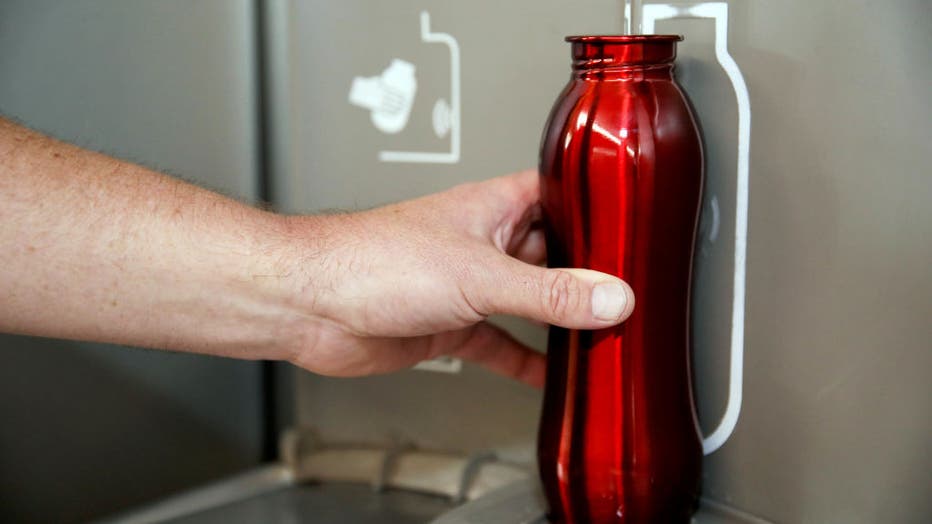
Water bottle at a hydration station in Terminal 3 at the San Francisco International Airport in San Francisco, Calif., on Thursday, August 1, 2019. (Photo By Yalonda M. James/The San Francisco Chronicle via Getty Images)
This doesn't surprise you? Let's look at a few more comparisons.
Your reusable water bottle contains twice as many germs as the kitchen sink, and four times the amount of bacteria as a computer mouse. Compare it to your pet's drinking bowl and that's 14 times more bacteria, researchers found.
The study compared different styles of water bottles as well. Squeeze-top bottles tested as the cleanest of the three styles, with a tenth of the amount of bacteria as one with a screw-top or straw-fitted lid.
Experts recommend washing reusable water bottles at least once a day with hot soapy water and sanitizing it at least once a week. If you are sick, drink from the bottle while eating, or fill it with coffee or juice or something other than water, clean it even more, they said.
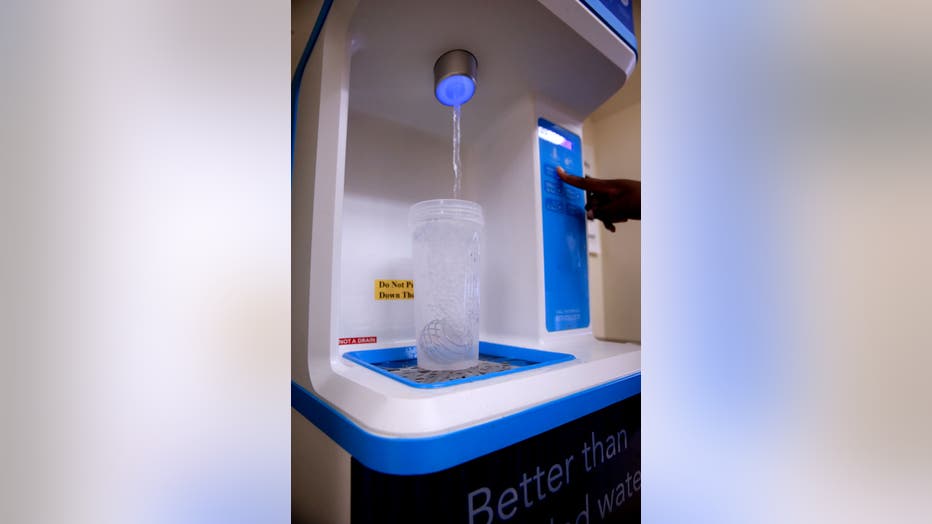
Students refill their water bottles at the FloWater dispenser during lunch break at San Mateo High School in San Mateo, California on Wed. April 6, 2016. (Photo By Michael Macor/The San Francisco Chronicle via Getty Images)
More than 60% of respondents said they clean their water bottles once or more per day, but others weren’t so diligent. One-quarter of Americans wash their water bottles just a few times per week, while over 10% only clean them a few times per month.
You can read the full study by tapping or clicking here.