

Paramount’s $81B Warner Bros. Discovery merger faces lawsuit from 12 states
In this photo illustration, a smartphone displays the Paramount Skydance logo in front of a blurred Warner Bros. Discovery emblem. (Photo illustration by Cheng Xin/Getty Images)
NEW YORK - Twelve states filed a lawsuit Monday seeking to block Paramount's proposed $81 billion takeover of Warner Bros. Discovery, arguing the merger would eliminate competition in Hollywood and reduce choices for consumers nationwide.
A Paramount-Warner combo would bring together two of Hollywood's last five legacy studios. It would also mean putting Warner's HBO Max, libraries filled with fan favorites like "Harry Potter" and even CNN under the same roof of Paramount-owned CBS and the Paramount+ streaming service.
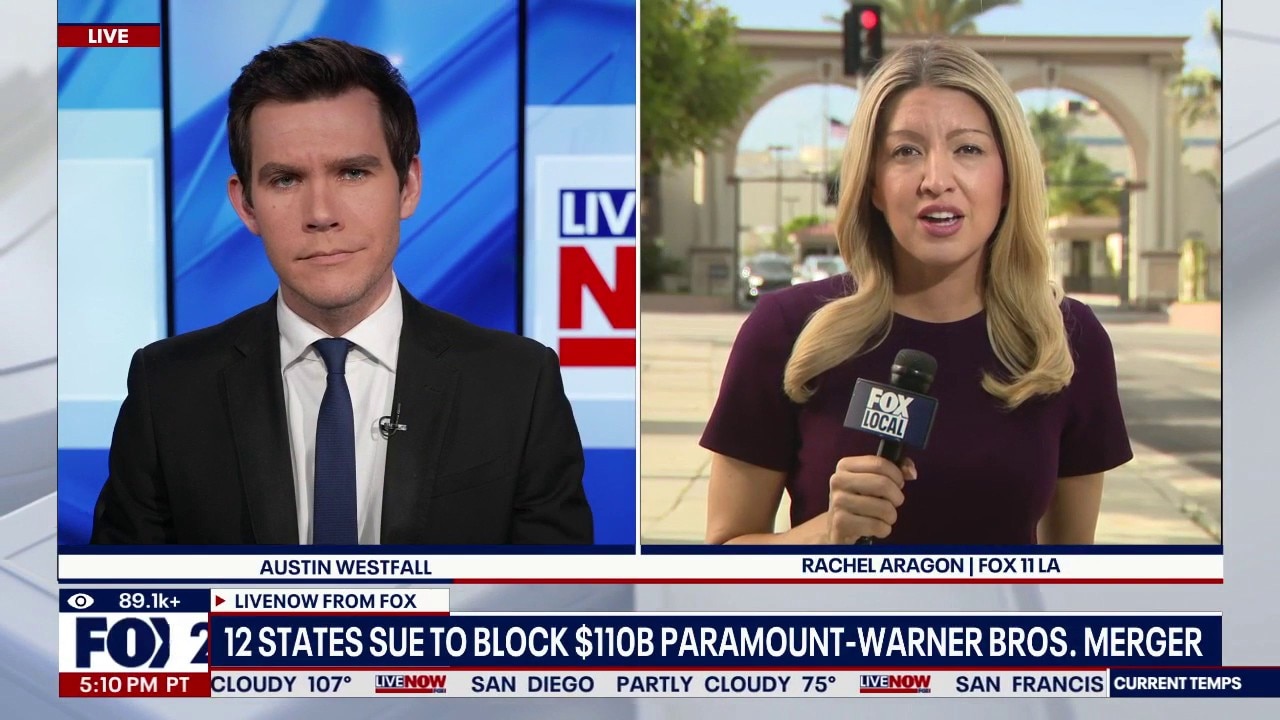
States sue to block Paramount-Warner Bros. merger
FOX 11 Los Angeles reporter Rachel Aragon joins LiveNOW's Austin Westfall with more details on a new lawsuit filed by roughly a dozen states to block the $110 billion merger between Paramount and Warner Bros.
What they're saying:
"Audiences on every sofa and in every movie (theater) seat would feel the impact of this unlawful merger," California Attorney General Rob Bonta, who is leading the case, said in a news conference from Los Angeles. He said the deal would result in higher prices, fewer movies and TV shows and lower quality of content overall.
In Monday's complaint, the states said such a tie-up would also "inflict substantial harm" on movie theatres and basic cable distributors. Bonta's office said the states are asking Warner and Paramount to not close this merger "until after the judicial process concludes." And if the companies do not agree, the coalition would then file a temporary restraining order.
The other side:
Paramount said Monday's lawsuit "distorts settled antitrust law" and maintained that its merger would instead create a "stronger competitor against dominant streaming and technology platforms who have harmed the market for theatrical exhibition and jobs in the entertainment industry."
The company, which was bought by Skydance just last year, vowed to "vigorously defend" the transaction.
Warner deferred to Paramount for comment. Beyond California, states joining Monday's lawsuit include Arizona, Colorado, Connecticut, Massachusetts, Minnesota, Nevada, New Jersey, New Mexico, New York, Oregon and Washington.
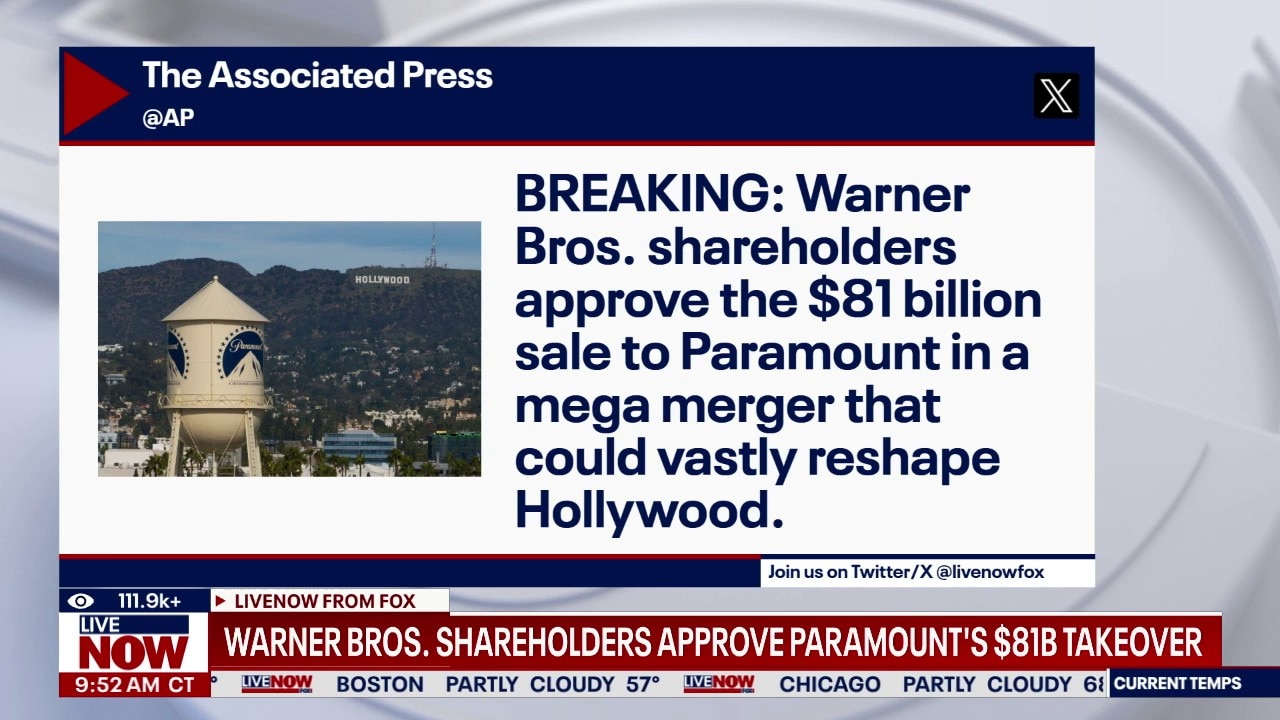
Warner Bros. shareholders approve Paramount takeover
An $81 billion Warner-Paramount mega merger has received shareholders’ stamp of approval, propelling a deal that could vastly reshape Hollywood and the wider media landscape.
Big picture view:
Monday's antitrust case arrives at a pivotal time for the Paramount-Warner transaction — which, after months of what became a very public bidding war with Netflix, received shareholders’ stamp of approval in April and then a blessing from President Donald Trump's administration just last month.
The companies have hoped to close their deal sometime in the third quarter of this year, recently signaling an effort to complete the process in the coming weeks. The states’ lawsuit could throw a wrench in those plans, at least for now.
The clock is ticking. Paramount also pledged to give shareholders some compensation if that process isn’t complete by Sept. 30 — in the form of a 25-cent per share "ticking fee" for every quarter past that date. And it’s agreed to a regulatory termination fee of $7 billion.
Beyond the U.S., Paramount has touted additional regulatory clearances it says it’s received in a handful of other countries, including China, Canada and Australia. Meanwhile, other reviews remain in progress, including in the European Union and the U.K. — which has separately suggested it may intervene.
Including debt, Paramount’s proposed purchase of Warner is valued at nearly $111 billion (or $31 per share) based on current outstanding shares.
Warner and Paramount argue that merging will be good for growth in the industry and give consumers access to more content, especially if HBO Max and Paramount+ libraries are combined. But critics have decried what further consolidation could mean in an industry already controlled by just a few major players.
Monday's lawsuit from the states pointed to movies that make their way into theaters and the wider TV landscape — noting that a combined Paramount-Warner could control nearly a third of both the theatrical film distribution market as well as basic cable programming.
Thousands of actors, directors, writers and other industry professionals have already voiced "unequivocal opposition" to the deal. Monday's challenge garnered applause from groups like the Writers Guild of America, who warn that consolidation would result in "fewer jobs, lower wages for entertainment workers, less variety of programming, and higher prices for consumers"
Throughout Paramount's quest for Warner, questions of political influence have also piled up — with criticism falling largely along party lines in Washington. No Republicans signed on to the states’ case on Monday.
Democrats have long expressed skepticism about whether regulators working under Trump would scrutinize the deal as heavily. Several attorneys general joining Monday's lawsuit took aim at the Justice Department's decision to not challenge the deal — pointing in particular to the president's close relationship with the billionaire family of Paramount CEO David Ellison.
Last month, DOJ leadership released a lengthy statement in support of the deal — maintaining a Paramount-Warner combo would "increase competition across the media and entertainment ecosystem, with benefits for American consumers and workers." The Justice Department had maintained that politics would not play a role in its review.
Trump himself previously made public comments about Warner’s future, despite backpedaling on what he once suggested his personal role would be in approving a merger.
Many eyes are on CNN, a network that has long attracted ire from Trump and his allies.
Paramount’s CBS has already seen significant turmoil and shifts in editorial leadership since coming under Skydance ownership last year — and if Warner merger goes through, the reach of that could grow. Several Trump administration officials have also been far from shy from sharing their hopes for CNN under Paramount ownership, with Defense Secretary Pete Hegseth telling reporters in March that "the sooner David Ellison takes over that network, the better."
The Source: The Associated Press contributed to this report. Information in this story comes from the antitrust lawsuit filed Monday by a coalition of 12 states led by California Attorney General Rob Bonta, statements from Bonta and his office, court filings outlining the states' legal arguments, and responses from Paramount. This story was reported from Los Angeles.