

Swarm of bees kill Kentucky man moving potting soil bag from porch, coroner says

This tiny McDonald's is actually a fully functioning beehive
McDonald's just opened its tiniest location for some of the world’s most important customers: bees.
A 59-year-old Kentucky man is dead after he was stung to death by a swarm of bees on his front porch.
Deputy Coroner John W. Jones says the man was moving an old bag of potting soil from his porch in Harlan Monday afternoon when he was stung by the bees from inside the bag. CPR was started by family and continued by paramedics and doctors until those attempts failed, authorities said.
The Harlan County Coroner's Office said the man was rushed by ambulance to a local hospital, where he later died from his injuries.
"Our heartfelt prayers go out to the entire family and friends," a post read on the coroner’s office Facebook page.
WHERE DO BEES GO IN THE WINTER?
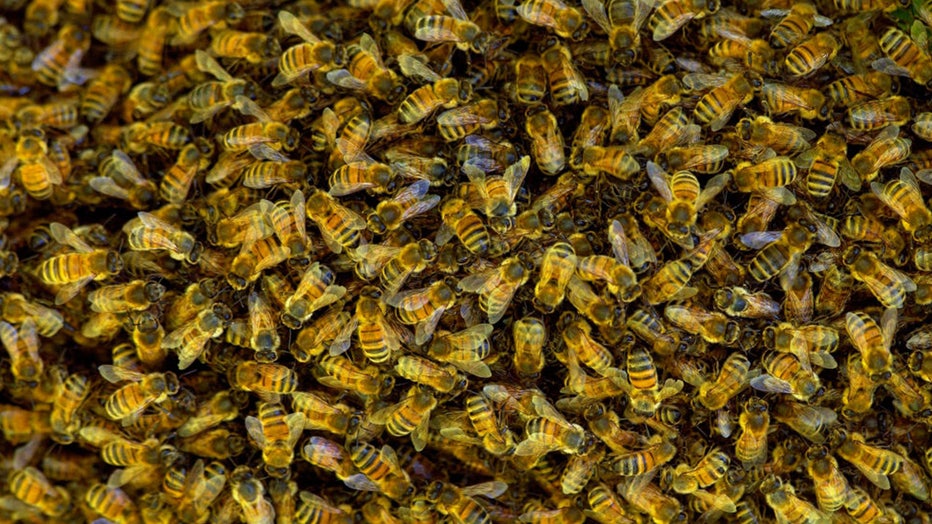
FILE - Honey bees swarming in a plum tree. (Tim Graham/Getty Images)
Face-to-face with a bee swarm
Beekeepers warn if you ever find yourself where bees are attacking you, the most important thing to do is protect your face and run indoors or get into a vehicle.
"Once the bees get riled up, the most important thing to do is run away as fast as possible. Do not try to retrieve belongings nearby. Do not try to stand still in an attempt to fool the bees. That may work with a snake under certain circumstances, but honey bees won't be impressed," states the University of Arizona's College of Agriculture and Life Sciences in an online information sheet.
Those who study bees' behaviors also warn not to fight the insects because they have the advantage of numbers and the gift of flight.
"The more you flail your arms, the madder they will get. Just run indoors as fast as possible," the British Beekeepers Association reports.
The normal top speed of a worker would be about 15-20 mph, when flying to a food source, and about 12 mph when returning laden down with nectar, pollen, propolis or water,
If you are allergic to bees, you should have an EpiPen with you at all times when you are outdoors.