Flood Watch
until MON 5:00 AM MST, Eastern Cochise County below 5000 ft including Douglas/Wilcox, Upper Gila River and Aravaipa Valleys including Clifton/Safford, Southeast Pinal County including Kearny/Mammoth/Oracle, Western Pima County including Ajo/Organ Pipe Cactus National Monument, Dragoon/Mule/Huachuca and Santa Rita Mountains including Bisbee/Canelo Hills/Madera Canyon, Tucson Metro Area including Tucson/Green Valley/Marana/Vail, Tohono O'odham Nation including Sells, Baboquivari Mountains including Kitt Peak, Upper San Pedro River Valley including Sierra Vista/Benson, Chiricahua Mountains including Chiricahua National Monument, Galiuro and Pinaleno Mountains including Mount Graham, Santa Catalina and Rincon Mountains including Mount Lemmon/Summerhaven, White Mountains of Graham and Greenlee Counties including Hannagan Meadow, South Central Pinal County including Eloy/Picacho Peak State Park, Upper Santa Cruz River and Altar Valleys including Nogales, Northwest Plateau, Lake Havasu and Fort Mohave, North Phoenix/Glendale, Aguila Valley, Mazatzal Mountains, Tonopah Desert, Gila Bend, San Carlos, East Valley, Northwest Pinal County, Northwest Valley, Southeast Valley/Queen Creek, Globe/Miami, Deer Valley, Fountain Hills/East Mesa, Apache Junction/Gold Canyon, Buckeye/Avondale, Tonto Basin, Rio Verde/Salt River, South Mountain/Ahwatukee, Dripping Springs, Southeast Gila County, Pinal/Superstition Mountains, Scottsdale/Paradise Valley, New River Mesa, Sonoran Desert Natl Monument, West Pinal County, Superior, Cave Creek/New River, Central Phoenix, Yavapai County Mountains, Little Colorado River Valley in Navajo County, Western Mogollon Rim, Coconino Plateau, Chinle Valley, Yavapai County Valleys and Basins, Oak Creek and Sycamore Canyons, Grand Canyon Country, Chuska Mountains and Defiance Plateau, Northeast Plateaus and Mesas South of Hwy 264, Little Colorado River Valley in Coconino County, Black Mesa Area, Marble and Glen Canyons, Northeast Plateaus and Mesas Hwy 264 Northward, Northern Gila County, White Mountains, Kaibab Plateau, Eastern Mogollon Rim, Little Colorado River Valley in Apache County

US lightning bolt stretching across 3 states sets world record for longest flash
Published February 1, 2022 10:39 AM MST

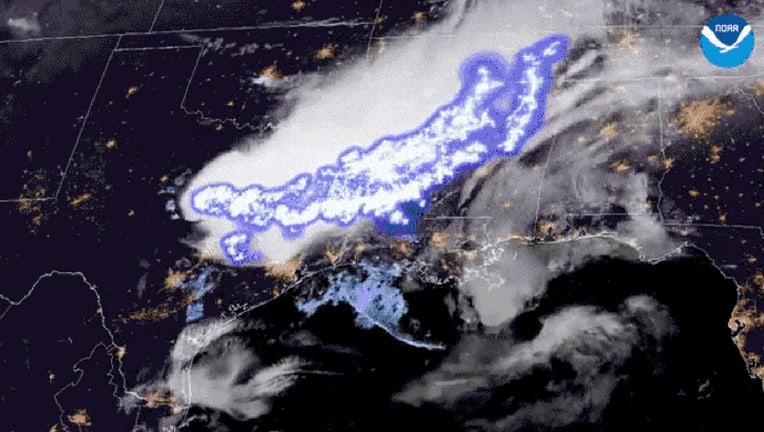
A bolt of lightning nearly 500 miles long that stretched across three states has set a new world record for the longest flash.

Satellite technology aided the World Meteorological Organization in establishing two new world records Monday for megaflashes of lightning in notorious hotspots in North and South America.
FOX-Weather_Map_Longest_Lightning_Strike.png

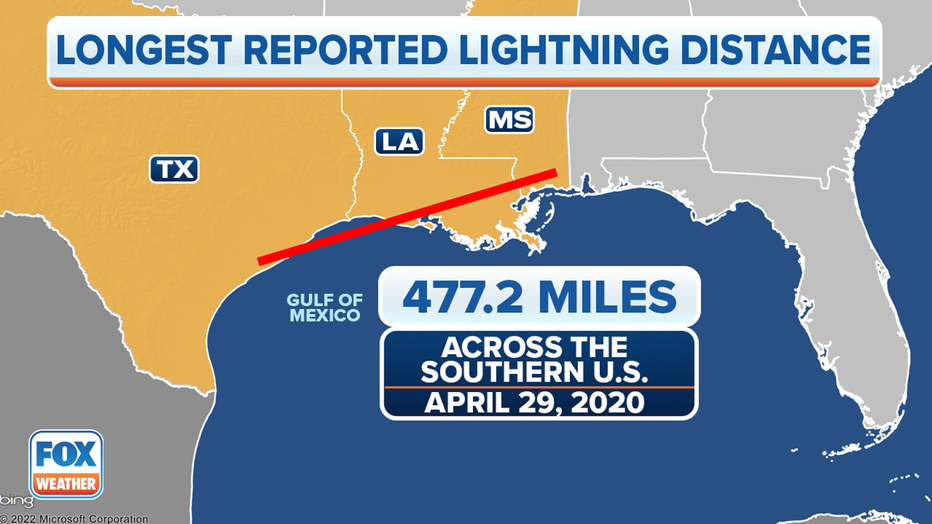
The longest single flash was recorded across parts of Texas, Louisiana and Mississippi and covered a horizontal distance of 477.2 miles on April 29, 2020. The previous record was 440.6 miles wide across parts of southern Brazil on Oct. 31, 2018.

"Lightning is a major hazard that claims many lives every year. The findings highlight important public lightning safety concerns for electrified clouds where flashes can travel extremely large distances," WMO Secretary-General Professor Petteri Taalas said.

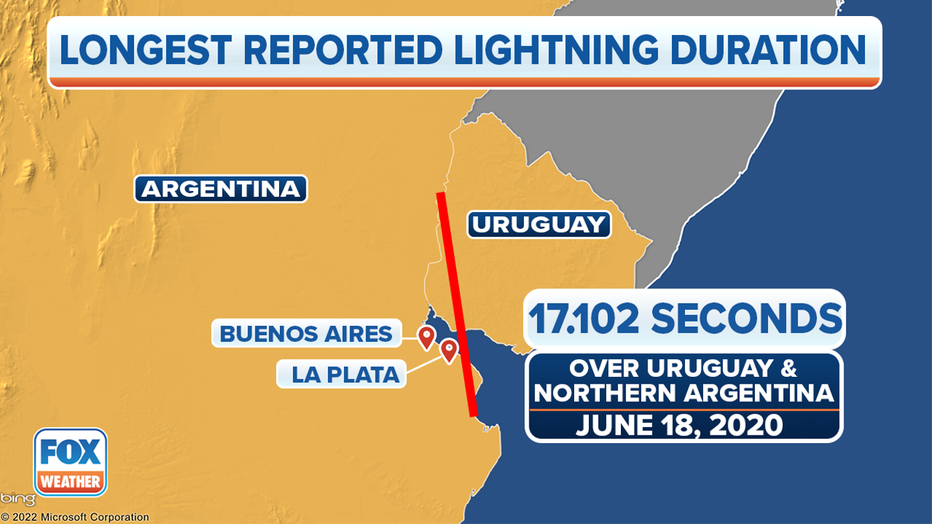
Another single bolt of lightning on June 18, 2020, lasted 17.1 seconds over Uruguay and northern Argentina. It broke the previous 2019 record of 16.7 seconds for the greatest duration for a single lightning flash.
50c27ea6-FOX-Weather_Map_Uruguay_Longest_Lightning_Strike.png

"These are extraordinary records from single lightning flash events. Environmental extremes are living measurements of the power of nature, as well as scientific progress in being able to make such assessments. It is likely that even greater extremes still exist, and that we will be able to observe them as lightning detection technology improves," said Randall Cerveny, a professor at Arizona State University and also the chief of records confirmation for WMO.

DEBUNKING 7 MYTHS ABOUT LIGHTNING

According to the meteorological organization, these extremely large and long-duration lightning events were not isolated but happened during active thunderstorms. 

In 2021, there was a considerable increase in the number of lightning strikes in the United States according to a report by lightning research firm Vaisala.

Their national and global lightning detection system measured just over 194 million lightning strikes in the U.S. this past year -- 24 million more strikes than were recorded in 2020.

WeatherNewsTexasLouisianaMississippi