

US-Mexico trade negotiations hung up by cheese name dispute
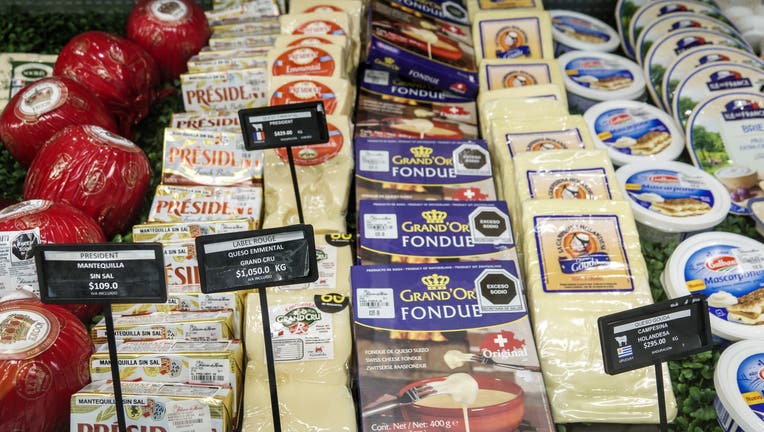
Mexico City, Mexico, Polanco, El Palacio de Hierro, luxury department store, food court, artisanal imported cheeses on display. (Photo by: Jeffrey Greenberg/Universal Images Group via Getty Images)
The U.S. is using thorny trade talks with Mexico to protest a deal that gives European cheese products exclusive naming rights in Mexico.
Sources tell Reuters that the U.S. is objecting to a deal that adds special protections to hundreds of European products in Mexico whose names are tied to specific regions, like Parmigiano Reggiano, feta and manchego, for example. It also gives the European Union legal recourse for violators, including U.S. producers who sell parmesan and feta cheese in Mexico.
US-Mexico cheese dispute
What they're saying:
The U.S. argues that names like parmesan and feta are generic, while the EU says they should only be labeled parmesan if they’re from the Parmigiano Reggiano of northern Italy and feta if they’re from select parts of Greece.
"It's absolutely wrong what Mexico did," Jaime Castaneda, executive vice president of the U.S. Dairy Export Council, told Reuters. "The Mexican government has to make it absolutely certain that the United States and the Mexican manufacturers of common cheese names will continue to be able to be in the market."
Dig deeper:
Sources say the U.S. is using high-level trade talks – including renewal of the U.S.-Mexico-Canada Agreement – as leverage over the cheese dispute.
RELATED: Trump's 50% tariffs implemented on Canadian goods after trade negotiations suspended
By the numbers:
The U.S. exports about $1 billion worth of cheese to Mexico every year, while the EU's total dairy exports to Mexico are about $200 million annually. Mexico is the biggest foreign market for U.S. cheese, accounting for about a third of all U.S. cheese exports.
What does Europe say?
The other side:
The European Commission told Reuters the deal can’t be changed. It said it has "taken note of the U.S. actions."
According to Reuters, the deal was signed in May, but Mexico has yet to finish work on its end for the agreement to take effect. The Mexican government told Reuters it has to be approved by lawmakers.
American cheese has a reputation for being overly processed, with some slices made of emulsified salts and dairy leftovers. The Institute for Agriculture and Trade Policy has warned Mexican dairy producers in the past that they were vulnerable to cheap U.S. exports.
"I'm glad tariffs on European cheese are being lowered, because Mexicans can learn to eat better cheese," Georgina Yescas Trujano, co-founder of Mexica cheesemonger Lactography, told Reuters.
"The U.S. is flooding the Mexican market with its cheeses because they can sell them very cheap," said Georgina Yescas Trujano, co-founder of Mexica cheesemonger Lactography.
The Source: This report includes information from Reuters.