

Valley wellness clinic uses hyperbaric oxygen therapy to help veterans

Clinic uses hyperbaric oxygen therapy for vets
A Scottsdale wellness clinic is helping a veteran heal in a powerful way, one dive at a time. The clinic's mission is to help a SEAL heal. FOX 10's Danielle Miller reports.
SCOTTSDALE, Ariz. - A Valley veteran is now receiving new hope through an advanced treatment known as hyperbaric oxygen therapy.
What they're saying:
"I've gone out and that's my heart set is to help people, and now I'm trying to say people help me so I can help more people."
Help is what Navy veteran Timothy Gill is in search of, and he's hoping to find it at Benessair in Scottsdale. We captured Timothy’s first day of treatment as he begins his journey of healing, one breath at a time.
Tim has spent most of his life in service, giving up his college football and boxing dreams to enlist. He spent 27 years in the military, became a Navy SEAL, and had several deployments. Now at the age of 74, Tim found himself battling a quiet enemy – memory loss, cognitive fog, and a frustrating decline in mental sharpness. A few months ago, this became apparent.
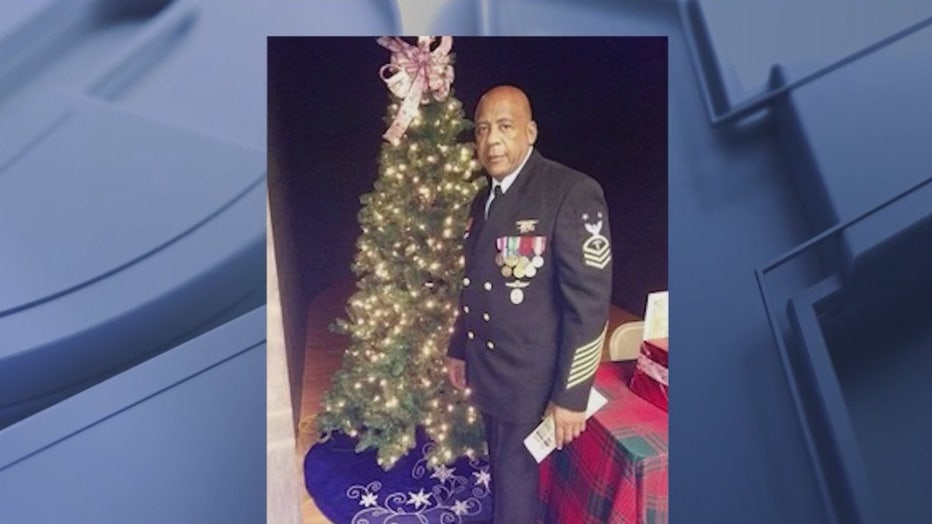
Timothy Gill
"We were driving to church one Sunday and when I made the turn, I came off of the turn, I was slightly drifting into oncoming traffic," Gill said. "She grabbed the wheel and said, 'You need to stop.' So we got to church and I let her drive in, and we were talking about it, and I was like, 'No, I didn't do that.'"
Things progressed from there. Both Timothy and his wife, Sarah, became concerned.
"I was starting to have memory issues," Gill said. "I know it's old age, but my head's been bumped every which way, from the boxing to the explosions to shooting guns to carrying boats on top of your head to jumping out of boats and riding fast planes, all of the compression of your brain bumping around and floating all around."
Tim says he's spent months seeking answers from the VA, but has walked away without a clear diagnosis or plan. His new plan came after being inspired by a friend who was experiencing the same symptoms. This friend underwent hyperbaric oxygen treatment through the nonprofit Koterra, which helps veterans suffering with brain injuries.
"My wife even talked to him on the phone, and she was like, 'That's a whole different person,'" Gill said. "I spoke with him, and he said my balance, everything is back to new."
That nonprofit put Timothy in contact with the owner and founder of Benessair in Scottsdale, Dr. Carrie Bordinko. Benessair has several treatment modalities focusing on prevention-based results. One of those being hospital-grade hyperbaric oxygen chambers. These at the clinic deliver 100 percent pure oxygen.
"It all stems from scuba diving, which is where a lot of this technology came from, and it's literally been around for 400 years, which is crazy to think of it that way," said Dr. Carrie Bordinko, owner of Benessair Health. "Different technology nowadays but it's always been there. What they found is when the body is exposed to higher levels of oxygen, and you combine it with pressure which is going down in depth which is sea. We talk in ATAS, but you can think of it as feet underwater. When you do that, it changes the way cells perform in the body. What we're doing is putting someone in a chamber and slowly descending them to a certain depth somewhere between 27 to 50 feet. When we do that, we allow the oxygen to permeate into the tissues, some parts that typically wouldn't get that much oxygen."
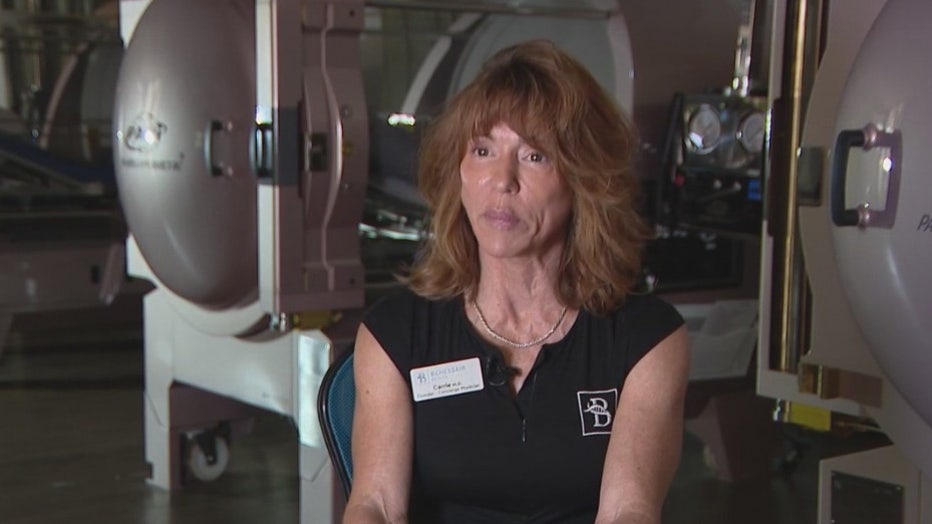
Dr. Carrie Bordinko
Benessair is providing this treatment as part of its broader support for veterans seeking cutting-edge recovery therapies. Hyperbaric oxygen therapy works by delivering pure oxygen in a high-pressure environment, which increases oxygen delivery to damaged tissue, promoting healing in the body and brain.
Bordinko says the treatment is considered "off label" and not covered by the VA or insurance.
"There's a recent study that shows PTSD is not just a mental problem or a behavioral health problem, but it's an actual physical situation that happened to them," Bordinko said. "We can really thank Doctor Shai Efrati out of the Aviv clinic in Israel who has shown we can heal those damaged brain cells and that connectivity in the brain by administering high levels of oxygen to them over a series of treatments."
A series of treatments that isn't cheap. Timothy is enrolled in a three-month program at Benessair thanks to Bordinko and generous donors from the clinic. He will complete 80 "dives", as they call them, in connection with neuro-cognitive therapy.
"What I like to point out about it is so many times when we're talking about injuries, we talk about maintaining or limping along the injury and what we're talking about is actually reversing the injury and brain trauma," Bordinko said. "That is something we've never discussed before, that is a change in the evolution is how we think about the issue of brain trauma. Working with the vets is helping to push legislation in every state which would push the VA and insurance companies to support using hyperbaric on label which means we use the term ‘off label,’ which means not covered by insurance. Not everyone can afford this and there's only so many resources to fund this."
There's been a lot of information coming out about the safety of this treatment recently. Bordinko says patient safety is top of mind at Benessair. There's physicians on site at all times, monitoring the chambers, and safety checks are performed every morning. She says these safety measures were missed in most cases where there was an injury, and in most cases the chambers were not hospital-certified.
Although we're unsure what the outcome will be with Timothy, he's hopeful and even now still trying to give back.
"My hat's off," Gill said. "If there's anyone who's donated or contributed. If you need something, call me. I will be there to do anything I can to help you for helping me. So I can get this out and say VA, this is what we need to do."
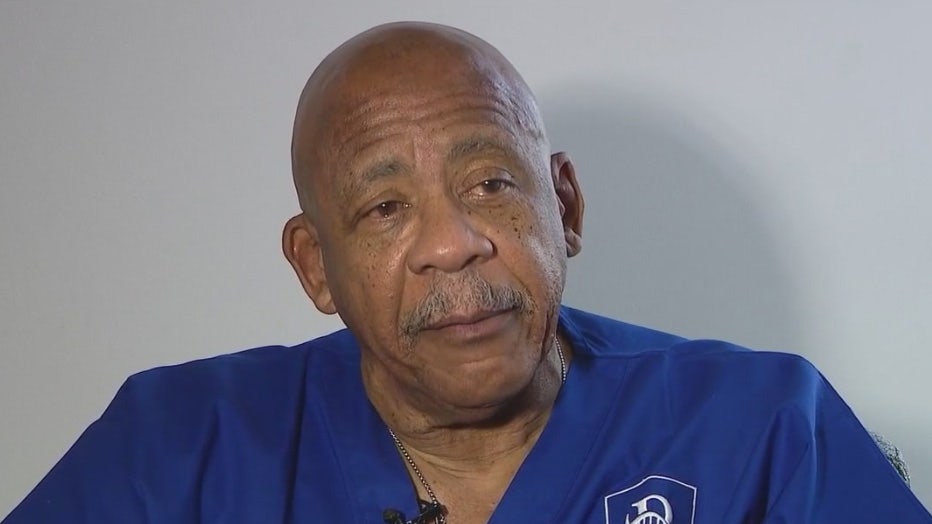
Timothy Gill
Both Timothy and Bordinko are hoping more positive outcomes will lead to change within the VA to help cover treatments like this, something Bordinko says will help save lives.
"We have great outcomes data," Bordinko said. "It's no longer 'will this work or could this help.' We can prove this helps. It needs to be talked about and needs to be more available."
What's next:
Dr. Bordinko adds that Tim has completed 17 sessions so far and is showing signs of improvement. She says his program should wrap up by Thanksgiving.