

Watch: Green auroras ripple over Earth from orbit, creating dazzling glow
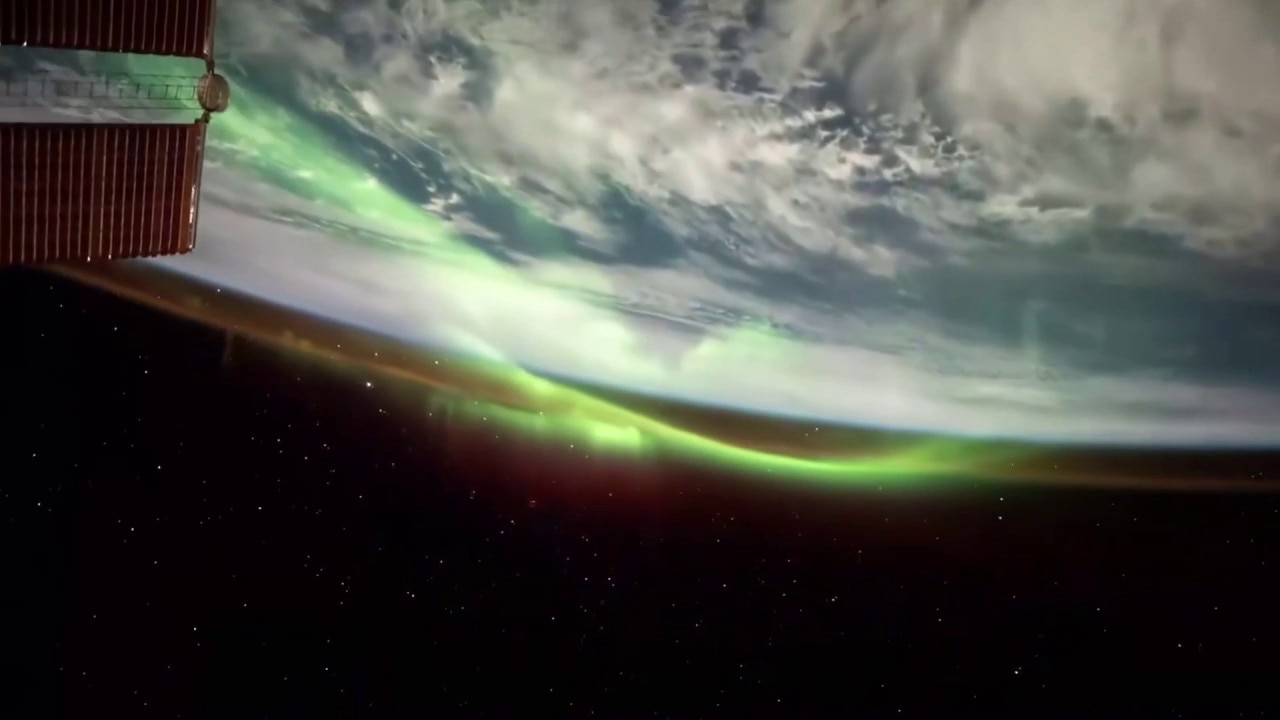
Stunning footage captures auroras from ISS
A stunning green aurora was seen rippling and pulsating from the International Space Station (ISS), footage posted on Wednesday, Feb. 4, shows. (Credit: NASA's Johnson Space Center via Storyful)
Footage released by NASA on Wednesday reveals striking green aurora ribbons illuminating our planet.
The timelapse captured from the International Space Station shows the ribbons shimmering above Earth, while a thin orange line of the atmosphere highlights the planet’s edge.
BACK-TO-BACK SOLAR STORMS HEADED FOR EARTH COULD CREATE DAZZLING AURORAS, POWER GRID FLUCTUATIONS
NASA explains that auroras form when charged particles from the Sun collide with gases in Earth’s atmosphere, guided by the planet’s magnetic field.
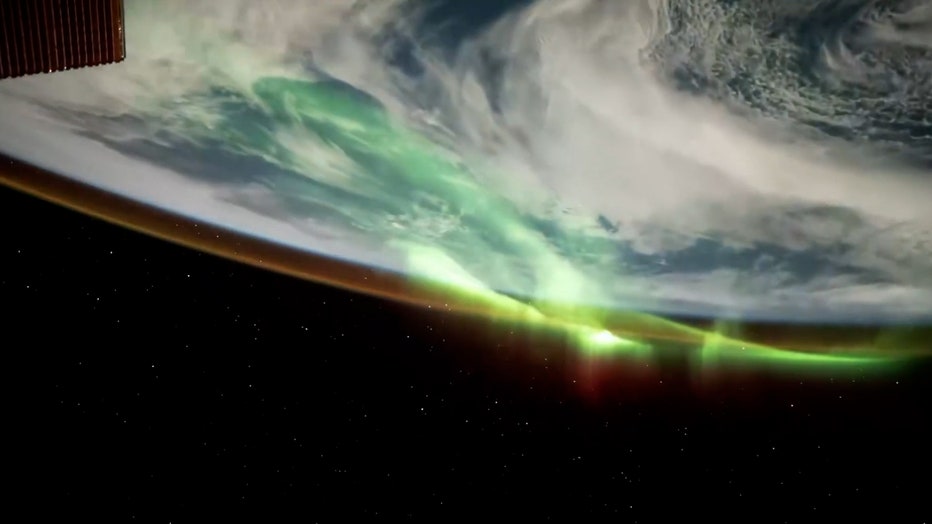
FILE - Striking green aurora ribbons illuminate Earth from International Space Station. (NASA's Johnson Space Center via Storyful)
"Oxygen produces green and red light, while nitrogen contributes blues and purples — a luminous reminder that Earth is constantly interacting with space weather far beyond what we can see from the ground," they said.
SEE IT: NASA CAPTURES STRONG X-CLASS SOLAR FLARE FROM SUN FUELING POTENTIAL FOR ENHANCED AURORAS
Recently, the Sun released a strong solar flare on Tuesday, Feb. 3, following several eruptions in the preceding days, raising the possibility of increased geomagnetic storm activity.
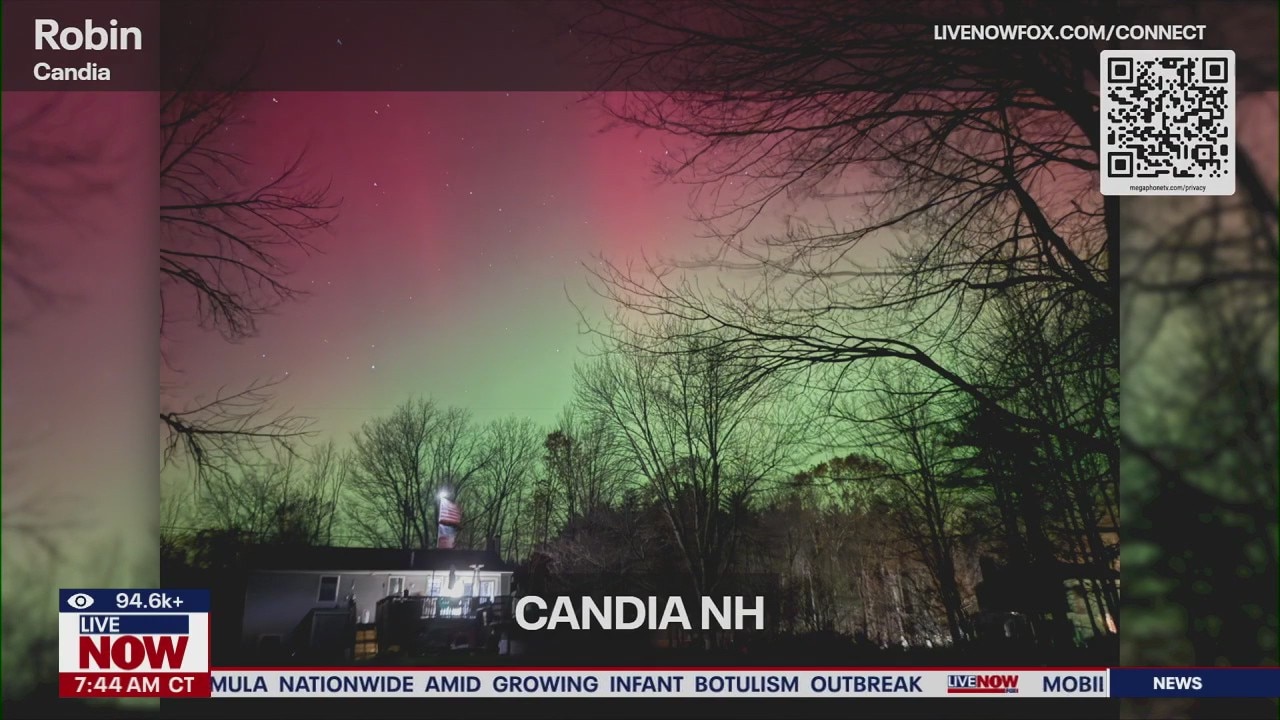
Northern lights spotted across the U.S.
The northern lights dazzled skies across the U.S. Tuesday night, caused by a geomagnetic storm that reached G4 intensity. According to NOAA's Space Weather Prediction Center, there will be another chance to see similar aurora conditions Wednesday night as far south as Alabama and Northern California. LiveNOW from FOX's Carel Lajara spoke with FOX Weather's Craig Herrera about the spectacle.
Solar flares — especially when accompanied by coronal mass ejections (CMEs) — can increase aurora views.
According to NOAA and NASA, when the Sun releases energetic particles and magnetic material — especially from coronal mass ejections (CMEs) associated with solar flares — these particles and fields can interact with Earth’s magnetic field, drive geomagnetic storms, and enhance the brightness and extent of the Northern Lights.
SEVERE GEOMAGNETIC STORM DAZZLES NIGHT SKY WITH NORTHERN LIGHTS IN MANY STATES ACROSS US

How to survive a coronal mass ejection
Most of Earth's modern power grids are more than capable of handling a large solar flare or coronal mass ejection but, what if a particularly strong space weather event took place?
In late January, a strong geomagnetic storm gave millions the rare opportunity to see the Northern Lights.