

'You have to advocate for yourself': Valley mother shares her breast cancer battle

Valley mother shares her breast cancer battle
October is Breast Cancer Awareness Month and this Saturday, tens of thousands will walk in the "Making Strides Against Breast Cancer Walk" at Tempe Beach Park. One of those will be Lindsey Dermyer, a survivor with quite a story. FOX 10's Syleste Rodriguez reports.
PHOENIX - A new mother was diagnosed with breast cancer at 29 – her daughter was only 11 months old.
What they're saying:
"She would have been 11 months old when I was diagnosed with, initially, a stage 2 diagnosis, and then I had a lumpectomy, and they tested my lymph nodes and, unfortunately, they were all cancerous," Lindsey Dermyer said.
A stage 2 diagnosis – it had spread to her sternum.
"I was terrified. As I mentioned, my daughter was 1, and I was devastated at the prospect of leaving her so soon," said Dermyer. "It was very shocking because it all happened fast. Hearing you have stage 2 cancer as a 29-year-old is a lot. A new mom is a lot to process, and then finding it has spread and is much more serious was very emotional."
Within a couple of months, her life had changed. That turn of events all began the day her aunt suggested she perform a self-breast exam and see a doctor.
"It was a self exam, at a BBQ. Why? I am so young, no history, and so I did, and I found a lump," said Dermyer. "I didn't know if it was a lingering-clogged duct or something, but I monitored it, and it did not go away, so then I scheduled something with my primary care doctor."
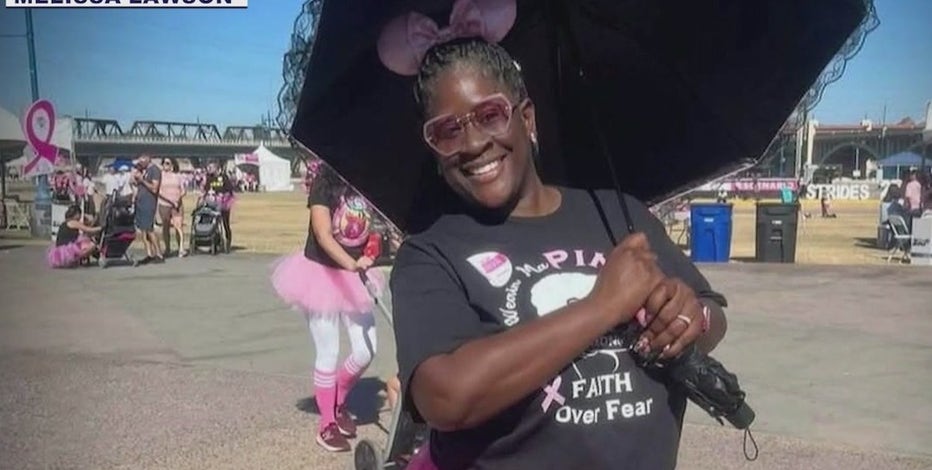
'Soul Sistahs Fighting': Retired detention officer shares her cancer battle
"Soul Sistahs Fighting" is a group of Black women committed to increasing awareness and support for Black women impacted by breast cancer.
Within a fairly short amount of time, doctors performed a lumpectomy, and Dermyer started treatment.
"After the lumpectomy, I started chemo, and then I started radiation, and then I did another surgery where they removed all the lymph nodes in that side and I have been on an oral medication and I get injections," she explained. "I am very lucky because my medical team treated me curatively and aggressively. My first medical oncologist was not willing to do that, so I switched oncologist."
Derymyer says that was a game-changer. Her advice? Don't be afraid to be your own best advocate.
"You have to advocate for yourself, and if a doctor proposes a treatment plan you're not comfortable with, find another one. That's what I did, and I might not be sitting here with you if I hadn't done that," she said. "Also, if I hadn't performed self breast exams – those are very important in an age group where screening is not regularly performed or paid for by insurance."
The Source: FOX 10's Syleste Rodriguez gathered interviews and information for this report.