

Quadrantid meteor shower peaks Friday night but bright supermoon may hinder visibility
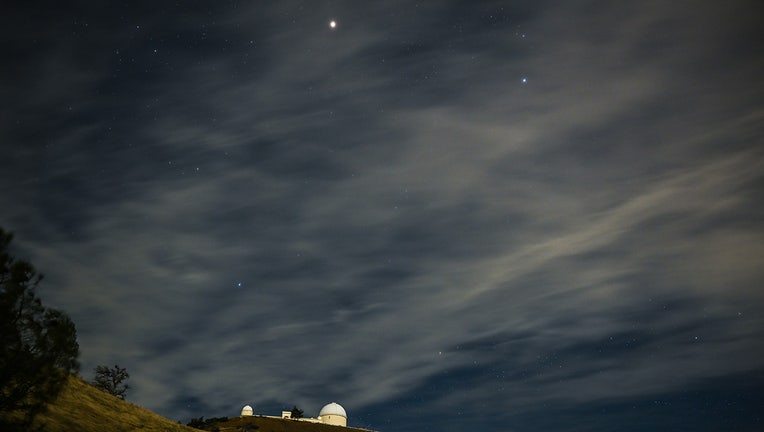
A view of partially stargazing during cloudy weather at Lick Observatory in Mt Hamilton, California, United States as Quadrantids meteor showers peak time on January 3, 2024. (Photo by Tayfun Coskun/Anadolu via Getty Images)
The New Year brings a double feature celestial performance as the year’s first Supermoon and Quadrantid meteor shower go head to head in the night skies Friday.
Dig deeper:
The American Meteor Society says the Quadrantid meteor shower will peak Friday night into Saturday morning, but fewer than 10 meteors will be visible per hour due to light from Saturday's supermoon. Typically, skygazers see around 25 meteors per hour.
The Quadrantids meteor shower
The Quadrantids are unique for a few reasons, including timing and where the meteor shower originates.
Astronomers consider the meteor shower the best of the year because of the lack of moonlight. This week’s Supermoon and weather will make seeing the meteor shower challenging. Other annual meteor showers have one or two-day peak activity, but the Quadrantids' peak happens over a few hours with between 60 and 200 meteors per hour, according to NASA. The space agency said this short peak window is because the Earth crosses the asteroid particle stream at a perpendicular angle.
Most meteor showers come from leftover comets. The Quadrantids are distinctive because they come from an asteroid known as 2003 EH1. NASA astronomers said it's possible 2003 EH1 is a "dead comet" or a "rock comet," but it's currently defined as an asteroid. The small asteroid is about 2 miles across and takes more than 5.5 years to orbit the Sun.
How to view the Quadrantids meteor shower
The Quadrantids are best viewed away from light pollution after midnight and in the predawn hours. A warm drink, blankets and winter weather clothing are also a must for most in the U.S. during cold January nights.
The International Meteor Organization recommends facing north with the Moon behind you to look for meteors.
Even with the cold conditions, it's a good time to step outside with a hot drink for some skygazing. The next active meteor showers don't happen until late April with the Lyrids and then in May with the Eta Aquariids.
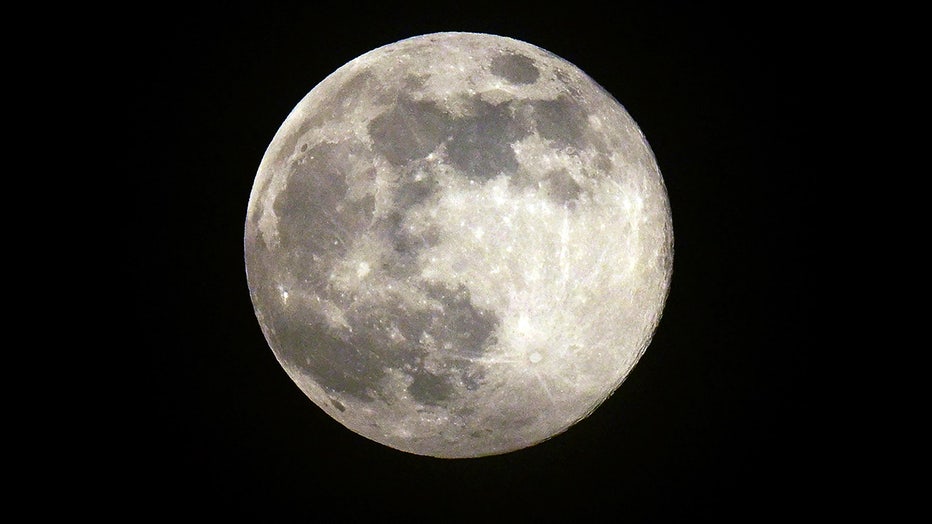
The last supermoon of 2025, the Cold Moon, rises above Los Angeles on December 4, 2025. (Photo by Frederic J. BROWN / AFP via Getty Images)
What makes a moon so super?
More a popular term than a scientific one, a supermoon occurs when a full lunar phase syncs up with an especially close swing around Earth making it appear up to 14% bigger and 30% brighter than the faintest moon of the year. This usually happens only three or four times a year and consecutively, given the moon’s constantly shifting, oval-shaped orbit.
The Source: Information in this article was sourced from The American Meteor Society, The Associated Press, and previous FOX Television Stations reporting. This story was reported from Orlando.